“All I care about today is Messieeee!” Once again, a phone case with the Argentine flag and a picture of “the greatest football player ever” is waved in our faces by one of our colleagues.
“Even if Oman were in the World Cup, I would still support Argentina,” he declares, a little unusually loud for someone normally so typically soft-spoken.
Our Egyptian coworker suddenly looks so sad. Miskeen, the poor guy, is apparently still not over that one match. He explains that many of his brothers and sisters back home turned to football for moments of unity, pride, and joy; for some, it was even a brief escape from their challenging daily realities.
Adding insult to injury, I stupidly let him listen to the “Egypt gooooooaalll” voice note that one of my relatives in Muscat had shared in our family WhatsApp group earlier that night.
I admit this is the first World Cup in years that I have not really followed, although it would have been a welcome distraction from the other global events dominating the headlines.
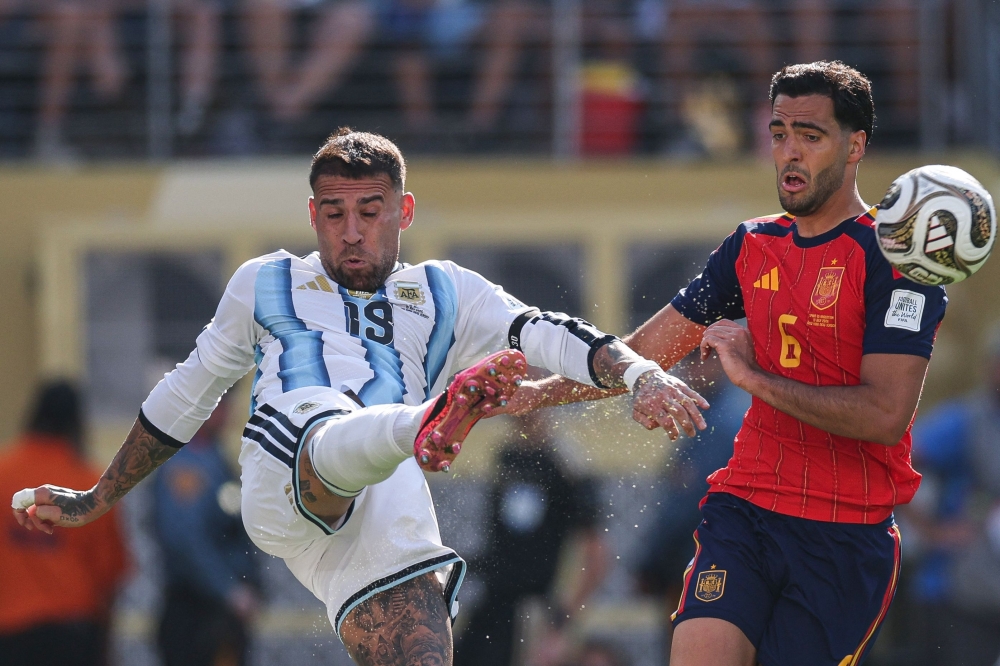
I read that England seemed destined for its first World Cup final in 60 years, until the legendary Messi shattered that dream with five minutes left.
There are no Brits at the office today to add to that weird emotional sense of defeat I know the World Cup can trigger. The one Englishman in Muscat I am close to is rooting for the Spanish team anyway.
That is the thing about emotional belonging: the country of origin that shaped you and the place that feels like home are not always the same for everyone.
When it comes to Spain, a lot of people also feel connected to their national team this year because of the current Prime Minister’s stance on Gaza.
In contrast, though, one of this PM’s predecessors recently falsely claimed that none of the French national team players were “really French.” Of course they are French.
France made them French, most by birth. And those who became French through immigration are French, too. Remember, the country of origin that shaped you and the place that feels like home are not always the same for everyone.
I suddenly wonder whether I should start calling my Omani colleague, who has supported the Argentina football team since he was eight years old, “The Messi” from now on.
At present, I greet him with a peace sign whenever I see him and say, “Salaam alaikum, Donald, kif halek, al amour?” “How are you and how is everyone or everything?”
I initially thought al amour (as it sounds like hamour) was a local fish. My Arabic is so, so bad for an immigrant, even though Oman feels like home from the first sight.
My calling this colleague after the American president is really his fault. He once started talking about Donald as soon as he saw me.
I asked whether I perhaps reminded him of this man, although I am not nearly as tanned and do not drink Diet Coke. I am also not a world leader who got himself entangled in a needless war. I would never call football soccer either, or use my position to ask for a red card decision to be reviewed.
As I am deciding on his new nickname, my colleague suddenly says, “Valhalla” to me. Naïvely, I ask him what that means, thinking it was Arabic. But apparently, I now remind him of Erling Haaland, Norway’s huge striker.
Perhaps these comparisons with Donald and the Vikings come because I am known to be direct. My colleague meant Viking as a compliment.
Still, that is it. I will continue calling him “The Donald.”
Also, if anyone is nicknamed Messi, it should be me.
My husband already calls me “The Messy” at home, sometimes even humming the “she is so messy and I am too clean” song while getting the kitchen back together after I have passionately prepared a new pasta recipe.
But there is something else about being a Messi, not Messy.
“The point is not how good he is but how many times he has had to become someone completely new,” one expert recently wrote about the football legend.
They meant on the field, but I thought of an immigrant, like myself, who carries two homes, and an earlier self and a new self. After all, the country of origin that shaped you and the place that feels like home are not always the same for everyone.
Oman Observer is now on the WhatsApp channel. Click here