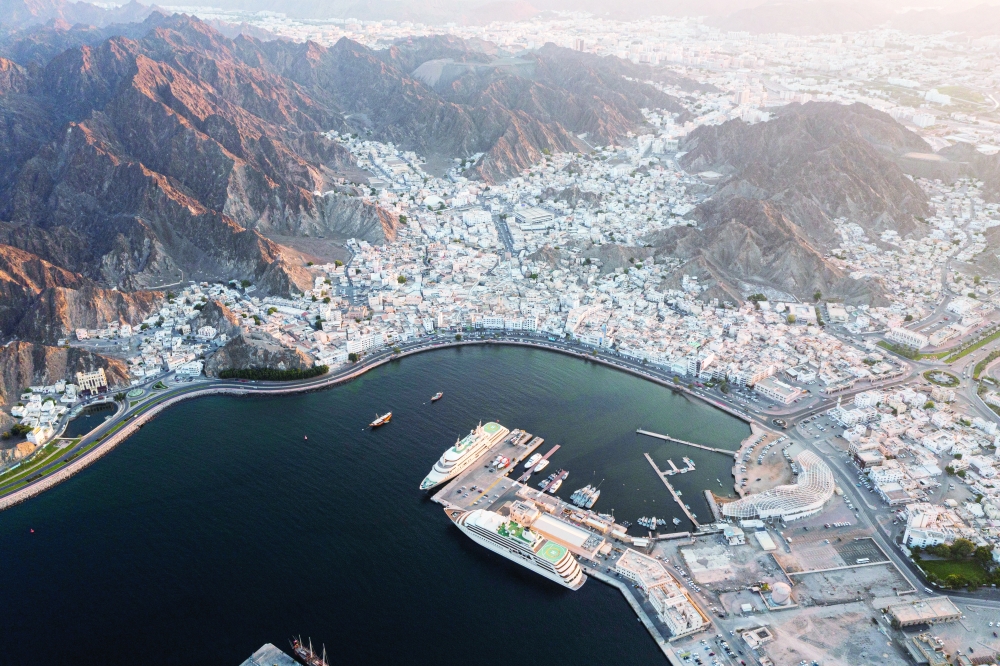





A bird’s-eye view changes everything. From thousands of feet above Muscat, the capital’s roads, buildings and vehicles shrink into tiny marks on a vast canvas, while its mountains and coastline reveal a striking three-dimensional landscape. From this height, Muscat feels both monumental and miniature, its urban rhythm suddenly visible in full.
Taking off from the city’s coast with Al Sharqiya Aviation (ASA), the 15-to-20-minute flight passes over some of Muscat’s best-known landmarks, from historic forts and royal palaces to the dramatic meeting point of mountain and sea. In just a few minutes, the familiar becomes almost unrecognisable.
As the helicopter climbed, each turn revealed another side of the city. The late afternoon sun washed the rugged mountains in crimson, while the turquoise sea and white-edged waves framed the forts, castles and tightly packed neighbourhoods below.
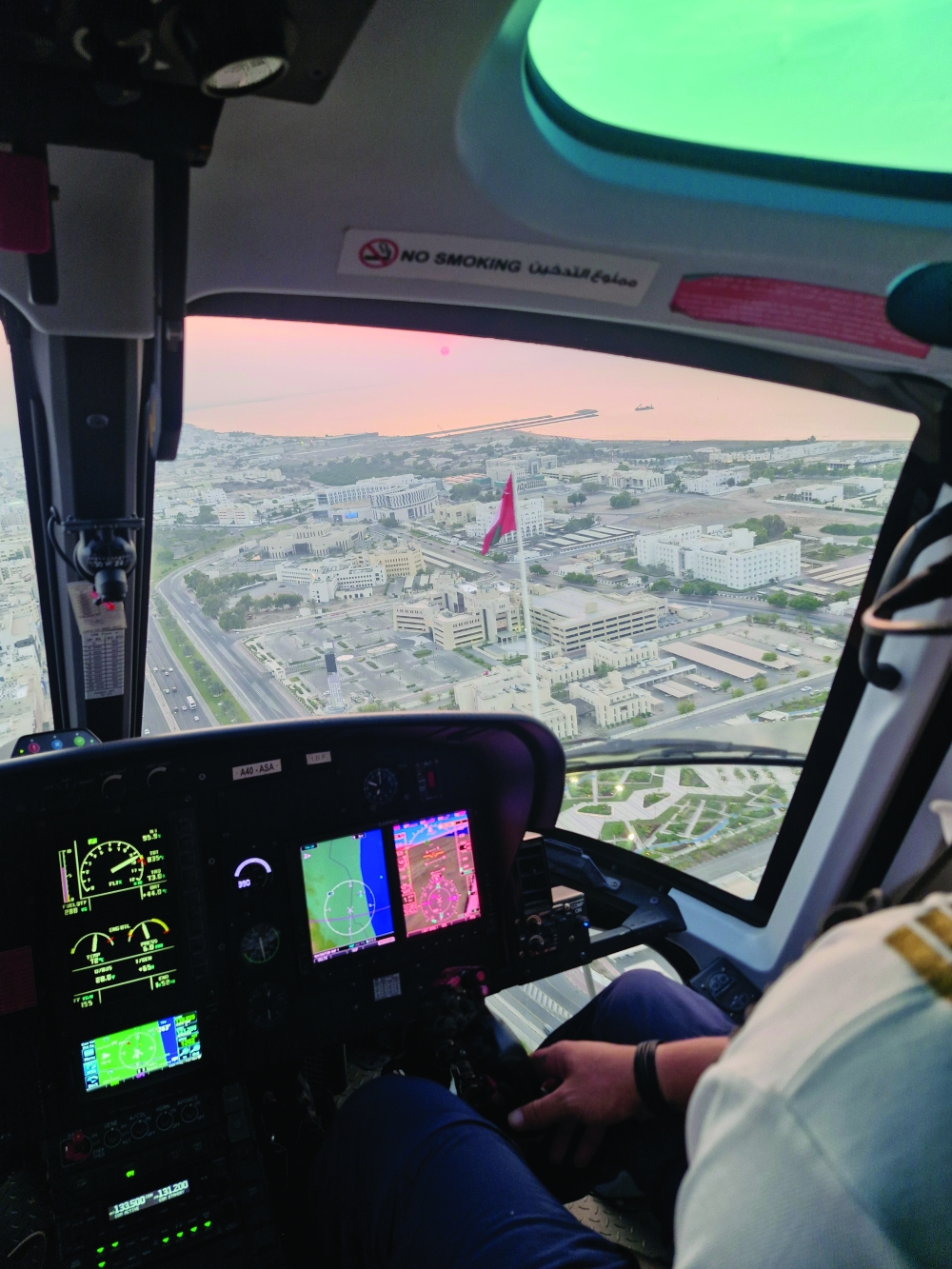
“The world looks completely different from an altitude,” said pilot Ivan through the intercom. “We normally see the world as flat, but from the air, you experience it in a completely different way.”
That difference was especially clear over Muttrah. Streets and alleyways that feel narrow and enclosed from the ground opened into a wider pattern from above, revealing how the old city sits between steep mountains and the sea.
Hidden among the giant rocks was a cluster of white Portuguese graves. From the air, the small “valley of peace” appeared almost cradled by the coastline, with waves gently reaching the shore.
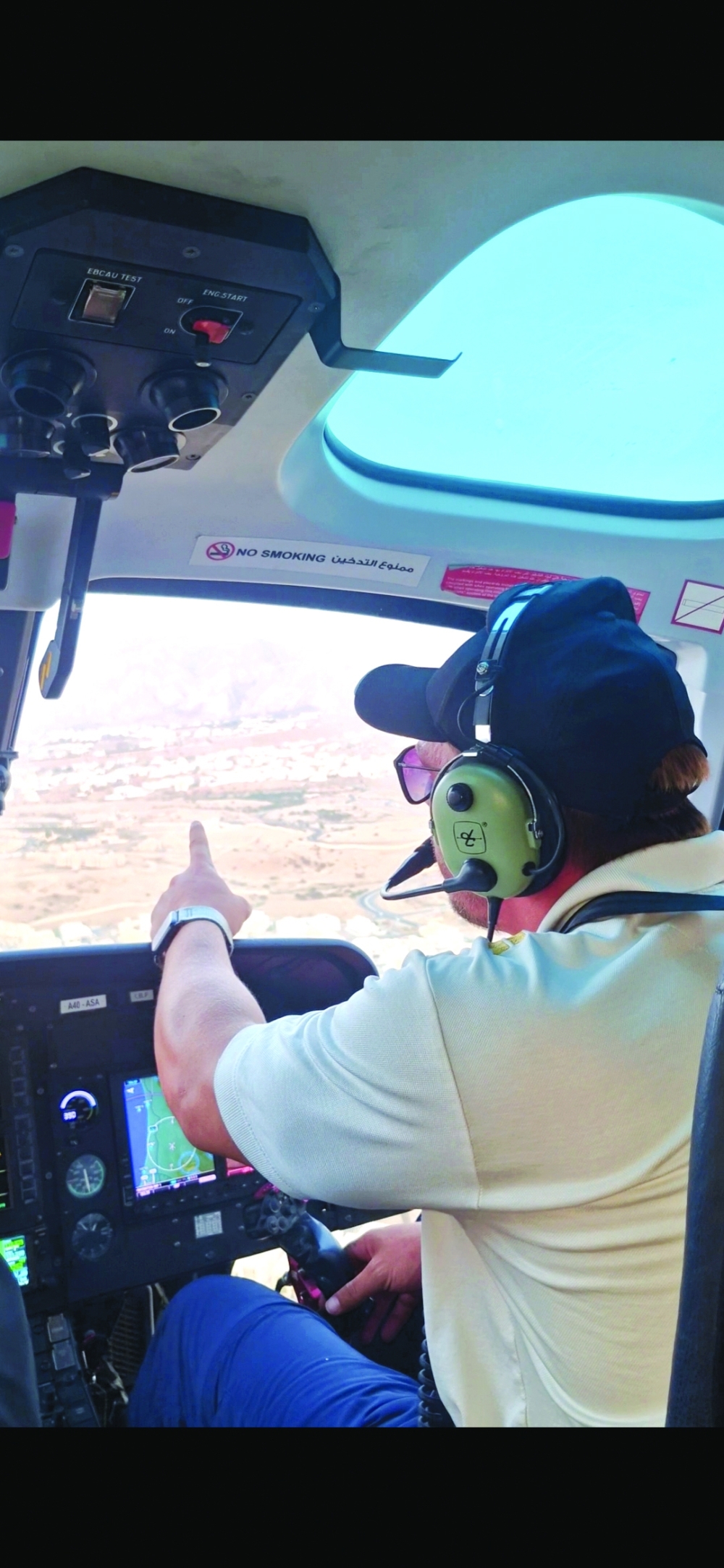
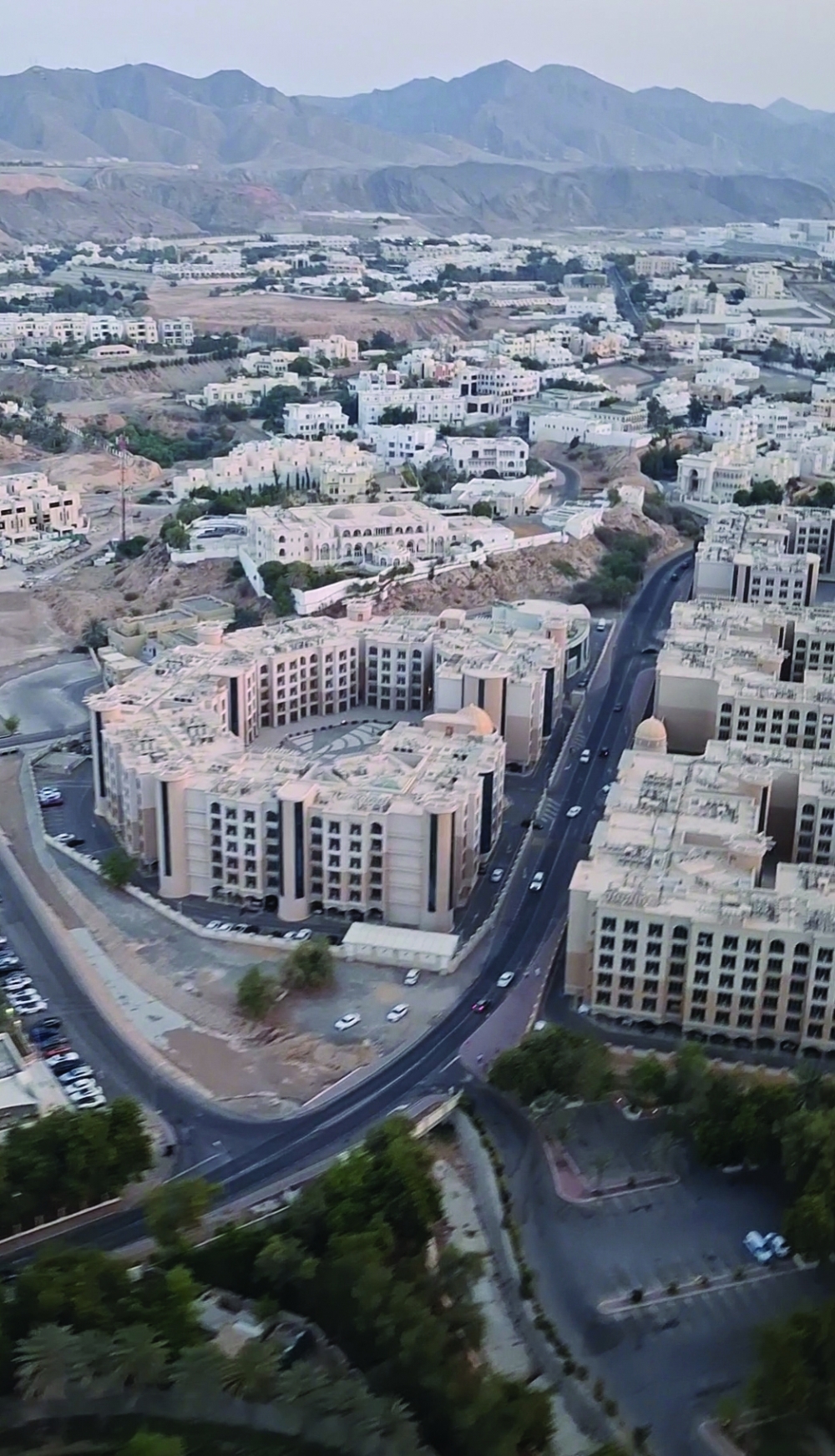
The route offered a rapid sweep across Al Athaiba, Qurum, Wadi Kabir, Ruwi, Darsait, Muttrah and Qantab. Familiar landmarks including Sultan Qaboos Grand Mosque, the Rose Garden, Royal Opera House Muscat, Al Bustan Palace and Al Alam Palace appeared like carefully placed pieces of a much larger artistic composition.
The aerial view did more than showcase Muscat’s beauty. It also revealed the city’s geography: neighbourhoods tucked into valleys, roads bending around mountains and landmarks positioned against a landscape that often hides their scale from street level.
The experience was organised by Al Sharqiya Aviation, Oman’s private helicopter operator, which began operations in 2020. The company operates Airbus H145 twin-engine and H125 single-engine helicopters, as well as the H145 D3, described by ASA as the first helicopter of its kind in the Middle East.
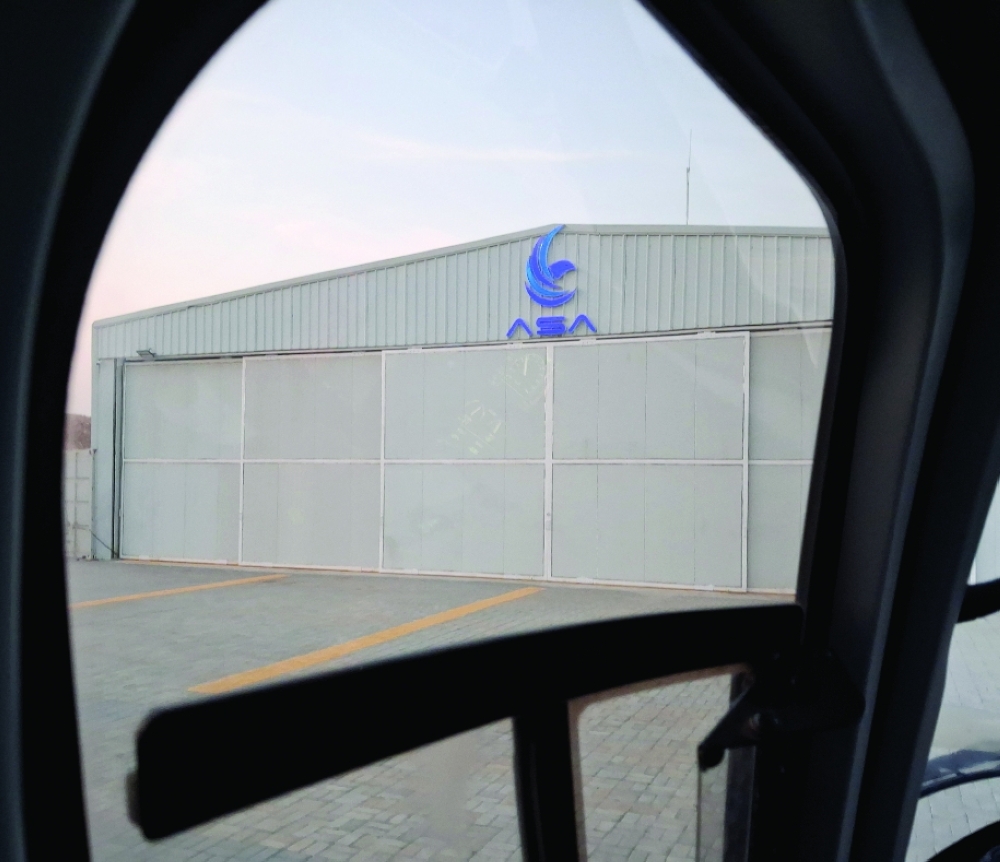
Before the flight, Tamar Al Gendy, ASA’s Vice President of Rotary Wings and a pilot, briefed passengers on safety procedures and explained the company’s wider operations.
Beyond sightseeing, ASA provides passenger and corporate transport, filming and media support, air ambulance services, oil and gas aviation support, crop spraying, advertising and heavy-load lifting. Its helicopters can transport loads of up to one tonne to remote or difficult-to-access locations.
The aircraft have also supported major productions and events. According to Al Gendy, three Bollywood films and the Tour of Oman have used ASA’s helicopter services. The company also provides flights for weddings and aerial crop spraying for palm plantations.
The Airbus H145, valued at about $13 million, can be converted into an air ambulance using a specialised stretcher system. It is also equipped with emergency flotation devices that allow it to remain afloat after landing on water. The helicopter requires an advance order of around two years.
ASA employs eight pilots and crew members of different nationalities. Its helicopters can reach speeds of around 240 kilometres per hour and fly at altitudes of up to 20,000 feet.
The company is also considering expanding sightseeing services to Salalah during Khareef although Dhofar’s misty weather and reduced visibility remain operational challenges.
For now, Muscat flight offers something rare: a chance to see a familiar city made new, suspended between mountains, sea and sky.
Oman Observer is now on the WhatsApp channel. Click here