




CONRAD PRABHU
A new upper reservoir planned atop Jabal Abyadh is emerging as the defining engineering feature of Oman’s landmark 2-GW Pumped Hydro Energy Storage (PHES) project, a development poised to become the largest energy storage facility in the Middle East and one of the region’s most strategically significant renewable energy infrastructure investments.
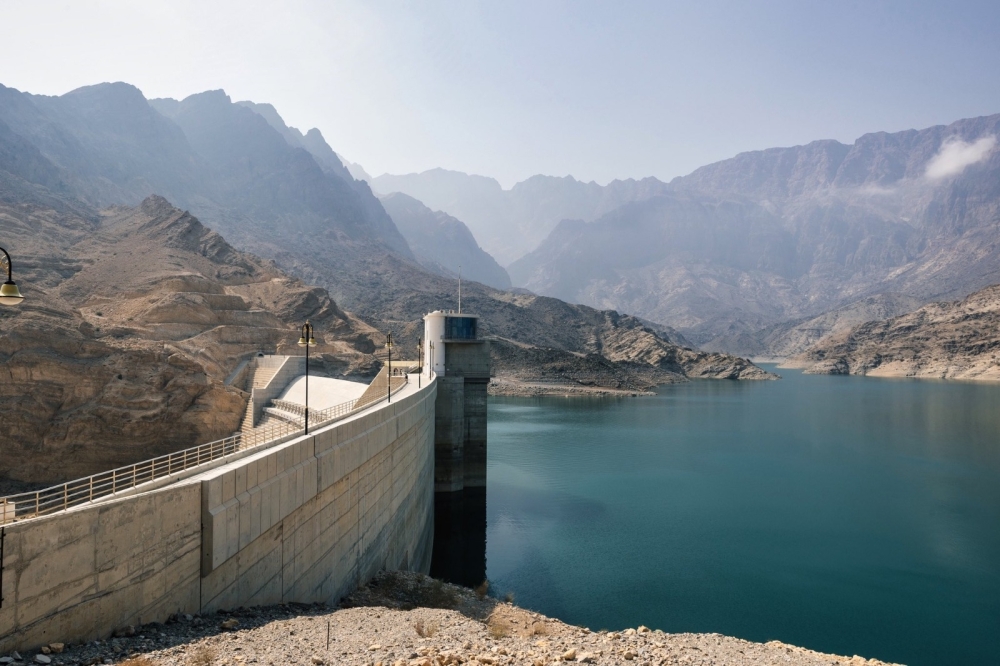
Led by a consortium comprising EDF Power Solutions, ONEIC - Takhzeen, and Green Universe Enterprise, the project harnesses one of the Arabian Peninsula’s rarest geological advantages: a dramatic elevation differential between the existing Wadi Dayqah Dam reservoir and the adjacent Jabal Abyadh plateau. This natural configuration provides the foundation for a large-scale pumped storage system capable of transforming Oman’s renewable energy integration capacity.
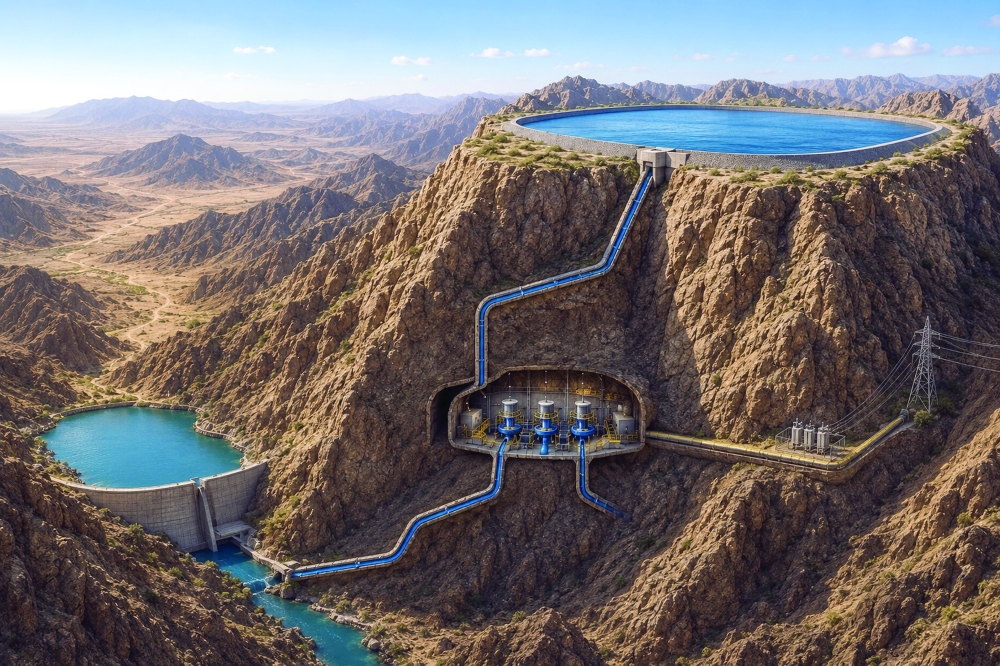
According to project details presented by EDF, the new upper reservoir will form part of a closed-loop pumped storage system with an active water volume of approximately 8 million cubic metres (8 hm³). Situated at an elevation of roughly 1,130 metres above sea level, it will interact with the lower Wadi Dayqah reservoir to create a gross hydraulic head of approximately 940 metres, placing the scheme among the highest-head pumped storage projects globally.
This elevation difference is central to the project’s technical and economic rationale. In pumped hydro systems, hydraulic head determines how much energy can be stored and retrieved per unit of water. The higher the head, the greater the energy yield, allowing large-scale electricity storage with comparatively modest water volumes.
As a result, despite its relatively compact active storage volume, the Jabal Abyadh system is designed to deliver 2 GW of installed capacity and around 17.9 GWh of energy storage, enabling continuous electricity generation for up to nine hours at full output.
The operating principle is based on shifting excess renewable energy from daytime to nighttime use. During periods of excess solar photovoltaic production - typically midday - electricity will be used to pump water from the Wadi Dayqah reservoir through underground tunnels up to the upper reservoir on Jabal Abyadh. When demand peaks in the evening or renewable generation declines, the stored water will be released back downhill through reversible pump-turbines, generating electricity almost instantaneously.
STRATEGIC USE OF EXISTING WATER INFRASTRUCTURE
According to Dr Yves-Laurent Beck, Senior Business Developer – Hydropower Projects at EDF Power Solutions Middle East, a key distinguishing feature of the project is its reliance on existing national infrastructure. The lower reservoir is formed by the Wadi Dayqah Dam, one of Oman’s most important water assets, originally constructed for flood protection and groundwater recharge. With a total storage capacity of approximately 100 million cubic metres, it provides a robust and strategically valuable foundation for pumped storage operations.
By utilising an existing reservoir rather than constructing a new lower basin, the project significantly reduces civil engineering requirements, environmental disturbance, and capital expenditure, he said.
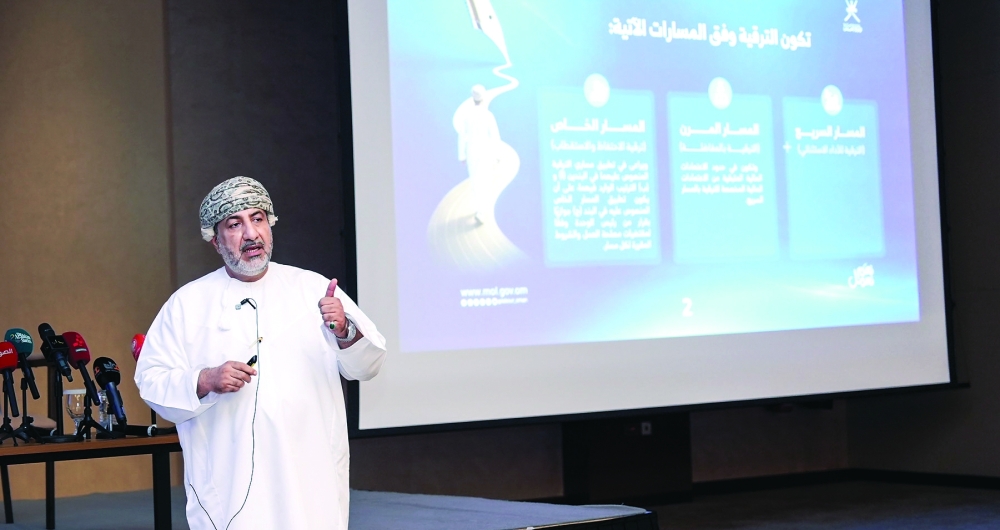
Speaking during a recent webinar titled “EDF’s Unique Experience in Pumped Storage Hydropower Development in the Middle East”, Dr Beck said a major engineering hallmark of the Jabal Abyadh project is the decision to house the generating station within a large underground cavern excavated into the mountain mass. This cavern will accommodate multiple reversible pump-turbines, transformers, and associated electromechanical systems.
This underground configuration delivers multiple advantages. It reduces the project’s surface footprint, enhances environmental integration, and provides operational protection from Oman’s harsh climatic conditions. It also leverages the region’s geological stability, a critical requirement for large-scale underground hydropower infrastructure.
A central point in his analysis was the importance of hydraulic head. The approximately 1,000-metre elevation differential between the two reservoirs enables exceptionally high energy density. This means that relatively small volumes of water can generate large amounts of electricity, significantly improving project efficiency and reducing spatial requirements.
He explained that this allows the project to achieve large-scale energy storage with only 8 million cubic metres of active water volume, underscoring the efficiency benefits of high-head systems.
Dr Beck also highlighted the use of variable-speed pump-turbines, a relatively recent technological advancement in pumped hydro systems. Unlike conventional fixed-speed machines, variable-speed units allow for a wider operating range and improved responsiveness to grid fluctuations.
This capability is particularly important in systems with high shares of solar energy, enabling smoother integration of intermittent generation and improving grid stability. The technology also enhances operational flexibility, allowing the plant to respond rapidly to changes in electricity demand.
LONG-TERM NATIONAL INFRASTRUCTURE ASSET
Beyond its technical attributes, Dr Beck described the Jabal Abyadh project as a long-term strategic asset for Oman, with an operational lifespan potentially reaching 100 years. Pumped storage facilities typically require relatively low maintenance once constructed and offer lower lifetime operating costs compared to gas-fired peaking plants.
He further estimated that around 70% of total project expenditure would remain within Oman, reflecting the civil engineering-intensive nature of pumped storage projects. This includes dam works, tunnelling, underground construction, and associated infrastructure, generating significant in-country value, employment, and local contractor participation.
Once completed, the Jabal Abyadh PHES project is expected to become the largest pumped hydro facility in the Middle East, playing a pivotal role in enabling Oman’s transition toward a more flexible and low-carbon electricity system, he added.
Oman Observer is now on the WhatsApp channel. Click here