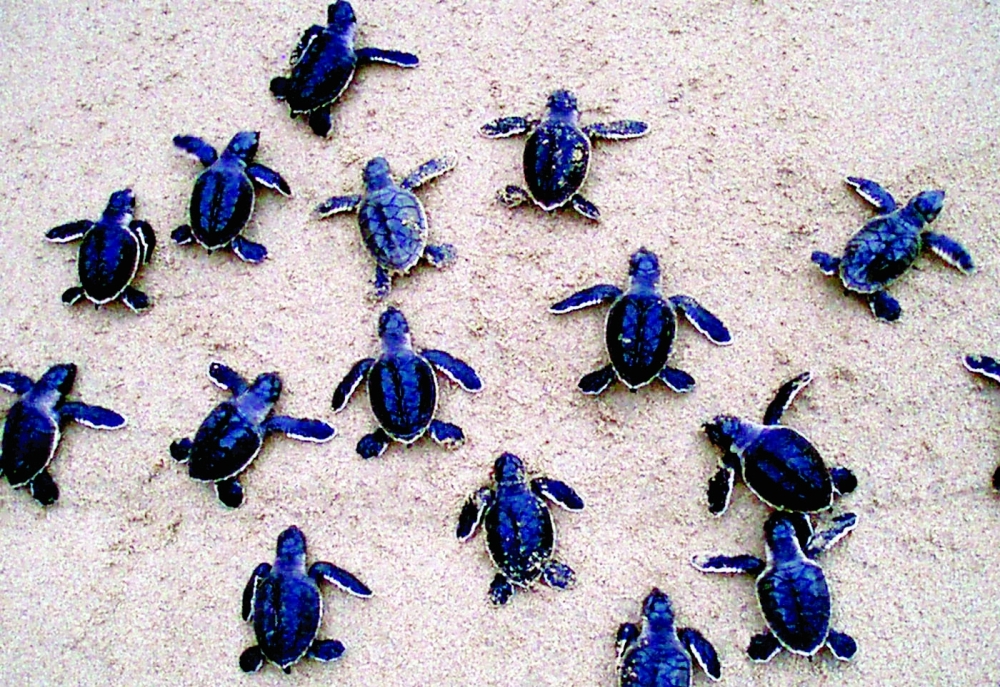





MUSCAT: As the sea turtle hatching season begins, the Environment Authority (EA) has urged the public to admire hatchlings from a distance and avoid touching or carrying them, warning that even well-intentioned human interaction can threaten their survival.
For most sea turtle species, the peak hatching season falls between July and October. Through a public awareness campaign, the EA stressed that handling hatchlings causes severe stress, increases the risk of injury and germ transmission, and disrupts their instinctive journey to the sea.
"Watch them from afar and let them complete their journey on their own," the authority said.
That first crawl to the ocean is a vital part of a hatchling's life. Scientists believe it helps imprint the beach's magnetic and environmental characteristics, enabling female turtles to return to the same shoreline years later to lay their own eggs.
According to the EA, hatchlings instinctively view every creature larger than themselves as a potential predator. Being picked up or handled causes extreme stress that can weaken their immune system. Their shells are still soft and fragile, making them vulnerable to injury even from a minor fall. Human hands can also transfer germs or harmful substances that may affect their health.
The authority added that handling hatchlings can interrupt their natural orientation towards the sea and reduce the time they need to feed and bask after entering the water, affecting their early development.
Visitors are encouraged to observe and photograph the hatchlings from a safe distance, but to avoid touching them and allow nature to take its course.
According to the Sea Turtle Conservancy, hatchlings emerge almost exclusively at night. The cooling of the sand after sunset signals that it is time to hatch, helping them avoid daytime heat and predators such as birds. Working together beneath the sand, the hatchlings dig upwards before bursting from the nest simultaneously in a phenomenon known as a "boil."
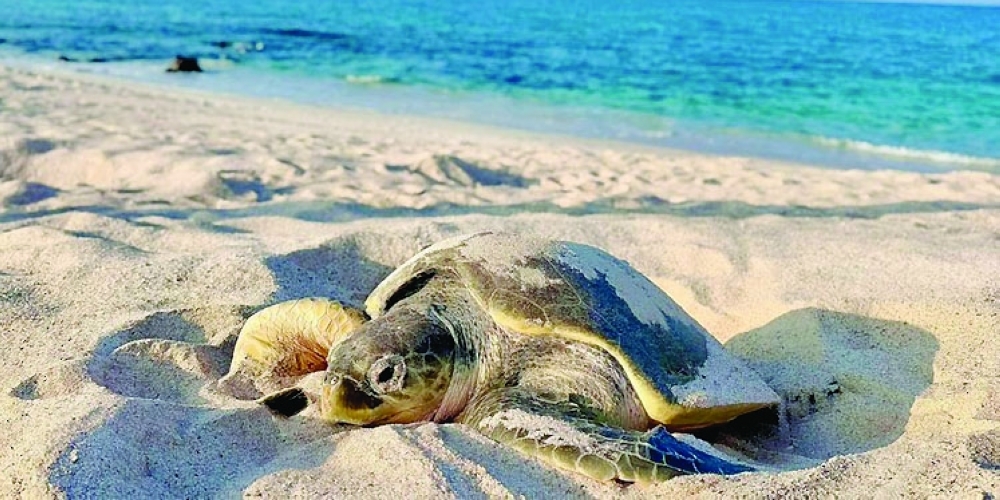
At the Ras Al Jinz Turtle Reserve, green turtles nest throughout the year, with the peak hatchling viewing season running from July to September. Guided tours are conducted at night and dawn under strict conservation guidelines. Visitors are prohibited from using flash photography and may only use the red-light torches provided by guides to avoid disorienting the turtles.
Green turtle eggs typically hatch after 50 to 70 days, while the critically endangered hawksbill turtles nesting in the Daymaniyat Islands Nature Reserve emerge after about 60 days.
The situation differs on Masirah Island, where nesting beaches stretch for long distances and nesting densities vary considerably.
Ghasi al Farsi, Environmental Systems Supervisor for Masirah at the Environment Authority, said: "Sea turtles are now beginning to emerge from their nesting chambers. Hatchling emergence will increase progressively, becoming especially noticeable during August, although numbers remain relatively small for now. Because Masirah's nesting beaches are extensive and widely dispersed, emergence rates vary significantly from one beach to another."
He noted that the island experiences its highest levels of hatchling emergence between August and October.
The EA also explained that hatchlings rely on several natural cues to locate the sea, including the reflection of moonlight on the horizon, the scent of the ocean, moisture carried by sea breezes, the downward slope of the beach, and an innate instinct that guides them immediately after hatching.
The use of white flashlights or mobile phone lights is strongly discouraged because hatchlings navigate using the natural brightness of the horizon over the sea. Artificial white light can confuse them, causing them to crawl inland instead of towards the water, where many eventually die. For this reason, turtle guides use specially designed red lights that do not interfere with the hatchlings' natural orientation.
Oman Observer is now on the WhatsApp channel. Click here