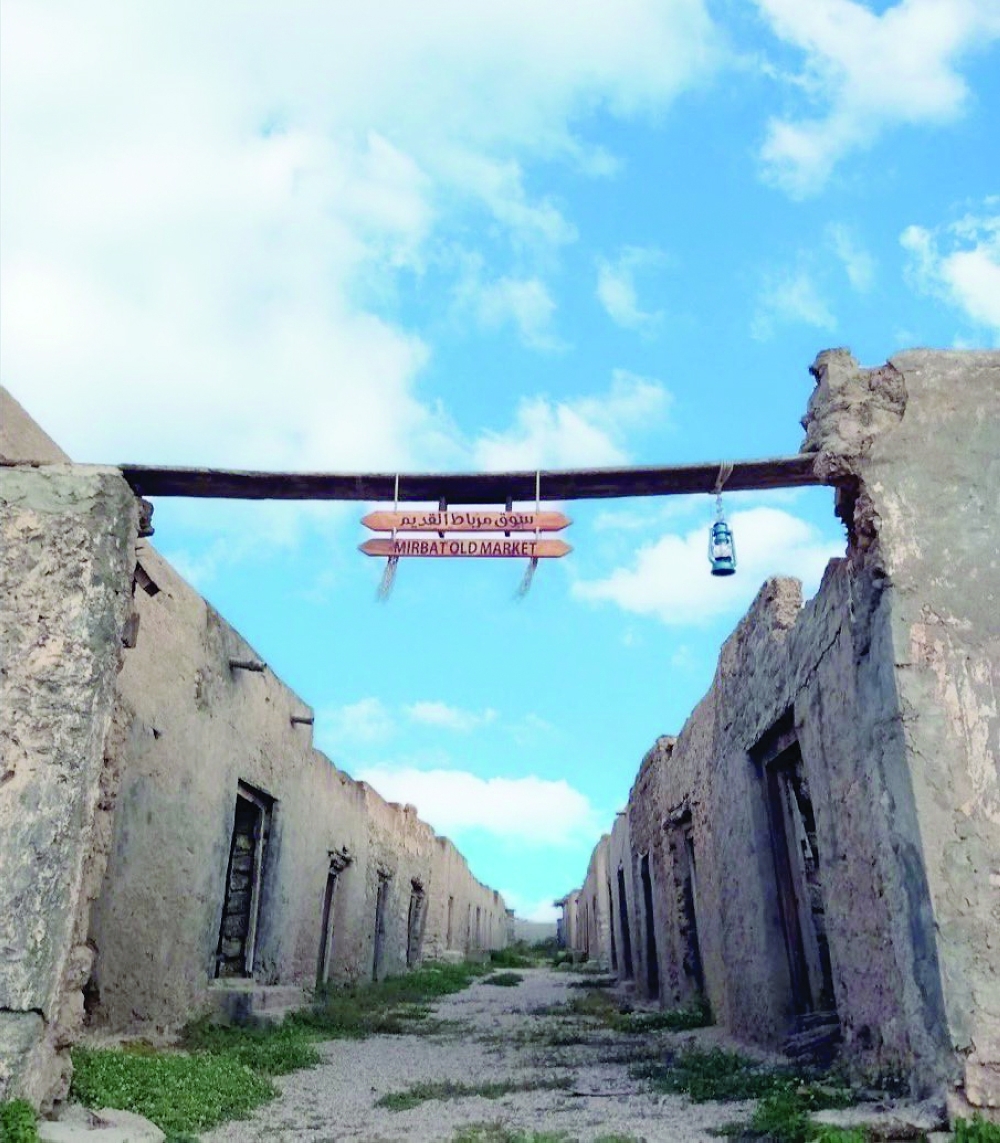





MIRBAT: Mirbat Old Souq, one of Dhofar’s most significant historic marketplaces, remains awaiting restoration as residents and heritage enthusiasts call for the preservation and revival of a site that once stood at the heart of the governorate’s commercial and social life.
Located alongside Mirbat Fort, the old mosque and the former customs house, the souq formed part of the town’s historic administrative and trading centre. Closely connected to Mirbat Port, the marketplace played a key role in maritime trade routes linking Dhofar with Oman’s coastal governorates, India, East Africa, Yemen and the Gulf.
According to researcher Saeed bin Khalid al Amri, the historic market includes 53 shops spread across an area of around 4,000 square metres. The wider heritage zone, including the fort, customs house and surrounding areas, extends over approximately 13,000 square metres.
Al Amri noted that the souq was once a major centre for the trade of frankincense, dates, ghee, leather and imported goods. Beyond commerce, it served as a gathering place for the community, where residents met, announcements were made and social affairs were discussed.
The current structure of the souq developed during the early twentieth century, expanding through different periods as Mirbat’s commercial activity grew. However, its importance gradually declined from the late 1970s due to the decline of maritime trade, population movement towards newer areas and the emergence of modern shopping centres.
The site also holds archaeological value. Research by Al Amri refers to the discovery of an Ayyubid dinar dating back to 1178 AD at the market site, while excavations around Mirbat Fort have uncovered remains linked to the Iron Age and later Islamic periods.
In recent years, parts of the old market have experienced deterioration, with some sections affected by weather conditions and the passage of time. The situation has renewed calls for a comprehensive restoration project that would preserve the site’s historical character while transforming it into a vibrant heritage and tourism destination.
Residents and heritage specialists believe restoring the souq could help revive traditional crafts, support local businesses and create opportunities for family enterprises, while enhancing Mirbat’s appeal as a cultural tourism destination.
Suggested plans include restoring the historic shops and customs building, improving public spaces around the site, introducing cafés and traditional craft outlets, organising seasonal markets and cultural events, and creating links between the souq, Mirbat Fort, the historic mosque and the waterfront.
Supporters of the initiative emphasise that any redevelopment should maintain the architectural identity of the marketplace while ensuring a sustainable model that protects the interests of shop owners and benefits the local community.
Mirbat Old Souq remains a symbol of Dhofar’s maritime heritage and commercial history. Its restoration could preserve a valuable chapter of Oman’s past while bringing renewed cultural and economic activity to the historic heart of the wilayat.
Oman Observer is now on the WhatsApp channel. Click here