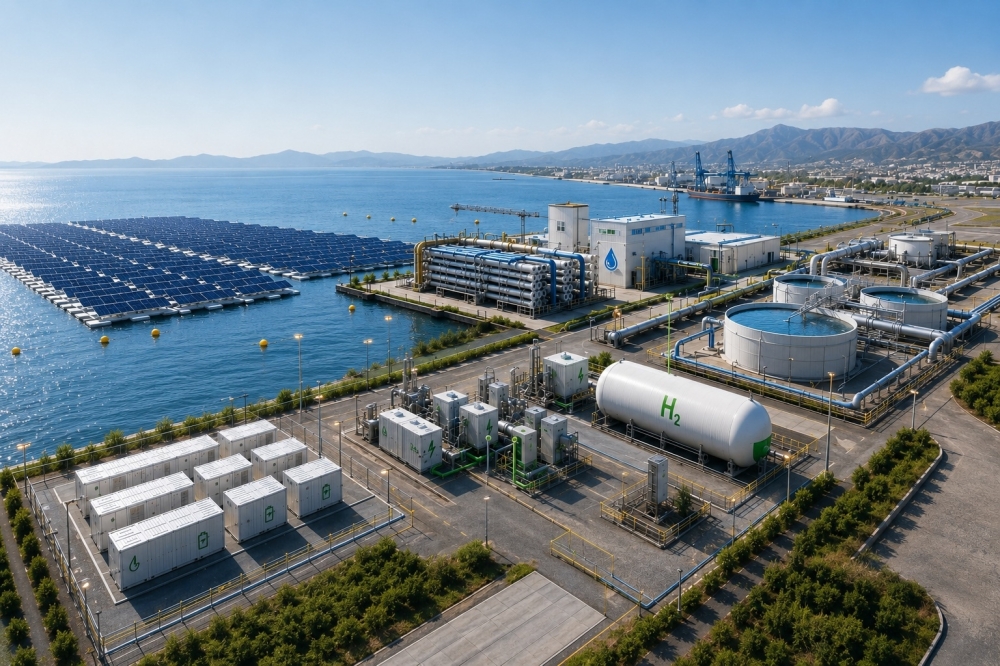
Floating solar power is rapidly emerging as one of the renewable energy sector’s fastest-growing technologies, with governments and utilities increasingly deploying photovoltaic (PV) systems on reservoirs, lakes, irrigation ponds and former quarry sites to overcome land constraints while boosting clean electricity generation.
Unlike conventional ground-mounted solar farms, floating photovoltaic (FPV) systems are installed on buoyant platforms anchored to the water’s surface. The approach offers several advantages, including reduced competition for valuable land, improved solar panel efficiency due to the cooling effect of water, and lower evaporation rates from reservoirs in arid regions.
According to the International Energy Agency (IEA), global solar deployment continues to accelerate at record levels, with floating solar expected to play an increasingly important role in countries facing limited land availability or growing water management challenges (International Energy Agency, 2025). The World Bank has previously estimated that only a small proportion of suitable artificial water bodies could support hundreds of gigawatts of floating solar capacity worldwide.
Several countries are now scaling up deployment. China remains the world’s largest floating solar market, operating some of the biggest installations on flooded former mining sites. India is commissioning large projects on reservoirs to support its expanding renewable energy targets, while nations including Indonesia, Singapore and South Korea continue to integrate floating solar into national energy strategies. In Europe, France, the Netherlands and Portugal are also investing in the technology to diversify renewable electricity generation.
Innovation is also extending beyond inland reservoirs. Developers are advancing offshore floating solar systems capable of operating in coastal waters, often alongside offshore wind farms. Hybrid renewable energy projects that combine floating solar with hydropower are becoming increasingly attractive because they can utilise existing grid connections while helping balance electricity production throughout the day.
The technology offers operational benefits beyond electricity generation. By shading reservoir surfaces, floating solar installations can reduce water evaporation, an advantage attracting growing attention in water-stressed regions. Studies have also shown that cooler operating temperatures can improve photovoltaic efficiency compared with equivalent land-based installations, although environmental assessments remain essential to understand impacts on aquatic ecosystems.
Costs have steadily declined as manufacturing has expanded and installation techniques have matured. Industry analysts expect further reductions as larger projects create economies of scale and specialised floating structures become more widely available.
For countries with ambitious renewable energy goals, floating solar represents an additional pathway to diversify clean power generation without placing pressure on agricultural or urban land. The technology could prove particularly valuable in regions with extensive desalination infrastructure, irrigation reservoirs or industrial water storage facilities.
Oman may also find opportunities in the future. While utility-scale floating solar has not yet become a major feature of the Sultanate’s renewable energy portfolio, the country’s continued expansion of solar generation, combined with reservoirs, water infrastructure and industrial developments, could create suitable locations for pilot projects. Floating solar could complement existing renewable energy ambitions while supporting efficient land use and water conservation in selected applications.
As renewable electricity demand continues to grow worldwide, floating solar is expected to become an increasingly important part of the global clean energy mix. Rather than replacing conventional solar farms, the technology is likely to serve as a complementary solution, enabling countries to maximise renewable generation from previously underutilised water surfaces while advancing energy security and decarbonisation objectives.
Oman Observer is now on the WhatsApp channel. Click here