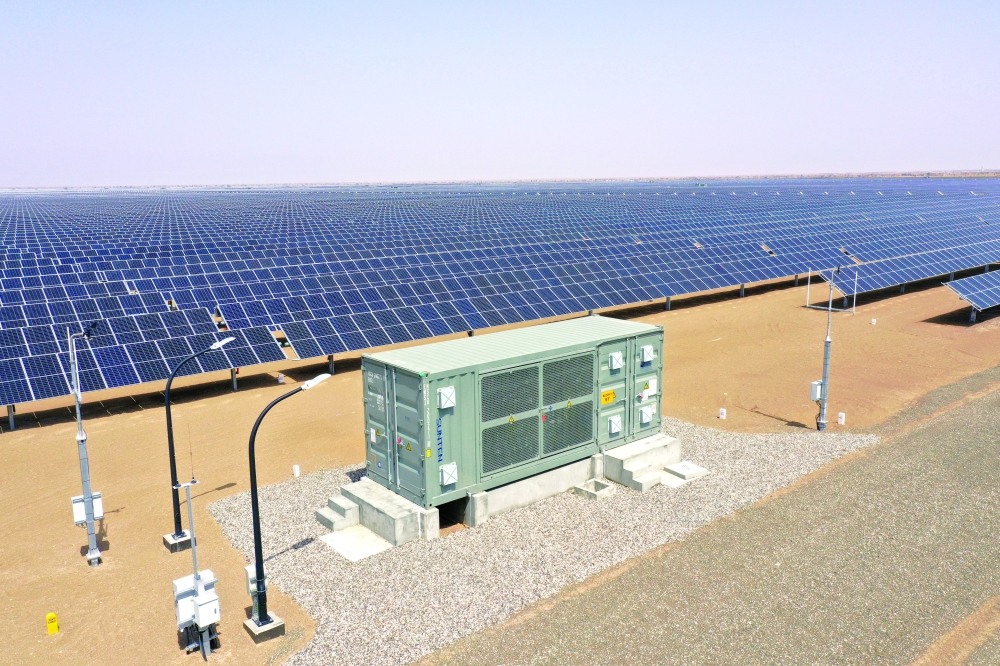
As solar energy expands globally, attention is shifting from capacity to performance in extreme environments. In desert regions, where solar potential is among the highest in the world, operational challenges are driving the development of technologies specifically designed for heat, dust and long-term durability.
Dust remains the most immediate constraint. In arid conditions, soiling can reduce solar panel efficiency by 20 to 30 per cent and significantly more if panels are left uncleaned over time. Fine particles accumulate quickly on panel surfaces, forming a layer that blocks sunlight and reduces output. In regions prone to dust storms, this effect can intensify rapidly, making regular cleaning and surface protection essential to maintaining performance.
Temperature presents a second challenge. Solar panels lose efficiency as heat rises, typically declining by around 0.4 to 0.5 per cent per degree above optimal operating temperature. In desert climates, where panel temperatures can exceed 60°C, this can translate into consistent daily losses during peak summer months. Over time, prolonged exposure to heat can also accelerate material degradation, affecting long-term reliability and increasing maintenance costs.
In response, desert-optimised technologies are evolving rapidly. Anti-soiling coatings are being engineered to reduce dust adhesion and make it easier for particles to be removed by wind or minimal cleaning. At the same time, robotic cleaning systems are becoming more widely adopted, allowing panels to be maintained without water, a critical advantage in water-scarce environments such as Oman and across the Gulf. These systems can operate autonomously, often at night, ensuring panels remain clean without disrupting power generation.
Material innovation is also playing a key role. Manufacturers are developing panels with improved thermal tolerance and more durable protective layers to withstand sand abrasion and prolonged exposure to ultraviolet radiation. These enhancements are helping to extend the lifespan of solar installations while maintaining consistent output under harsh conditions.
Tracking systems are being refined to suit desert environments. Modern solar arrays can adjust their positioning not only to maximise sunlight capture, but also to reduce exposure during sandstorms or periods of extreme wind. By limiting direct impact from abrasive particles, these systems help protect panel surfaces and reduce wear over time.
These advancements are reshaping the economics of solar deployment in desert regions. By improving efficiency and reducing maintenance requirements, desert-optimised systems are making large-scale solar projects more predictable and financially viable. This is particularly important for investors, who are increasingly focused on long-term performance and operational stability rather than just installed capacity.
For Oman, these developments carry direct strategic importance. The country’s solar expansion, including major projects in Ibri and Manah, is built on leveraging its natural solar advantage. However, sustaining that advantage will depend on how effectively technologies are adapted to local environmental conditions. Integrating dust-resistant coatings, water-free cleaning systems and heat-resilient materials will be essential to maximising output and ensuring long-term returns.
The broader shift is clear. Solar energy is no longer a uniform solution applied in the same way across different regions. It is becoming increasingly tailored to geography, with innovation driven by the need to perform under specific environmental conditions. In desert regions, success will not be defined by sunlight alone, but by the ability to harness it efficiently, consistently and sustainably under some of the harshest conditions on earth.
Oman Observer is now on the WhatsApp channel. Click here