The world has football on its mind right now, and it looks like it could be a perfect platform to talk about climate change and what the common people could do to overcome the challenge.
Climate change presents a fundamental threat to human health, says the World Health Organization. WHO pointed out that it affects the physical environment as well as all aspects of both natural and human systems – including social and economic conditions and the functioning of health systems. It is therefore a threat multiplier, undermining and potentially reversing decades of health progress.
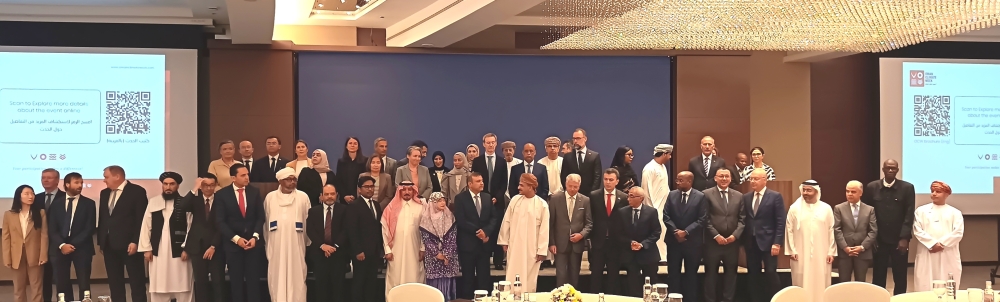
This week, the Environment Authority held an Ambassadors' Gathering to introduce the Oman Climate Week that is to be held from September 14 to 16, 2026.
Oman Climate Week is about investing in a green future. It seems like there is no other way because the world is going through changes; as they always say, the environment knows no borders.
According to EA, Oman Climate Week 2026 serves as a critical regional platform for climate cooperation, technology adoption and investment activation. Positioned at a moment where global action must move into execution, this event links policy, industry, technology and funding in one environment built for tangible outcomes.
For Oman, some of the major concerns of climate change are intensified droughts, extreme flash floods and rising sea levels. Droughts are a concern for agriculturists, as they can affect groundwater and, subsequently, the traditional irrigation system – the aflaj networks.
The increase in adverse weather systems also causes flash floods that can be damaging to the infrastructure. When we think about the rising sea levels, what comes to mind are the beautiful coastlines of Oman and the turtles that depend on them as much as the ocean.
The Arabian Sea is currently preparing to bring in the monsoon to the coastal areas of Dhofar, which has been the norm. But the Arabian Sea has also been experiencing more frequent and intense storms and heavy rainfall. The coastal cities know the differences. The changes, whether in the form of frequent storms or sea level, are highly significant because we have something precious in the coastal areas — desalination plants that provide drinking water.
Oman has prioritised carbon neutrality and sustainable transitions under Oman Vision 2040. And what will be discussed at the conferences as part of Oman Climate Week will be highly significant.
We are used to the high temperature in the summer, but we dare it with our air conditioners. But there is an impact on this factor too.
A major concern in the world has been the acidification of the oceans, and we have seen it in the difficulties faced by coral reefs and shellfish in parts of the world.
According to the experts, the primary solution to ocean acidification is drastically reducing global carbon dioxide emissions and transitioning to clean energy.
Because the ocean absorbs about 30 per cent of atmospheric carbon dioxide, curbing emissions directly reduces the chemical shifts that make seawater corrosive to marine life.
We need global, broad systemic changes as well as local actions. The world is taking the initiative towards renewable energy. Can we as individuals make a difference?
For example, would we consciously move towards using public transportation? And would we reduce energy consumption in homes? Even in the 80s, many companies in Oman used to have vehicles from the organisations that actually picked up their staff from home. Would that be a possibility in 2026?
Of course, we will need to continuously find ways for carbon removal processes and capping greenhouse gas emissions.
I was recently at a restaurant that had a pretty outdoor setting. Sitting out there, I realised the heat from the air conditioner was more than the summer temperature.
And we need to protect 'blue carbon' ecosystems, and that is by conserving and restoring marine vegetation like kelp forests, seagrass beds and mangroves. Oman has been taking immense measures to enhance the coverage of mangroves in different parts of the country.
And why footballers?
The footballers – they spend a lot of time outdoors. They are known to log 15 to 25 hours weekly on the pitch for training and matches, and they are also known to prefer outdoor activity during their break time. When they are professionals, they travel too and play outdoors in many countries.
Oman Observer is now on the WhatsApp channel. Click here