




In an age dominated by mass-produced cosmetics and modern beauty trends, a traditional Omani craft continues to survive through the dedication of women who believe in the value of heritage and authenticity.
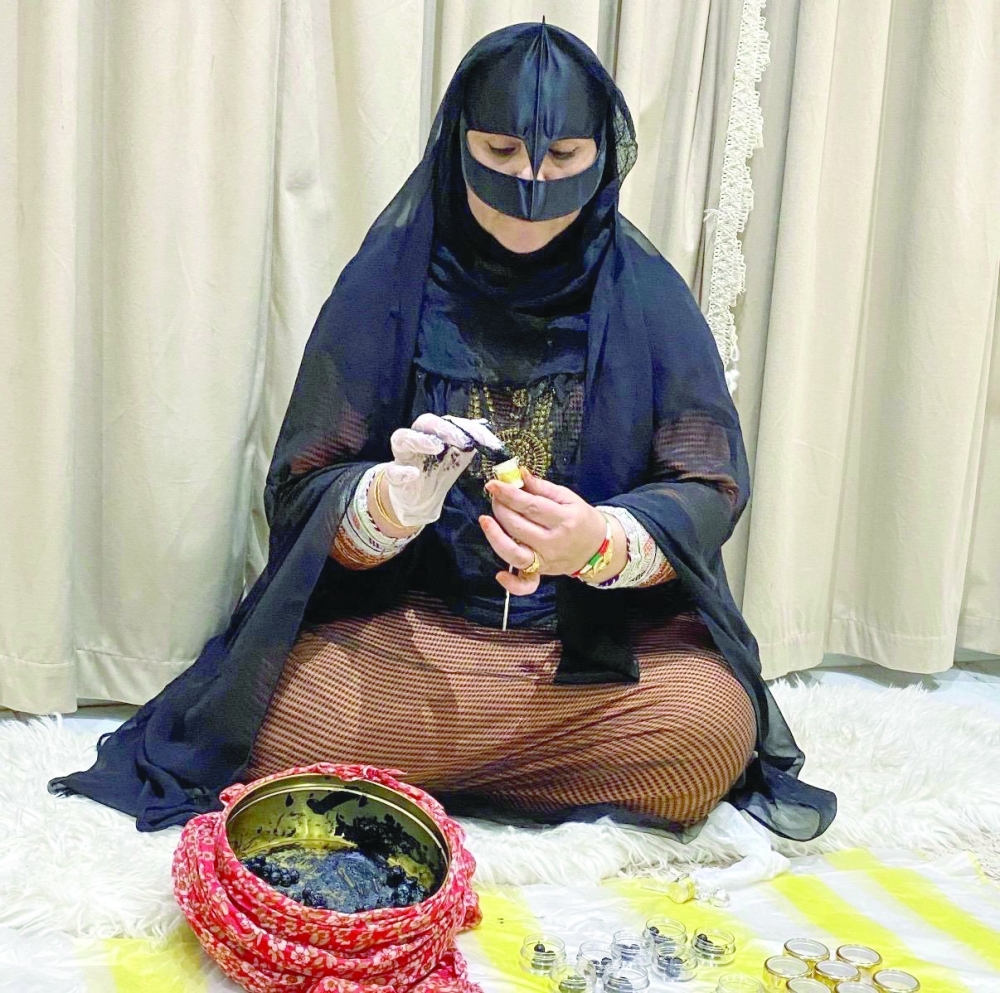
One such example is the traditional kohl made from whale liver, a rare practice that has been preserved and developed by Omani craftswoman Khusayfa bint Taib bin Hamad al Hakmani.
Khusayfa’s connection to traditional crafts began at an early age. She describes herself as a woman who has carried a deep passion for Omani heritage and traditional industries since childhood.
This interest was not accidental; it was nurtured within her family. She learned the craft from her maternal aunt, Moza bint Mohammed al Hakmani, who passed down the knowledge as part of a long-standing family tradition.
What began as inherited knowledge later became a personal mission to preserve and refine a product deeply rooted in Omani culture.
Unlike commercial kohl products commonly found today, whale liver kohl is valued not merely as a cosmetic item but as a traditional remedy.
According to Khusayfa, this type of kohl is known for its natural composition and its role in eye comfort and treatment rather than decoration alone. Prepared using inherited methods, it is considered gentler on the eyes compared to modern products that often contain chemical substances. Its long history of use has built a strong sense of trust among those who rely on it.
The craft itself is a family legacy. While Khusayfa acknowledges that the foundation of this practice was passed down from earlier generations, she emphasises her role in developing the product without compromising its authenticity. Her work focuses on maintaining the original essence of the kohl while presenting it in a form suitable for today’s users.
Despite the rapid spread of modern cosmetics, this traditional craft continues to hold its place. Khusayfa believes that many people still turn to traditional kohl because of its proven natural benefits and the experiences shared across generations.
Whale, or shark, liver contains natural fats that are believed to strengthen eyesight and protect the eyes from dryness and inflammation. This, she explains, is what sets it apart from commercial kohl, which often relies on artificial ingredients.
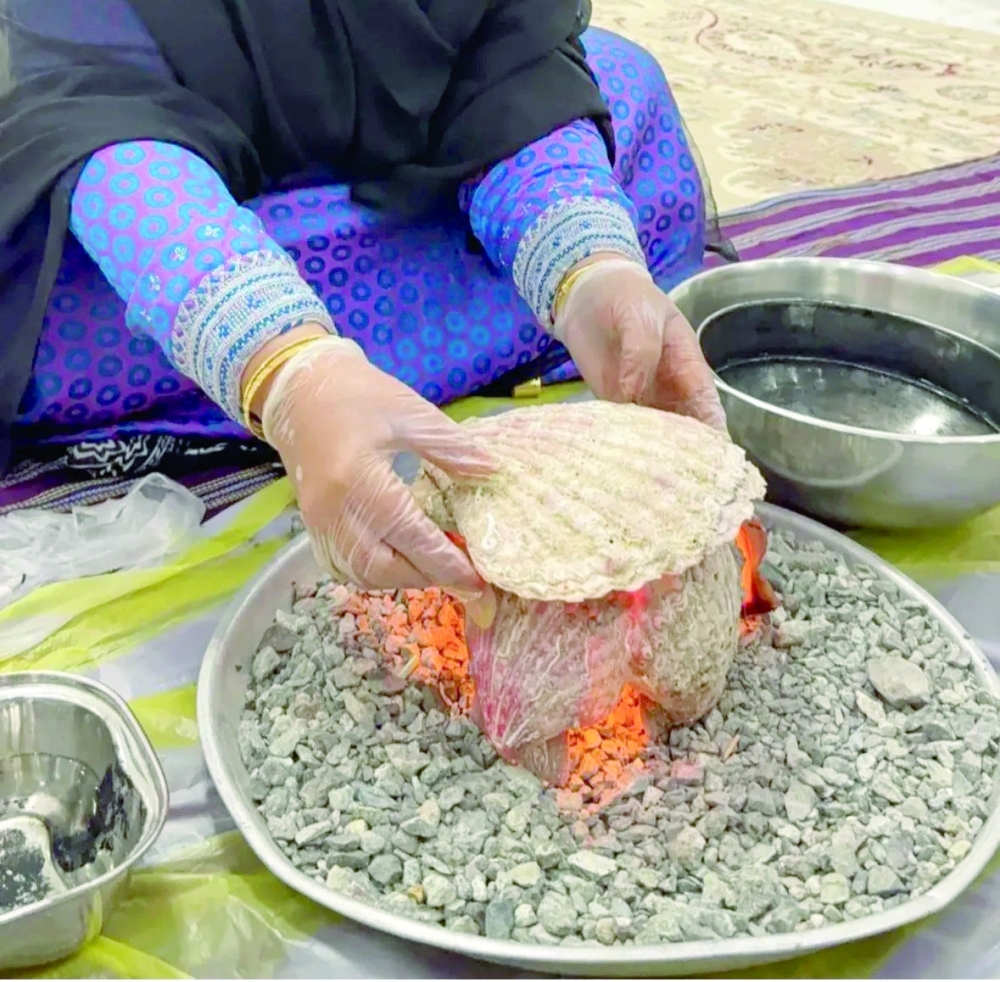
The preparation process is both detailed and demanding, requiring patience and precision. It consists of five main stages. The whale liver is first collected and melted to extract the oil. The oil is then poured into a clean clay container or sea shells, where a cotton wick is placed and lit. The container is covered with shells or pottery to trap the smoke. The black soot produced by the burning oil collects on the inner surface of the cover and becomes the base kohl powder.
In the following stage, cow butter is melted and mixed with a measured amount of clean water. The collected black powder is then added gradually until the mixture forms a cohesive dough.
Khusayfa stresses that accurate measurements are essential to achieve the right consistency. Finally, the mixture is shaped into small round pieces and placed into specially prepared kohl containers, marking the completion of the process.
While the purpose and method of using kohl have remained largely unchanged over time, the challenges surrounding its production have increased. The craft is entirely handmade and requires significant effort.
In addition, sourcing containers and application tools from outside the island of Masirah adds to the cost and time involved. Marketing the product also presents difficulties, particularly in reaching younger audiences.
When young people learn that kohl is produced using traditional methods from whale liver, their reactions are often a mix of curiosity and surprise. With further explanation of its benefits and preparation, interest tends to grow. While some immediately appreciate its authenticity, others need time to build trust.
Khusayfa believes that Omani women play a crucial role in protecting such crafts from disappearing. She calls on women to show greater interest in their heritage, preserve it and contribute to its development and promotion.
Her message to future generations is clear: safeguarding traditional crafts is a responsibility tied to identity and history. She encourages youngsters to protect their heritage, develop it responsibly and share it with the world.
Khusayfa also expresses her readiness to conduct training workshops for youth, ensuring that this rare craft continues to live on.
Oman Observer is now on the WhatsApp channel. Click here