




MUSCAT: The United Nations Industrial Development Organization (Unido) has welcomed Oman’s ratification of a landmark international agreement that calls for the removal and replacement of climate-warming hydroflourocarbons (HFCs) currently used in the refrigeration and air-conditioning industry globally.
Royal Decree 37/2024, issued by His Majesty Sultan Haitham bin Tarik in September, ratifies the Kigali Amendment of the Montreal Protocol on Substances that Deplete the Ozone Layer.
In effect, the Sultanate of Oman became the 162nd party globally to ratify the Kigali Amendment. It also joined fellow GCC member states - the United Arab Emirates, Bahrain and Kuwait - in the endorsement of the key convention on HFCs.
Welcoming Oman’s decision, UNIDO – the implementing agency of the Montreal Protocol – said: “Congratulations to the Sultanate of Oman! With this ratification, Oman commits itself to reduce the consumption and production of Hydrofluorocarbons (HFCs), potent greenhouse gases by more than 80% over the next 30 years and adopting sustainable cooling technologies.”
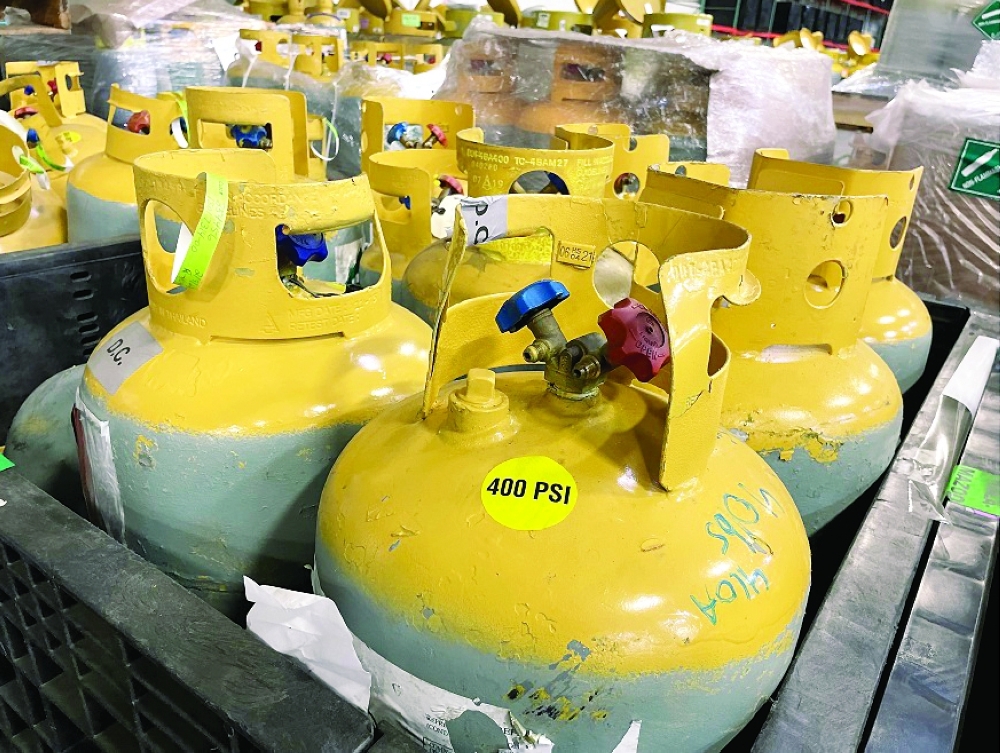
HFCs are described as a group of chemicals primarily used as refrigerants for air-conditioning and cooling. Their use became commonplace in the early 1990s as an alternative to Hydrochlorofluorocarbons (HCFCs), which were found to damage the ozone layer. But as evidence grew over the role of HFCs as climate-warming greenhouse gases – far more potent than CO2 – the international community agreed to phase-out HFCs as well, a commitment enshrined in the Kigali Agreement.
As a signatory, Oman is now required to freeze HFC production by 2028 and reduce its HFC consumption by 85 per cent by 2047, compared to its average HFC consumption from 2024 to 2026. Oman is also required to reduce its HCFC consumption by 65 per cent compared to its baseline average consumption in 2009 and 2010.
According to Unido, global implementation of the Kigali Amendment will prevent up to 80 billion metric tonnes of CO2 equivalent emissions by 2050. Full implementation of the Amendment is also expected to avoid up to 0.5°C of global warming by the end of this century.
Pledging to support Oman in the protracted drive to reduce HFC consumption, Unido said: “The United Nations Industrial Development Organization (Unido) works with Oman to complete various projects, including the HCFC Phase-Out Management Plan (HPMP), project related to Institutional Strengthening under the Montreal Protocol and others supported by Green Climate Fund and Global Environment Facility.”
It further added: “As an implementing agency of the Montreal Protocol, Unido supports its member states on their path towards successful implementation of the Kigali Amendment. We look forward to our continuing strong collaboration with Oman to ensure a healthy and clean environment for all Omanis for many generations to come!”
Oman Observer is now on the WhatsApp channel. Click here