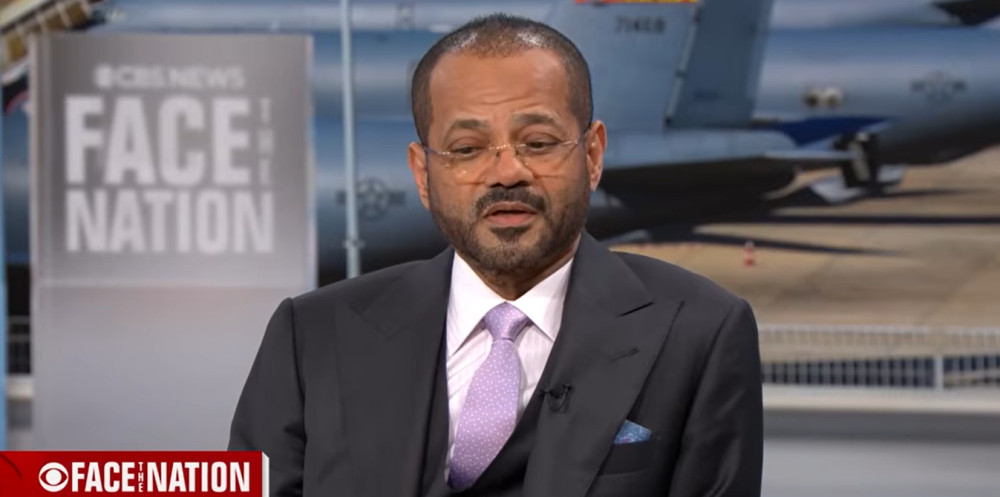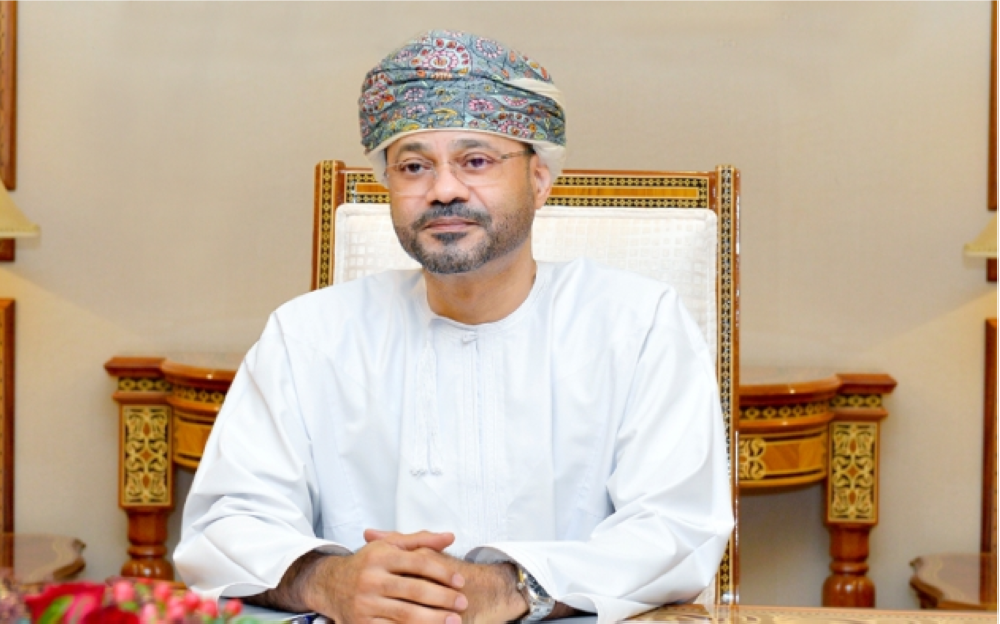





Paris: Sayyid Badr bin Hamad al Busaidi, Foreign Minister, stated that the war on Iran has revealed the need for a comprehensive review of the security architecture of the Gulf region, and a transition from the policy of "containment" that governed regional arrangements over the past decades to a system based on the inclusion of all countries in the region and their assumption of responsibility for their shared security.
Al Busaidi added, in an article published by the French newspaper Le Monde, that the peoples of the Sultanate of Oman and the Gulf nations are living under the weight of the consequences of a war that should never have occurred, expressing hope that current developments will lead to an actual end to the conflict, rather than a mere temporary halt in military operations that could collapse at any time.
He explained that one of the priorities currently on the table is to establish a permanent framework that guarantees the freedom of navigation in the Strait of Hormuz, pointing to the special responsibility that the Sultanate of Oman bears in this file, as it is, alongside Iran, one of the countries whose territorial waters border the strait.
The Foreign Minister stressed the necessity for the Sultanate of Oman and Iran, in cooperation with the international community, to formulate realistic, sustainable, and international law-compliant arrangements that guarantee freedom of passage and protect maritime navigation in this corridor, which represents one of the primary pillars of global trade and economy.
In this context, he praised the constructive role undertaken by France in the discussions related to the future of navigation in the Strait of Hormuz, but stressed that addressing the situation of the strait should be part of a broader strategic vision that includes the Gulf and its connected maritime corridors.
The Foreign Minister noted that the security system formed in the Gulf since 1979 was based on the premise that Iran is considered an existential threat to the region and Western interests—a premise he described as having been fundamentally flawed.
He pointed out that past decades have witnessed massive military spending, the expansion of US bases in the region, and the entrenchment of a security system dependent on external protection, without this leading to the building of sustainable security or preventing the outbreak of wars and crises.
Sayyid Badr bin Hamad al Busaidi, the Foreign Minister, said that the recent war revealed the extent to which the policy of containment was an illusion, adding that the sources of greatest danger to Gulf security often stem from decisions made outside the region, particularly from Tel Aviv.
Al Busaidi raised questions regarding how the Gulf security system could be rebuilt in light of these transformations, emphasizing that any future structure cannot exclude any of the eight countries bordering the Gulf, namely the six GCC countries, in addition to Iran and Iraq.
He added that each of these countries has vital interests and responsibilities commensurate with its capabilities and priorities; thus, all of them must participate in designing, implementing, and bearing the obligations arising from the new regional system.
He explained that this transition will require frank and perhaps difficult discussions, as well as a review of some of the established norms that have governed regional and international relations for decades, with the aim of distinguishing between partnerships that enhance Gulf security and those that may create vulnerabilities or new sources of tension.
In this framework, he called for a balanced review of relations with international partners, notably the United States, pointing out that the goal is not to abandon historic and deep-rooted relations, but rather to rebalance them in a manner consistent with the strategic realities revealed by the war.
The Foreign Minister questioned what constructive role friendly nations, including the United States, could play if inclusion, rather than containment, becomes the foundation upon which regional security cooperation is built.
He also stressed that Gulf security cannot be separated from the northwestern Indian Ocean, the Bab el-Mandeb Strait, the Red Sea, and the ports and sea lanes linked to the economic and logistical infrastructure of the region.
He said that the peoples of this vast geographical scope would benefit from the establishment of a legal and practical framework capable of protecting trade and navigation, and promoting sustainable stability and prosperity.
Sayyid Badr bin Hamad al Busaidi, Foreign Minister, described the war as a "disaster," noting that it broke out without a United Nations mandate and did not achieve the goals declared to justify it.
He concluded his article by emphasizing that hope remains that the repercussions of the war will lead to an end to the nearly half-century-old policy of containment, paving the way for a more just, realistic, and effective security system in the Gulf region.
Oman Observer is now on the WhatsApp channel. Click here