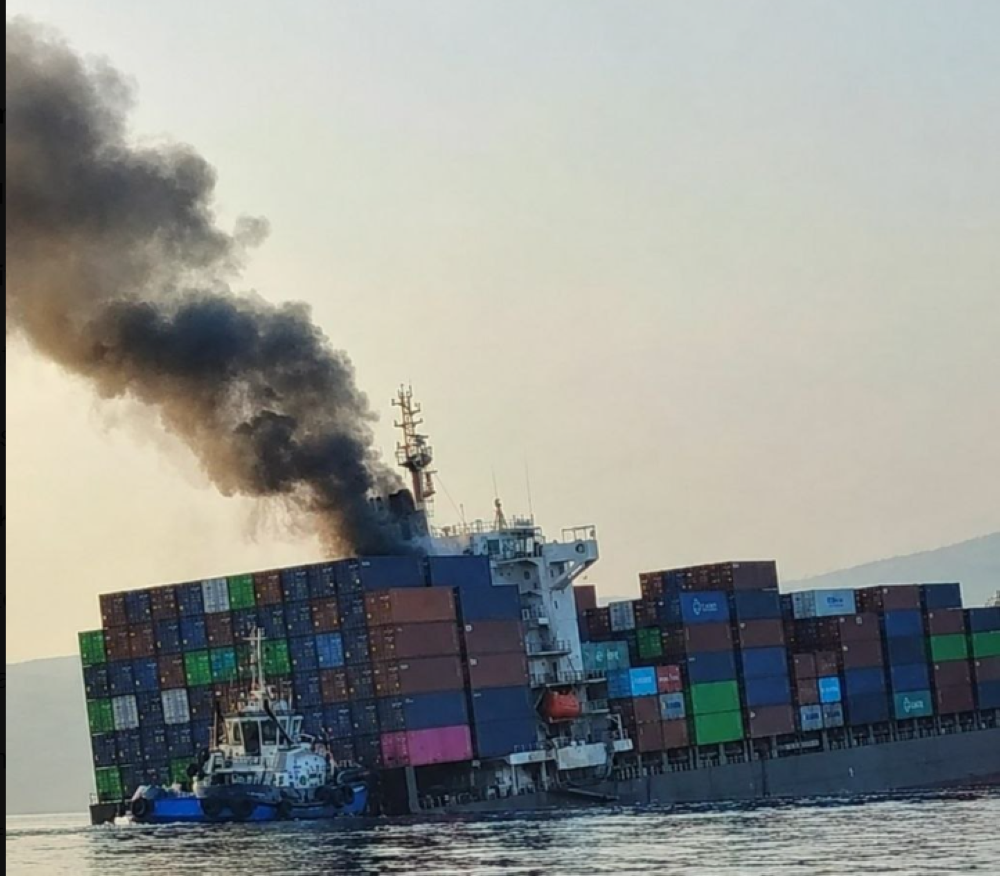
Avalanche, glacier collapse and mudslide: are we hearing about these disasters more often now? Is climate change getting a little too close for comfort?
Climate change is no longer just a topic to be discussed at conferences or debated in international forums. It seems to be getting increasingly difficult to keep it at a comfortable distance. If we look closely, someone, somewhere, is being affected — by drought, unexpected rainfall, floods, landslides or the collapse of glaciers.
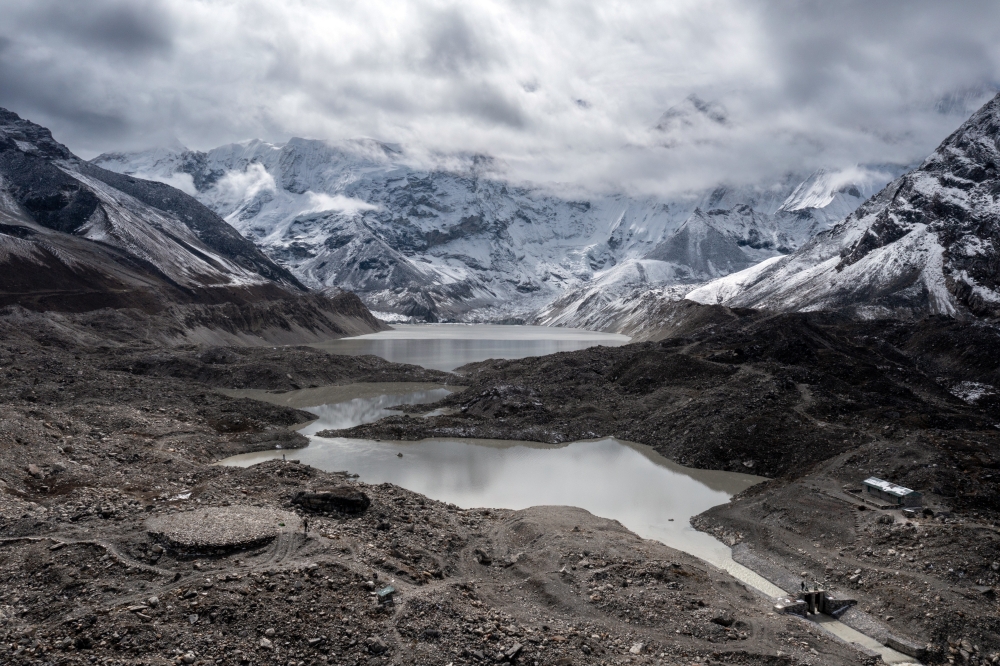
A large mass of ice and rock recently collapsed from a glacier high in the Himalayas, sending a powerful surge of water downstream through the Bhote Koshi River and into communities in northern Nepal. The resulting flash floods affected communities across Rasuwa, Nuwakot and Dhading districts.
Nepal’s Foreign Minister has called for a 'global effort' to tackle climate change, saying that his country is among those worst affected by rising temperatures.
Initially, experts thought the disaster might have been caused by an earthquake. Later, it was concluded that a glacier collapse was responsible. Glaciologists have long been studying how global warming is shrinking glaciers and how these changes can affect sea levels, water systems and natural disasters.
In the coming days and weeks, we will hopefully know more about what happened and what it tells us about a changing climate.
For now, the struggle is real and deeply personal.
According to Unicef, the flash floods in Nepal in August 2026 have left more than 17,000 children in need of urgent humanitarian assistance. The emotional turmoil is only beginning. Many people are still in shock while rescue and relief operations continue.
And while Nepal is dealing with the immediate consequences of a devastating disaster, Oman is looking at another side of the climate challenge: water security.
In Salalah, Oman is hosting the Water Resources Sustainability Seminar, 'Water and Climate Change' — a scientific platform bringing together experts and specialists to discuss water and climate challenges, examine solutions and explore technologies that can strengthen water security and resource sustainability.
The objectives are clear: to raise awareness about the importance of sustainable water resources in a changing climate; discuss the challenges facing water resources as a result of climatic impacts; present modern strategies and technologies for water sustainability; examine the role of national policies and partnerships in strengthening water security; and develop practical recommendations for long-term water sustainability.
Water is something we have taken for granted for generations.
We grew up with ponds, wells, springs, rivers and lakes as familiar sources of water. But water can also become the source of catastrophe. At the same time, in arid regions, seawater has increasingly become part of the solution.
What we once considered abundant is now something we have to think carefully about conserving and sustaining.
There is pressure from agriculture to ensure food security. There is pressure from growing populations and expanding cities. There is increasing industrial demand. And, alongside all of this, there is the fundamental need to protect the resource on which all of these activities depend.
That is why the Salalah seminar has focused on themes such as water-resource sustainability under climate change, water-resource management and planning for climate risks, modern technologies for ensuring water sustainability, and policies and partnerships supporting water security.
Presenting a paper on sustainable solutions to climate change and its impact on water resources, Hamad bin Khamis bin Rashid Al Hatmi of Oman Water Society pointed to the pressures created by rapid urban growth, population expansion, migration, changing lifestyles, and urban, industrial and agricultural development.
All of these trends are increasing demand for services and placing greater pressure on the environment.
He explained that rising temperatures and carbon pollution are also affecting the hydrological cycle and altering rainfall patterns in terms of both volume and frequency.
At the same time, water demand is increasing across different sectors, widening the gap between naturally available water resources and what people and industries require.
Growth, however, cannot simply be stopped.
The answer, as Al Hatmi suggested, is to learn to coexist with growth while finding ways to bridge the gap between available resources and rising demand.
There are opportunities to do this through conservation and modern technologies that can improve the efficiency and productivity of every cubic metre of water. Producing and reusing reclaimed water, for example, can reduce pressure on conventional sources.
Other solutions include continued research and development in seawater desalination, rainwater harvesting, artificial groundwater recharge and even the development of technologies associated with artificial rainmaking.
The concept of 'virtual water' — effectively importing water in the form of food and industrial products — is another part of the wider discussion.
But technology alone cannot solve the problem.
Wise and integrated management of watersheds is also essential. Mathematical models and artificial intelligence can help monitor entire catchment areas, from mountain peaks to the points where water eventually reaches seas or deserts.
This means understanding the water balance of each catchment area and continuously monitoring both water quantity and quality — rainfall, water stored in dams, groundwater recharge, renewable water volumes and, importantly, water demand.
The goal is simple: prevent unnecessary depletion and stop the gap between supply and demand from becoming wider.
Yet, amid all the talk of sophisticated technologies and large-scale solutions, perhaps we should also look at something much simpler.
But climate change is made up of enormous global forces — and our response to it is also made up of millions of small decisions.
The glacier collapse in the Himalayas may seem very far away from Oman. The floods in Nepal may seem like someone else’s tragedy. But the question of water is not far away at all.
Perhaps climate change has not suddenly arrived at our doorstep.
Perhaps it has been knocking for quite some time. The question is whether we are finally listening? Most importantly, are we ready to take personal actions?
Oman Observer is now on the WhatsApp channel. Click here