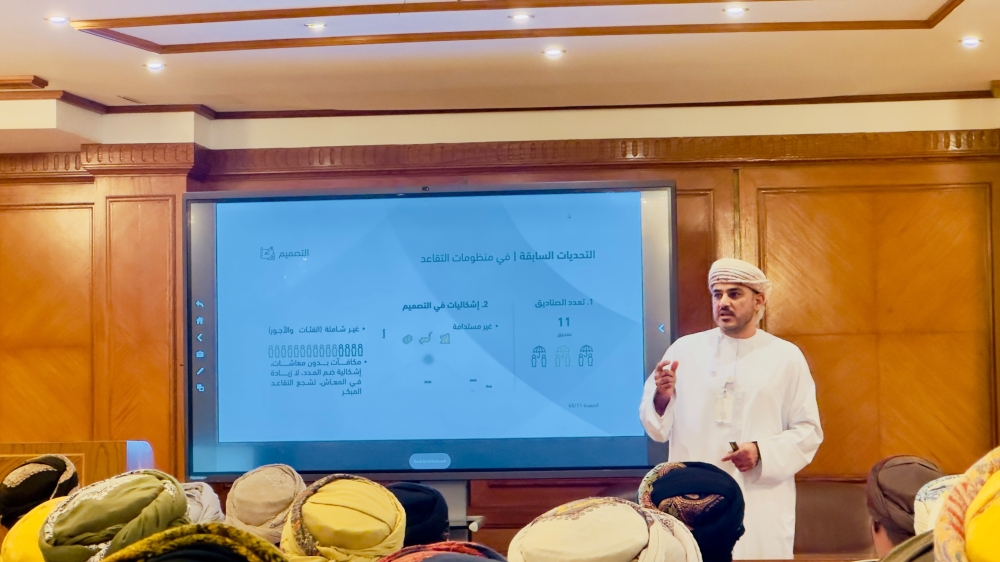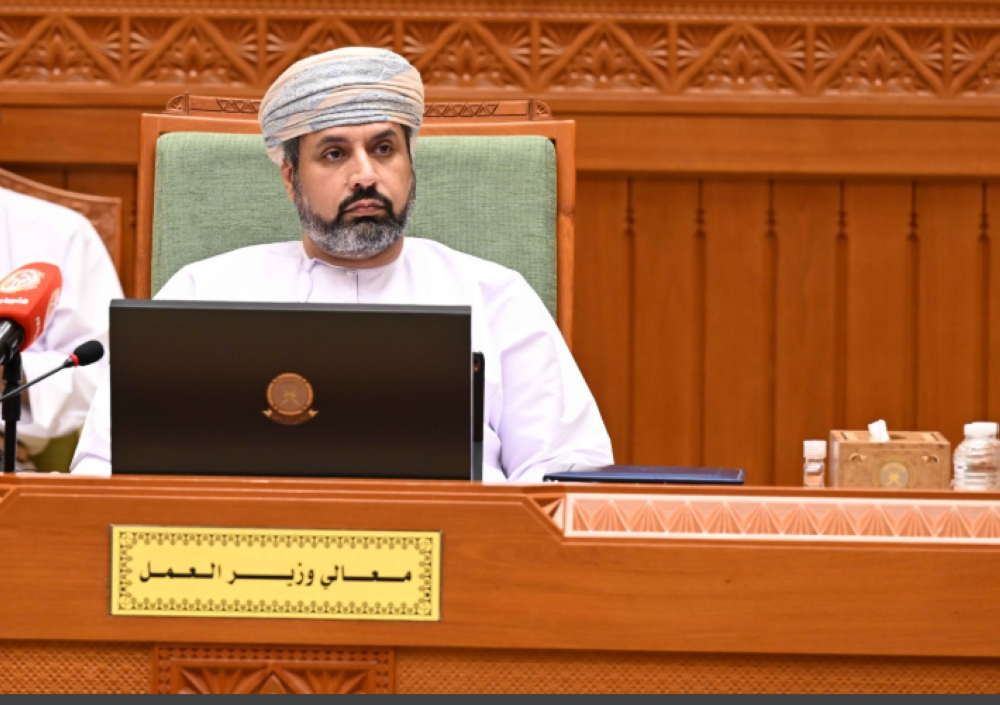





The Ministry of Labour on Sunday unveiled the regulatory framework governing the practice of recruiting non-Omani manpower. The move aims to organise the activity of recruitment offices within a clear legal framework, raise the sector's efficiency and the quality of services provided, and enhance the protection of the rights of employers and workers, in a manner that contributes to building a clear and balanced contractual relationship among the various parties and supports the stability of the labour market.
Dr Saif bin Mohammed al Busaidi, Adviser to the Minister of Labour for Labour Welfare, said that the framework represents a regulatory step to develop the non-Omani manpower recruitment sector, raise the quality of services provided and enhance the reliability of recruitment offices, ensuring clarity in the contractual relationship between the office, the employer and the worker.
He added that the new regulation focuses on creating a clearer framework for rights and obligations, through the adoption of unified contracts and forms and the specification of clear periods and procedures for the recruitment process, alongside the establishment of financial guarantees and dispute-resolution mechanisms, in a manner that contributes to protecting the parties to the relationship and curbing unregulated practices.
He noted that the framework also strengthens oversight of recruitment offices and sets out a set of requirements aimed at raising the level of professionalism in practising the activity. He affirmed the importance of offices' compliance with the specified controls, which is reflected in the quality of services and the stability of the labour market.
The framework includes a range of new regulations and requirements for practising the activity of recruiting non-Omani manpower. They include restricting the activity to offices licensed by the Ministry of Labour, adopting unified contracts and forms that ensure clarity of obligations and establishing a register of licensed offices that enhances transparency and organises the relationship between recruitment offices, employers and workers.
The framework requires, for obtaining a licence, that the owner of the establishment, the partners and those authorised to sign be an Omani, that the owner of the establishment or one of the partners be a dedicated full-time person to manage the activity and registered with the Ministry of Labour as an employer, alongside registration with the Authority for Small and Medium Enterprises Development and the submission of a financial guarantee of RO 5,000 to be deposited in the Ministry of Labour's account.
The financial guarantee aims to raise the reliability of recruitment offices and to make it available for fulfilling the office's contractual obligations and protecting the rights of employers and workers in the event of any breach of obligations.
The framework also obliges the office to provide suitable premises for practising the activity and appropriate housing for workers and to comply with occupational safety and health requirements, in a manner that contributes to raising the quality of services and enhancing reliability in the recruitment sector.
With regard to employers, the framework includes the adoption of unified recruitment contracts approved by the Ministry of Labour, a guarantee of recruitment service for a period of two years, alongside the specification of a clear period for recruiting the worker not exceeding 45 days, thereby enhancing clarity of obligations and raising the efficiency of recruitment procedures.
The framework devotes attention to protecting the rights of workers, as it prohibits the collection of any sums from the worker in return for recruitment, and obliges the office to provide housing and care for the worker during the period he remains with it, in addition to mandating the existence of a job offer for the worker prior to recruitment that includes the wage and the nature of the work.
It also prohibits the licensee from promoting or offering the services of non-Omani workers, within the framework of organising the practice of the activity and curbing practices that may affect the rights of workers and the integrity of the labour market.
The framework includes special regulation for the settlement of disputes among the parties to the relationship, by enabling the disputing parties to report to the Ministry of Labour to settle the dispute, specifying time periods for handling disputes and ensuring the implementation of financial obligations among the parties, thereby enhancing stability in the contractual relationship and contributing to the speedy resolution of differences.
The framework also strengthens oversight of recruitment offices by monitoring the performance of licensed offices, ensuring their compliance with the rights of employers and workers and establishing regulatory procedures to address violations.
The framework includes a set of facilitations for owners of recruitment offices, foremost among them reducing the licensing fee to RO 300 for a period of two years, increasing the number of temporary licences to 25 and the possibility of opening branches for offices after one year has passed from obtaining the licence, with the mandatory appointment of an Omani manager for the new branch.
It also includes the distribution of the study of activity licence applications according to the geographical dimension of the directorates and labour departments affiliated with the Ministry of Labour, in a manner that contributes to organising the licensing process and facilitating procedures related to practising the activity.
The framework aims to raise the level of professionalism and reliability in the non-Omani manpower recruitment sector, improve the quality of services provided to the community and enhance a clear and fair contractual relationship between employers, workers and recruitment offices, in support of the stability of the labour market and the raising of confidence in recruitment services. — ONA
Oman Observer is now on the WhatsApp channel. Click here