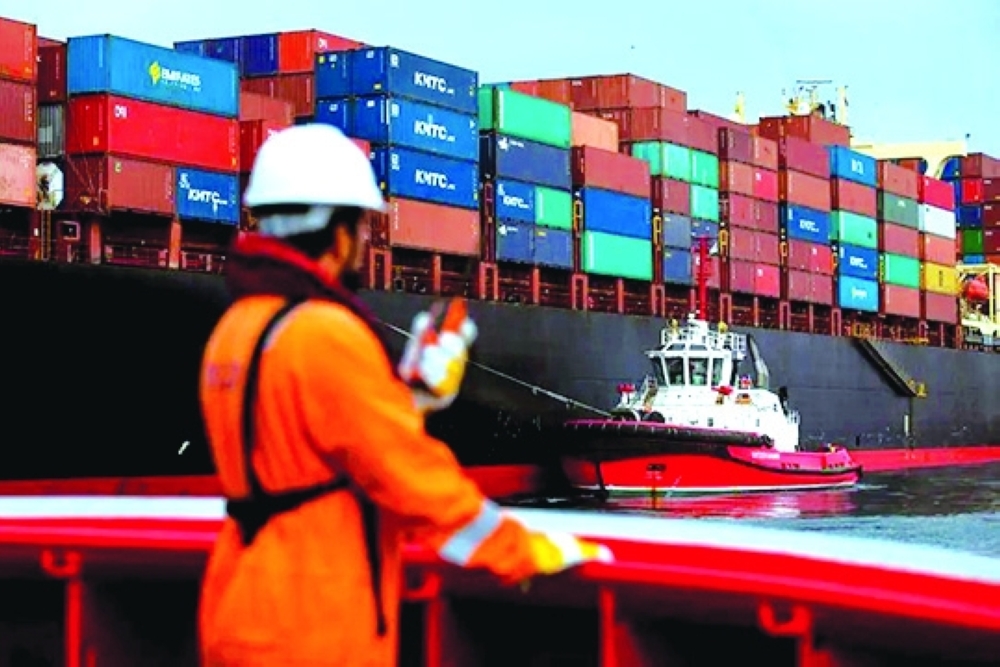
For decades, legacy supply chains were built on a simple logic of linear efficiency and abundance. A linear supply chain is the straight sequential movement of goods from the producer to the consumer. The approach was to concentrate manufacturing in the lowest-cost regions and rely heavily on a small number of dominant ports and chokepoints. The global supply chain was defined by scale, cost optimisation and globalisation.
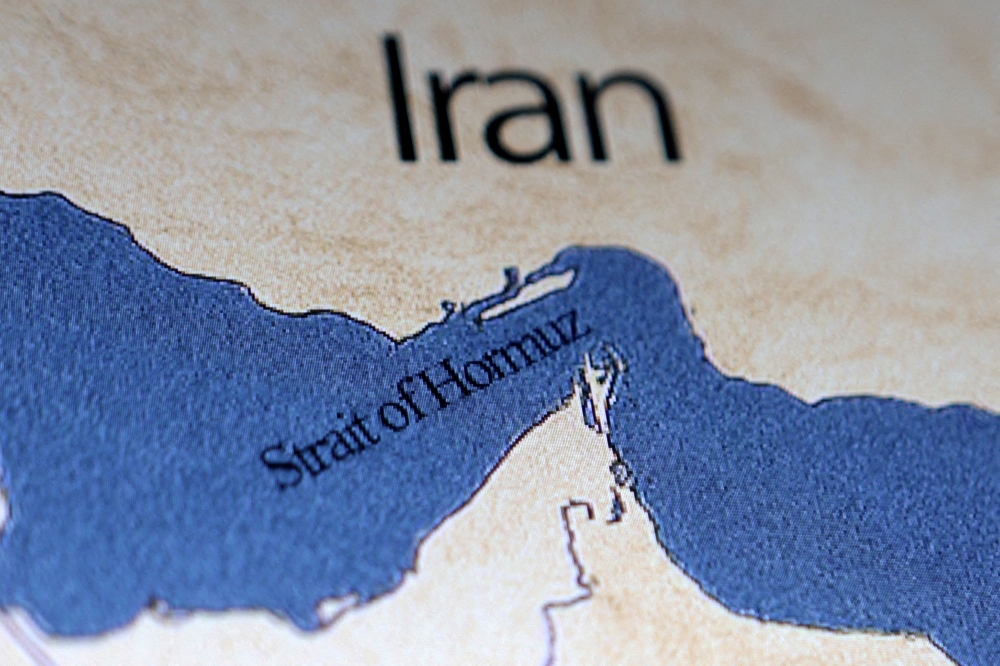
Earlier pillars of the global supply chain, such as institutional stability, network predictability and open trade, have now become fragile and unpredictable. The global supply chains have entered a new era of structural volatility. Disruptions in the Red Sea and the Panama Canal forced hundreds of billions of dollars in trade flows to be diverted and contributed to a sharp increase in container shipping rates.
Globalisation is undergoing a structural recalibration due to AI, automation, technological acceleration and protracted regional and international military conflicts. It is no longer viable to produce anywhere and transport everywhere under the dominant paradigm. Regional systems now manage structural instability by striking a balance between dependability and efficiency.
In such an environment, success belongs to those with agility, trustworthiness and digital foresight; and to those leaders who can perceive uncertainty as a source of advantage. Reports from leading global bodies such as the WEF, IMF, OECD and UN warn that technological asymmetry, geopolitics and economic divergence and disruption are now persistent features of the world economy. Against this backdrop, several structural changes are redefining the global supply chain:
According to recent multilateral forecasts, economic growth is projected to remain low, around 2.5-3%, with developing economies at around 4% and growth stagnating among the major trading partners. There is a paradigm shift from supply chasing demand to demand being shaped by constrained supply around local markets. Trade is splitting along geopolitical rather than geographic lines, a pattern the IMF calls geoeconomic fragmentation. Long and linear supply chains are evolving into digitally enabled ecosystems.
One of the visible structural changes is the fragmentation of supply networks. Practices such as reshoring — bringing production back in-house; nearshoring — moving production to a country that is geographically close to the home market; and dual sourcing — deliberately using two or more separate suppliers are becoming standard tools in supply chain strategies.
These moves are supported by AI-driven forecasting and advanced analytics. The global supply chain is shifting from a single efficient network to a more resilient, focused network of trusted partners.
While trust has always influenced supply chain relationships, it now emerges as a performance metric, with geopolitical rivalry and the erosion of public trust in institutions putting leaders under intense scrutiny. Accountability, transparency and secure data sharing are becoming the core currency in partner relationships across the supply chain ecosystem.
Technology is accelerating at a speed and scale never imagined before, with AI and automation already reshaping planning, logistics and production; and emerging technologies such as quantum computing poised to transform optimisation and security further. A new digital divide is emerging between the few powerhouses and others with data and emerging dependencies. Some research shows that early adopters are achieving logistics cost reduction and lower inventory levels, making this a key differentiator and widening the divergence.
Geopolitical escalations have ushered in a period of deep instability and volatility, with prolonged armed conflicts in Ukraine and multiple flashpoints in the Middle East and escalating military tensions in East Asia. Globalisation is now being increasingly shaped by two main blocs: the US-led bloc and the China-led bloc, with the EU as a potential third bloc. Though the EU largely aligns with the US, it seeks to act as an autonomous geopolitical pole.
Many other countries that are not aligned with either bloc occupy the space between these countries and are called swing countries. These swing states have now become a bridge between the two blocs. Notable examples include India, Vietnam and the Gulf States.
These forces are individually disruptive and collectively rewriting the structure of global supply chains. These overlapping conditions are shaping the leaders' decisions across industries and geographies. As the global value chain becomes more transactional, volatile and fragmented, leaders need to evaluate risks, assess opportunities and assess operating conditions with greater precision and speed.
Oman Observer is now on the WhatsApp channel. Click here