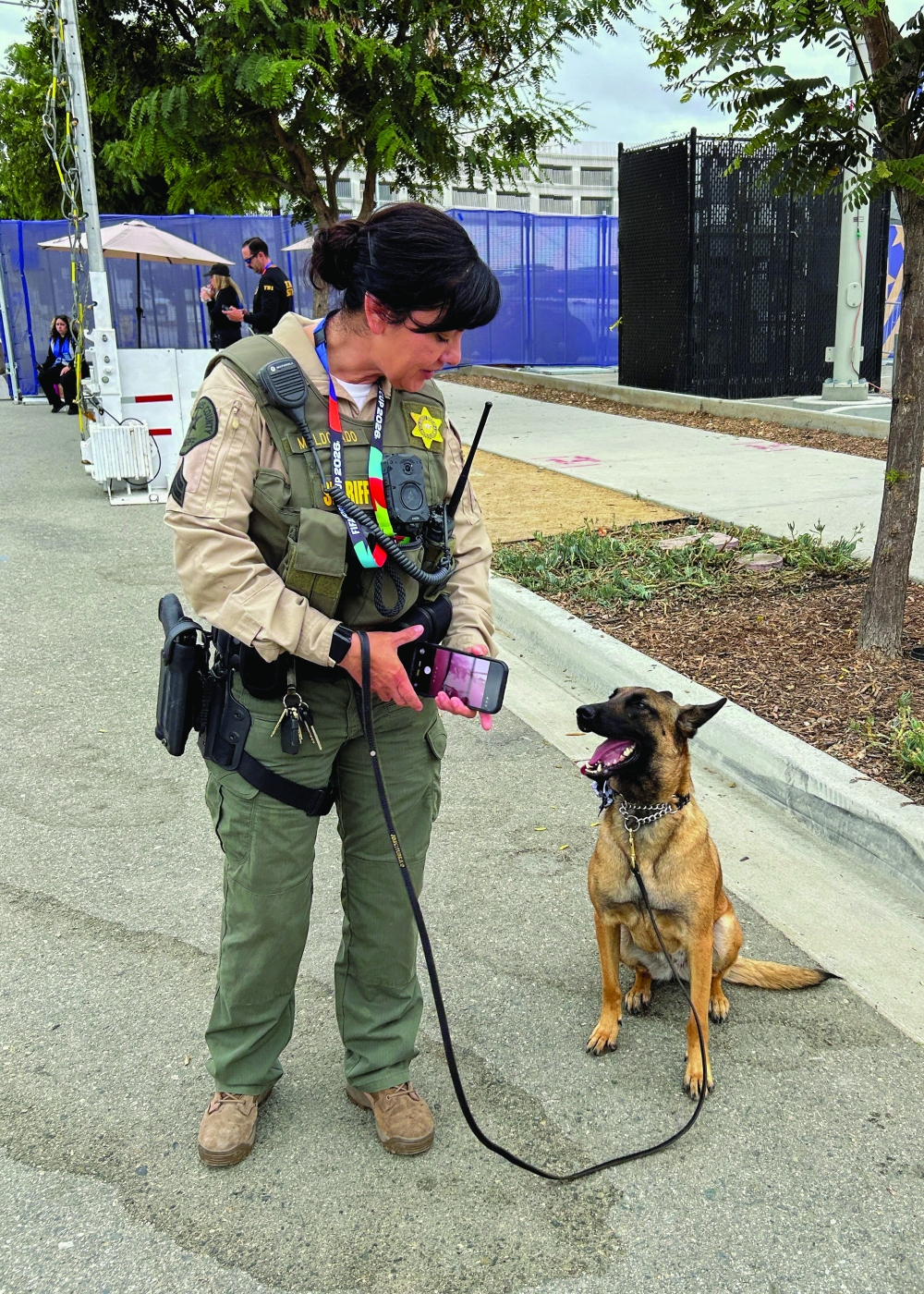





INGLEWOOD: Kali, a sweet and well-behaved five-year-old Labrador Retriever, is not scaring anybody. She also is not letting anyone sneak into the Los Angeles Stadium with explosives, fireworks, firearms or other sniffable threats at the World Cup.
Stationed near one of the stadium entrances, Kali was among hundreds of police and security dogs marshalled across North America to provide a first line of defence against potential threats.
About 300 of Allied Universal Enhanced Protection Services' 1,000 dog teams have been employed in World Cup security, according to company president Glen Kucera.
The scale of the World Cup co-hosted by the US, Canada and Mexico has presented challenges for security organisers. Not only have there been matches at stadiums in 16 cities in the three countries, but security has been needed for training grounds, hotels and transportation routes.
SNIFFER DOGS ON PATROL
Kali represents the Federal Bureau of Alcohol, Tobacco, Firearms and Explosives and has a keen nose for things that could go boom. Dogs from the L A County Sheriff's Department were nearby, while private security teams patrolled the perimeter with dogs sniffing vehicles.
Anybody going into the stadium was going to have to pass close by a public safety dog.
"That's the point. Everybody attending is likely to realise they're being assessed by the nose of a security dog, something which provides a key deterrent to a terrorist or any other person planning something dangerous," Kucera said. "Ninety-five per cent of what we do is a visual deterrent."
Not all security risks are from terror threats. Fans in many countries commonly celebrate goals or wins with fireworks, so security officials were keen to stop such items being brought into stadiums by well-meaning supporters.
Across the tournament, security organisers have been keen to both provide the visual security of dogs and make fans from across the globe feel comfortable.
Kucera said that was why his firm had used mostly friendly dogs like Labradors to provide security, rather than German Shepherds or more intimidating breeds.
Different countries and cities provided different canine approaches. In Guadalajara, Mexico, robot dogs helped sniff out explosive threats. In Vancouver, Canadian agencies developed a multi-layered strategy to make dogs a key part of detecting threats.
So far everything has gone well. Reuters found that not one dog approached was unwilling to sit like a good boy or girl to have their picture taken. — Reuters
Oman Observer is now on the WhatsApp channel. Click here