




There is a silent question that walks through every city, every village, and every economy. It is a question that statistics alone cannot answer. Why do some families wake up every morning with purpose, while others wake up with uncertainty? Why do some households become engines of economic growth, while others remain spectators of the very economy they help sustain?
Economics is often presented as a science of numbers, graphs, inflation, interest rates, and GDP. Yet behind every percentage lies a human story. Every unemployment figure represents a father searching for work, a graduate waiting for an opportunity, or a family wondering how tomorrow's expenses will be paid. Numbers may describe an economy, but people define it.
The Italian economist Vilfredo Pareto observed more than a century ago that a small proportion of society owned most of the wealth. His famous 80/20 principle continues to appear across the world. In many countries, a relatively small segment of society controls a substantial share of national wealth, productive assets, and investment opportunities. Whether the ratio is exactly 80/20 or not is less important than the message it conveys: wealth naturally tends to concentrate unless opportunities are widely shared.
This concentration of wealth has led many economists to describe what may be called an elite economy—an economy where prosperity circulates within a limited circle while large sections of society struggle merely to participate in economic life.
Thomas Piketty reminds us that when the return on capital grows faster than the economy itself, wealth accumulates in the hands of those who already own assets. Joseph Stiglitz argues that inequality is often reinforced not only by markets but also by institutions that favour those with greater economic influence.
C. Wright Mills, in his theory of the Power Elite, further suggests that economic power eventually translates into political and institutional influence, allowing privilege to reproduce itself across generations.
Yet the real consequences of the elite economy become clearer when viewed through ordinary families rather than academic theories.
Imagine two families living in the same neighbourhood. In the first family, every member contributes to the economy. The father works. The mother works. The son has a job. The daughter is employed. Even the brother and sister earn their own incomes. Together they receive salaries, pay taxes, contribute to pension funds, purchase goods and services, repay loans, invest in education, and support local businesses. Their income circulates through the economy, increasing consumption, stimulating demand, and contributing to national output. In economic terms, they strengthen aggregate demand, enhance labour productivity, and contribute directly to Gross Domestic Product (GDP).
Now imagine another family. The father is unemployed. The mother has no job. The son is searching for work. The daughter remains unemployed. The brother and sister also have no source of income. They own no commercial buildings, no factories, no investments, no rental properties, and no shares in listed companies. They have no productive assets capable of generating wealth. Their only hope lies in finding employment or depending upon government assistance or charitable support.
Now let’s ask as economists with difficult questions. Is the second family poor because they lack ambition, or because the economy has failed to provide them with an opportunity to participate?
Karl Marx argued that societies become divided between those who own productive resources and those who possess only their labour. Whether one agrees with his conclusions or not, the distinction remains relevant today. Ownership creates wealth; employment creates income. When neither exists, poverty becomes self-perpetuating.
This is where economic policymakers must move beyond celebrating GDP growth alone. Economic success should not be measured merely by the number of billionaires a country produces, nor by the height of its skyscrapers or the performance of its stock market.
A successful economy is one in which growth is inclusive, opportunities are accessible, and every household has a realistic chance to participate in production.
Daron Acemoglu and James Robinson, in their work on inclusive and extractive institutions, argue that nations prosper when economic opportunities are open to the majority rather than reserved for a privileged few.
Therefore, the responsibility of government extends beyond regulating inflation or balancing the national budget. Policymakers should pursue employment as vigorously as they pursue economic growth. Their objective should be clear: every household should have the opportunity for at least one member to participate in productive employment. This is not simply a social policy; it is an economic strategy.
Employment raises household income, expands consumption, increases tax revenues, reduces dependence on welfare, strengthens domestic demand, and promotes long-term social stability.
A nation should never aspire to become an economy where prosperity belongs only to an elite class. It should aspire to become an economy where every family has the opportunity to contribute, to earn with dignity, and to build a better future.
For an economy that grows without inclusion may become richer on paper, but poorer in justice, weaker in resilience, and divided in hope.
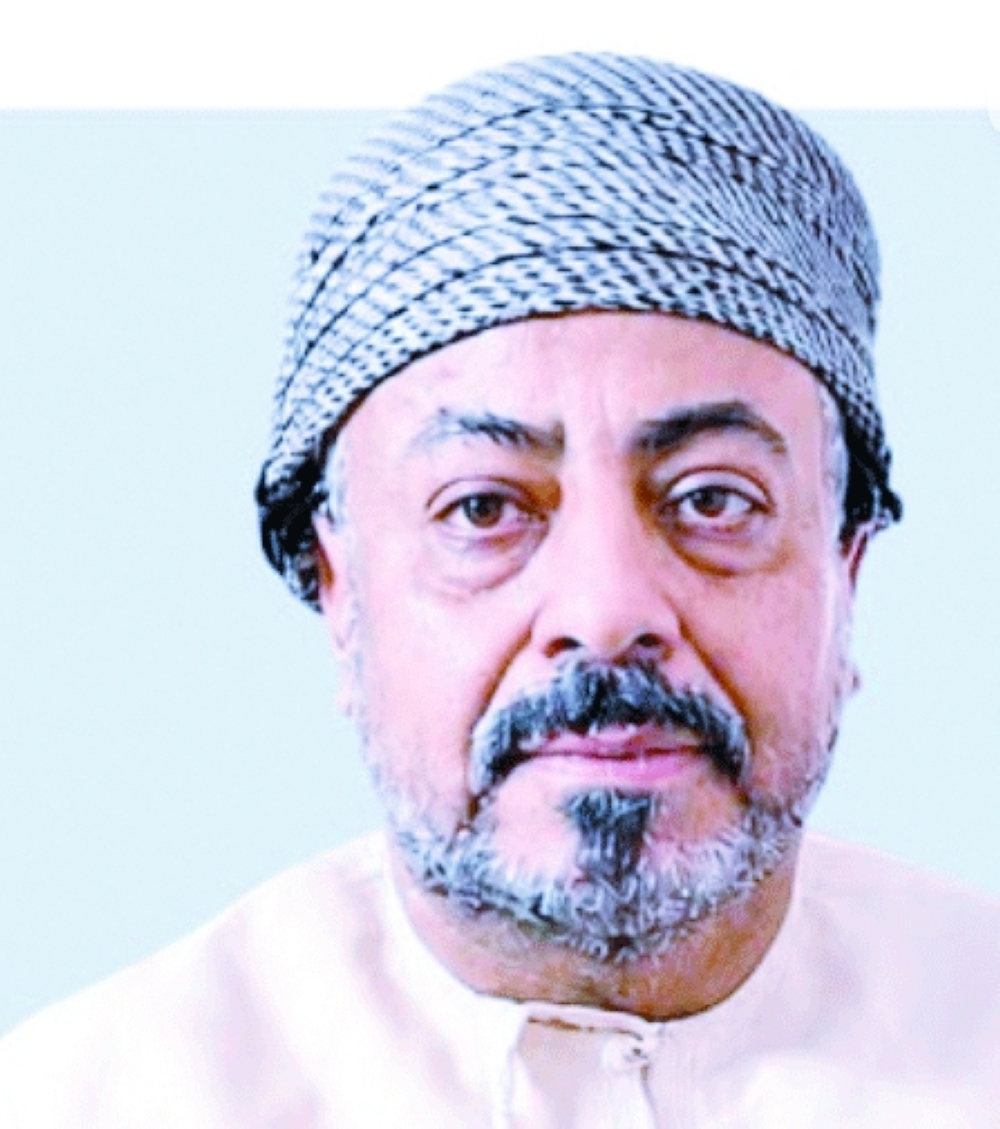
Mohammed Anwar Al Balushi
The author works at UTAS
Oman Observer is now on the WhatsApp channel. Click here