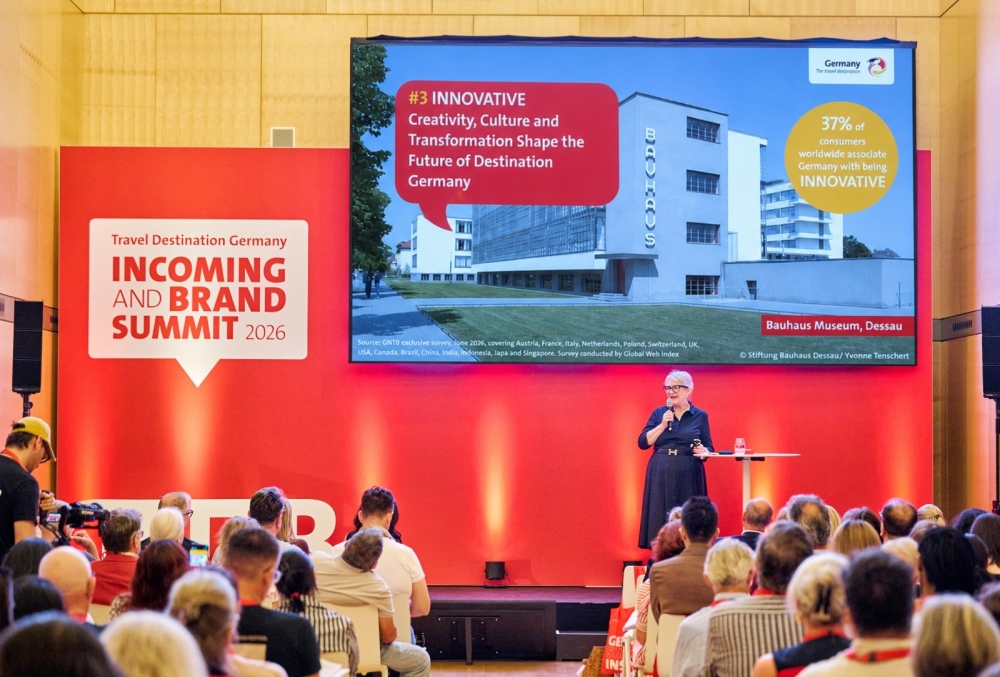





FRANKFURT AM MAIN : “Culture is an exceptionally strong asset for the Destination Germany brand – both in the major cities and in rural areas,” said Petra Hedorfer, Chief Executive Officer of the German National Tourist Board (GNTB), during her keynote address at the fifth GNTB Incoming & Brand Summit held in Frankfurt.
Speaking under the summit theme ‘Innovative. Authentic. Liveable”, Hedorfer highlighted how Germany is strengthening its global tourism profile by combining cultural heritage, regional traditions, natural landscapes and contemporary experiences to meet the changing expectations of international travellers.
“Brand values need to be constantly refined,” Hedorfer said, stressing the importance of connecting globally relevant cultural themes with market-specific campaigns and using digital innovations to make Germany’s attractions more visible and immersive.
“Our aim is to inspire regular visitors to return to Germany again and again, while at the same time making new target groups excited about Germany’s cultural proposition,” she added.
The summit brought together more than 70 travel and lifestyle journalists from over 25 countries, along with tourism experts and industry partners, to discuss the future direction of the Destination Germany brand and the role of innovation, authenticity and quality of life in attracting global visitors.
Hedorfer said Germany’s strong competitive position in international tourism is a result of the GNTB’s continuous adaptation to changing customer demands, international market conditions and the opportunities created by digital transformation.
“Today, Germany is one of the ten most popular travel destinations worldwide and, for more than a decade, has been firmly established among Europeans as the top destination for cultural travel,” she said.
Germany’s cultural appeal extends far beyond its major cities, with historic towns, villages, castles, palaces, abbeys, vineyards and cultural landscapes contributing significantly to the country’s global tourism identity. One in five overnight stays by international visitors in Germany takes place in rural areas, highlighting the growing importance of regional destinations in creating authentic travel experiences.
With 55 Unesco World Heritage sites, more than 6,000 museums, over 80 opera houses, internationally recognised music festivals, architectural landmarks and innovative design centres, Germany offers a diverse cultural portfolio for visitors.
A survey conducted by Appinio on behalf of the GNTB in August 2025 showed that cultural exploration remains one of the strongest motivations for international travellers. Around 50 per cent of potential visitors ranked discovering cultural heritage and sightseeing as their top priority when planning a trip to Germany. Experiencing local cuisine (44 per cent) and visiting museums and galleries (39 per cent) were among other leading interests.
The country’s cultural strength is also reflected in tourism performance. According to IPK International’s World Travel Monitor, Europeans made 198.8 million cultural trips worldwide in 2025, with 20.8 million choosing Germany. With a 10.5 per cent market share, Germany retained its position as Europe’s leading cultural travel destination for the eleventh consecutive year.
A central pillar of GNTB’s cultural tourism strategy is its partnership with the German Unesco World Heritage Sites Association, which has worked since 2010 to raise international awareness of Germany’s heritage treasures.
The GNTB’s global Unesco campaign in 2023 and 2024 promoted heritage destinations across 18 key markets through integrated digital and traditional marketing channels, including media campaigns, social media, search engine marketing and email outreach. The initiative also introduced augmented reality experiences for selected World Heritage sites.
Further advancing digital tourism, the GNTB developed the mixed reality application “Unesco World Heritage Sites in Germany”, allowing travellers to explore destinations through immersive technology. The application combines virtual experiences with travel information, themed routes and tourism offerings and was later integrated into Lufthansa’s in-flight entertainment system — making the GNTB the first national tourism board to introduce a VR application through an airline platform.
Through a strategic blend of cultural preservation, digital innovation and authentic regional storytelling, Germany continues to strengthen its position as a global destination where heritage meets modern creativity.
Oman Observer is now on the WhatsApp channel. Click here