




On April 6, the astronauts of Artemis II were able to catch a full view of the Mare Orientale, a dark, ringed 600-mile-wide crater that straddles the near and the far sides of the moon. Human eyes had never seen the whole basin before.
Everything to the crater’s left is the far side, the hemisphere we don’t get to see from Earth because the moon rotates on its axis at the same rate that it orbits around us.
Astronauts looked at the dark, smooth plains on its concentric impact rings, noting that there was more brown near the center of the multi-ring crater. To the naked eye, the basin looked like a plain or a plateau, but through the camera lens, the Artemis II crew members were able to distinguish colors from shadows.
Some 24 minutes into the flyby, the Artemis II crew began observing the South Pole-Aitken basin.
With an immense width of about 1,600 miles, it is the largest known impact crater in the solar system. These observations will help scientists find clues to the moon’s geological history.
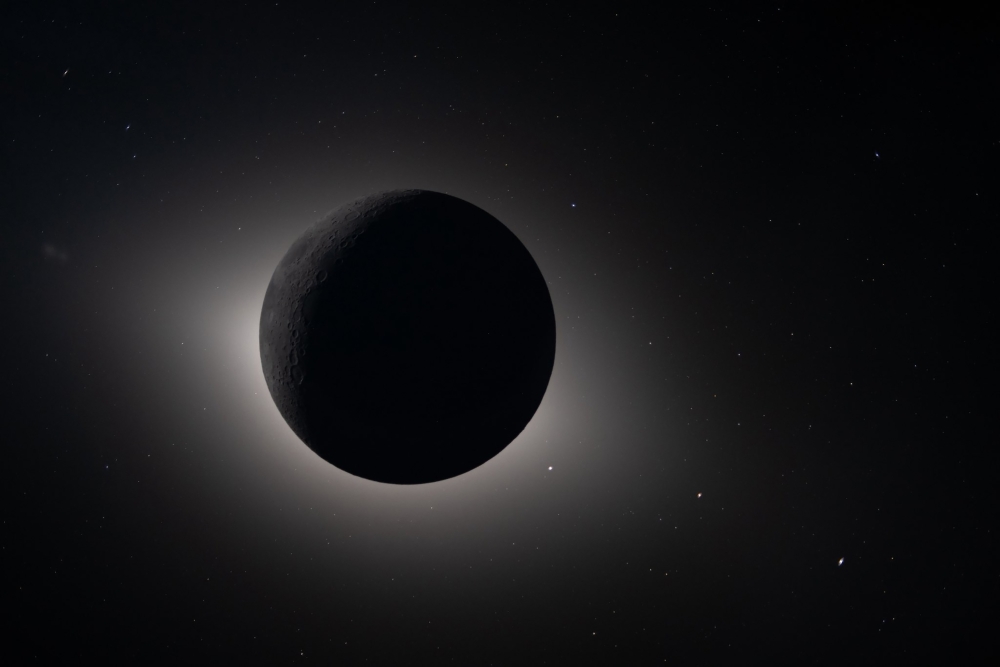
After Artemis II swung around the far side, the astronauts experienced a 53-minute solar eclipse.
They were able to observe the solar corona and get glimpses of a bright Venus, a reddish Mars far in the distance, and a Saturn with hints of orange.
The crew described the corona as similar to “baby hair” as the sun’s light intensified.
Then, Earth came into view over the moon’s edge, an event described as Earthrise when humans first saw it in 1968.
This article originally appeared in The New York Times.
Oman Observer is now on the WhatsApp channel. Click here