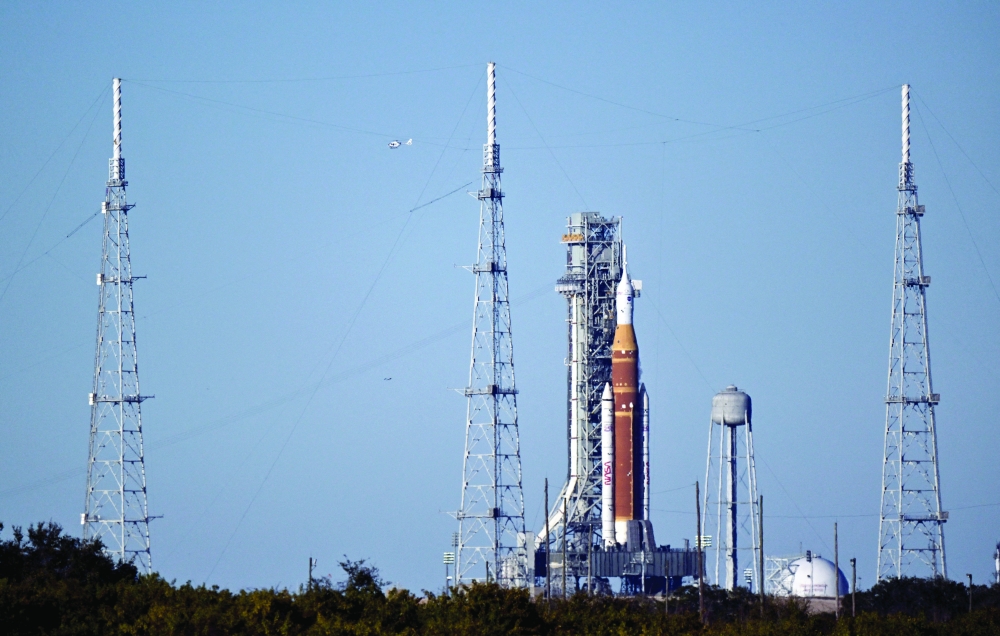





Washington: US space agency NASA is delaying its launch of the Artemis mission to the Moon until February after reporting issues during a test, administrator Jared Isaacman said on Tuesday.
"With the conclusion of the wet dress rehearsal today, we are moving off the February launch window and targeting March for the earliest possible launch of Artemis II," Isaacman wrote on X.
The mission is aiming to send humans close to the Moon for the first time since 1972, paving the way for future landings. The current launch window extends until April.
Various issues were recorded during Tuesday's dress rehearsal at Cape Canaveral in Florida, which is referred to as a "wet" rehearsal as it involved loading some 2.6 million litres of liquid propellant into the tanks. The issues included a "liquid hydrogen leak at a core stage interface during tanking," Isaacman said.
Other factors included "intermittent ground audio dropouts, and cold-weather impacts to some cameras." In addition to the launch teams on site, the control centre in Houston and other NASA centres were also involved in the test.
The crew — US astronauts Christina Koch, Victor Glover and Reid Wiseman and Canada's Jeremy Hansen — had been in preparatory quarantine in Texas for days.
Due to the delayed launch, they are now to be released from quarantine, according to NASA.
"Safety remains our top priority, for our astronauts, our workforce, our systems, and the public," Isaacman said. "We will only launch when we believe we are ready to undertake this historic mission."
The mission is the second in the multibillion-dollar Artemis moon program, following an uncrewed flight in 2022, and the first to carry astronauts around the moon in a 10-day journey to the farthest humans have ever ventured in space.
The leak took place in an interface "used to route the cryogenic propellant into the rocket’s core stage," NASA said, adding that it would release the astronauts, quarantined since January 21 for the anticipated launch. — Agencies
Oman Observer is now on the WhatsApp channel. Click here