


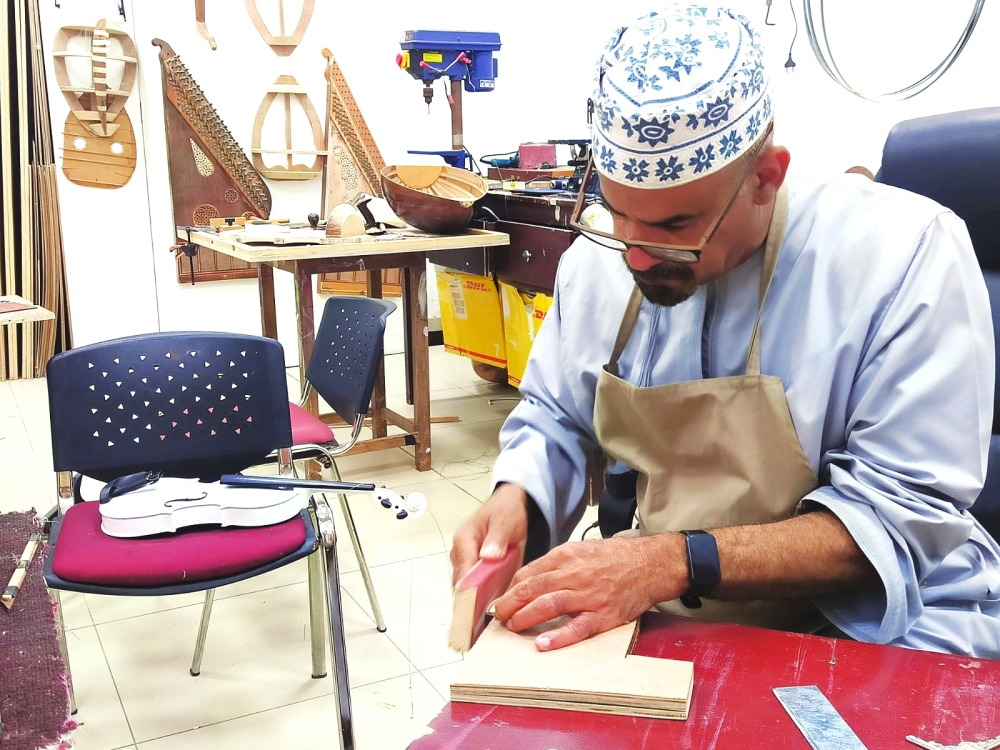





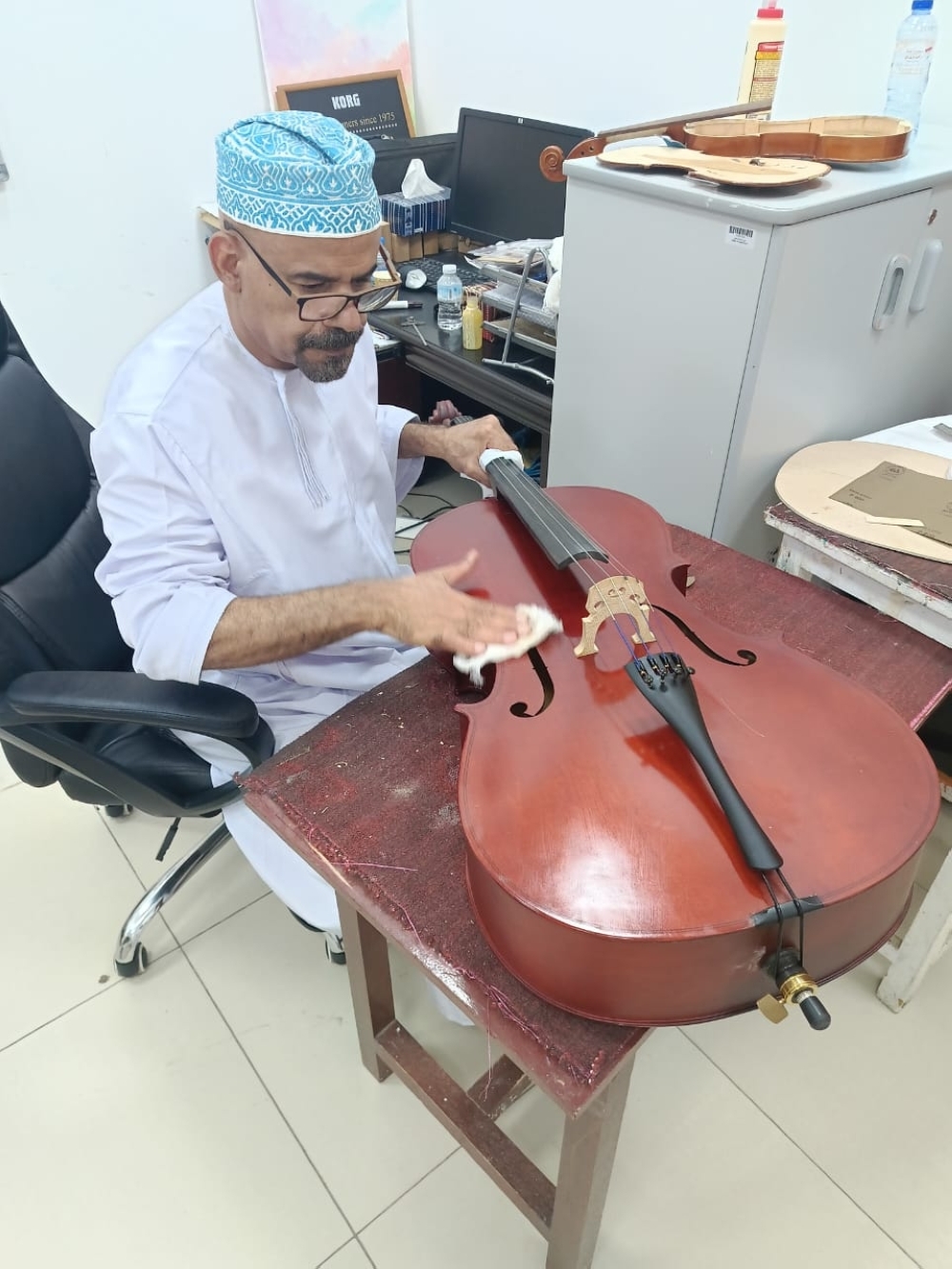
Musical instruments are the musician's soul. When a violin or an oud goes out of tune or a piano loses its luster, it can feel like losing a part of oneself. This is where the unsung heroes like Youssef bin Saeed al Azki who step in to breathe life back into these cherished companions.
Al Azki is one such a veteran luthier or a craftsperson who builds or repairs string instruments. Step into his instrument repair shop: the room is full of machines and frames and stringed beauties waiting for their turn to be reborn.
Al Azki's journey in this craft began over 30 years ago, driven by his passion for melodies. He started as a hobbyist in his youth and with continued encouragement from his family and friends, it evolved into a profession. He then honed his talent through research, study and training.
Al Azki focuses on using local, environmentally-friendly raw materials in the maintenance and repair of musical instruments, drawing on his skill in selecting and evaluating the woods used in crafting wooden instruments.
He hosts workshops, conducts training courses and encourages young people to engage in this art. He also makes the oud which is a traditional Omani stringed instrument using wood native to Oman.
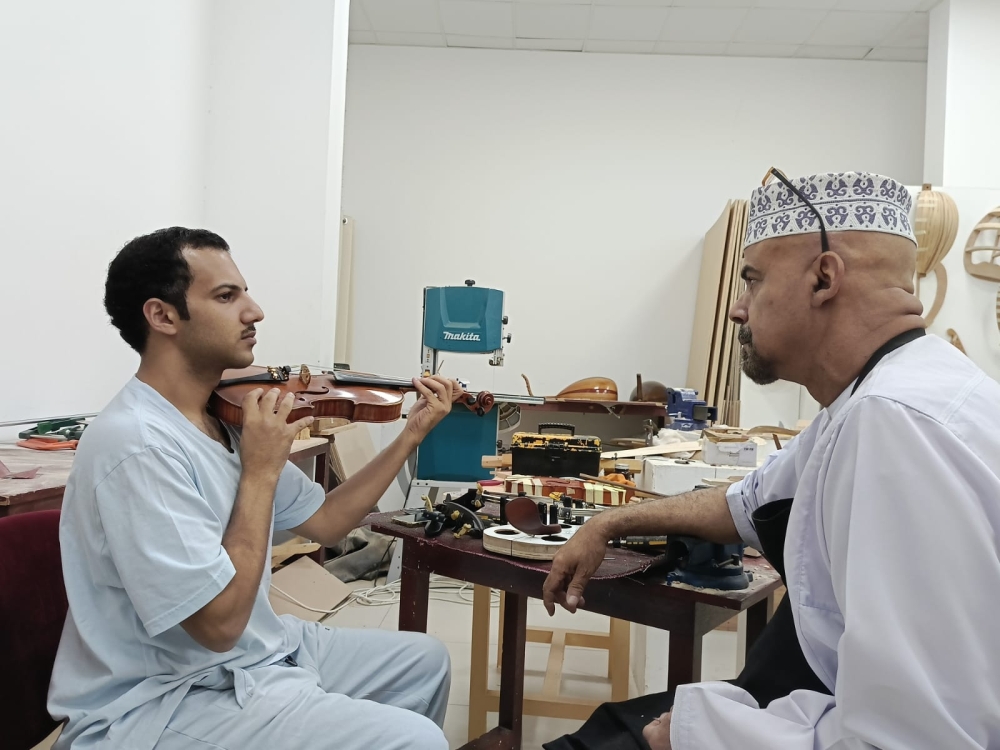
Al Azki clarified that his craft differs from others in terms of precision and innovation. While preserving the spirit and authenticity of the traditional craft, he also focuses on its acoustic performance and contemporary aesthetics.
The luthier said that the most prominent challenges he encountered were securing high-quality wood and hand tools, adhering to necessary standards and principles. He also noted the lack of specialists to help him overcome training obstacles and the absence of relationships with professional musicians at the beginning of his journey. Instrument making depends on reputation and making it competitive with other instruments in terms of tone accuracy, durability and aesthetic appeal.
Al Azki hopes to receive support from relevant authorities and seeks opportunities to contribute to the development and preservation of this craft. The importance of training lies in enhancing the efficiency of handcrafting and mastering precise acoustic calibration techniques to ensure high-quality musical output. It also involves keeping pace with modern woodworking methods.
He believes the future of Omani crafts is very promising. Modern advancements provide precise tools to improve sound quality, while digital platforms contribute to give Omani crafts a global market.
Al Azki aspires to establish a leading national workshop for oud and violin production according to international standards. This workshop would train young Omanis in this craft and export musical instruments bearing the "Made in Oman" label to leading international musicians. He advises young Omani enthusiasts to be patient in learning the secrets of the craft thoroughly and to prioritise quality over quick profits. He also emphasises the need to integrate manual skill with modern technologies and digital marketing to achieve global recognition and compete effectively. Furthermore, calling on Omani society to appreciate the artistic value and cultural identity behind every locally crafted product. “By supporting Omani products, we are not just selling a machine or a piece of equipment; we are preserving our heritage from extinction and contributing to the sustainability of our national economy with a global reach”, said Al Azki.
In line with Oman Vision 2040 to enhance economic sustainability, the Sultanate of Oman is paying close attention to entrepreneurs in the crafts sector, aiming to empower artisans, develop skills, support financing and innovation; and establish marketing platforms to promote products both locally and internationally.
Oman Observer is now on the WhatsApp channel. Click here




