In a post global world, the power of translation is taking centre stage in ways that centre regional cultural and linguistic dynamics. This was the key take away from a major international conference which took place in Muscat last week.
The 8th edition of the International Association for Translation and Intercultural Studies (IATIS) was held by the Department of English and Translation, Sultan Qaboos University.
Hosting over 250 presentations, panels, workshops and public symposia, this intellectually stimulating event showcased a kaleidoscopic interpretation of translation.
Not only did it focus on traditional areas of translation studies such as literary and machine translation, but it brought attention to emerging areas of translation which are gaining focus and attention.
Such areas include ethical challenges posed by Artificial Intelligence in translation; the role of translation in crisis management and climate change; the links between translation and global displacement, as well as emerging linkages with reproductive health.
As the organisers of the conference state 'these contributions illustrate the field’s vitality and its continuing capacity to respond meaningfully to global transformations'.
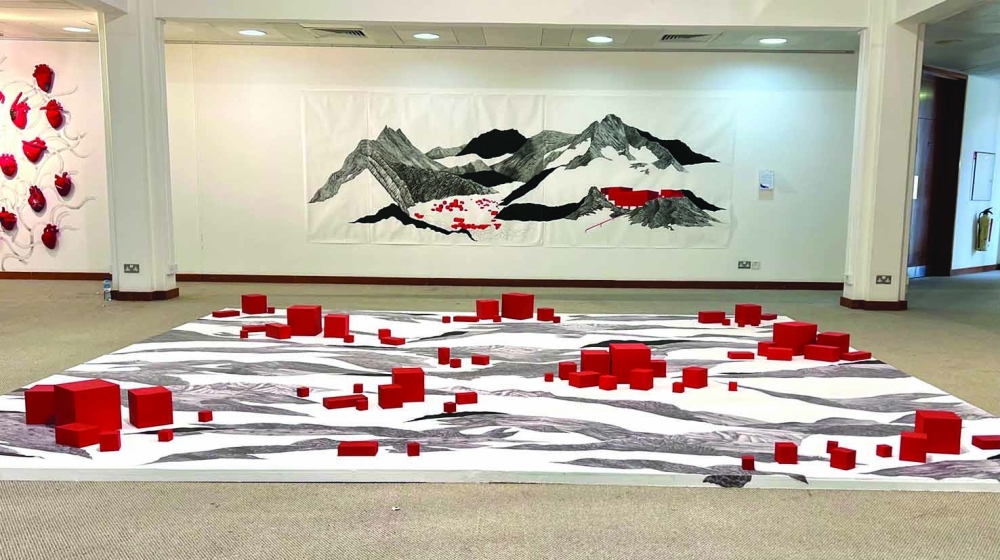
Another interpretation of translation in the conference was an exploration of the way that visual art translates and re-imagines belonging, identity and global migration.
The most interesting addition to this conference event was the exhibition that ran parallel to the academic presentations. This included participation from various ministries and agencies in Oman which are closely linked to preserving and disseminating Oman’s rich cultural heritage.
One of the main takeaways from the conference was how important translation has become in today’s world where communication between non-English speaking communities is increasingly prevalent. While most translation until now has been centred on English, whether from, or into English, there is increased focus on working with other languages in order to increase visibility in other regions of the world.
Papers, for example, showed how an increase in literary translations from the non-English speaking world is resulting in intercultural awareness in non-Eurocentric contexts.
The way in which marginalised communities are finding a voice through translated works also adds depth to translation projects around the world.
Another significant question that is forward-looking, of course, is the role of Artificial Intelligence in translation. Whose work can an AI produced, or collaborated one be considered to be? Who would be responsible for any possible mistranslations? These are questions that will be relevant in the coming years as technology takes over.
The workshops that ran parallel to the conference gave hands-on experience and training to aspiring and practicing translators. Aspects that were explored included subtitling, post-editing, gamification and collaboration in low tech contexts.
The focus on education was central to this conference, as the participants included academicians, students, as well as practicing translators. The pedagogical implications of translation strategies were explored and various alternatives suggested. These also included using easily accessible technology in developing countries and maintaining ethics in translation projects.
The conference reminded one of the transformative role of translation in a rapidly changing world.
Oman Observer is now on the WhatsApp channel. Click here