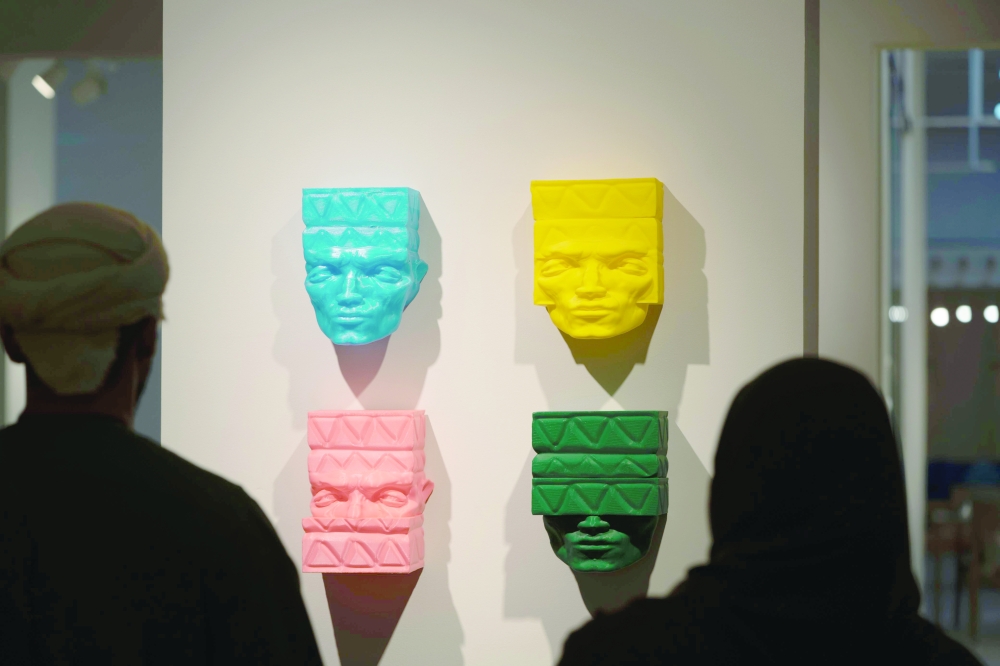





The Omani Society for Fine Arts opened its halls to a world both eerie and familiar. This is the world of 'When Life Turns into a Habit', the new exhibition by contemporary artist Hamad al Harthy, who uses the visual language of the undead to explore the experience of living without truly being alive.
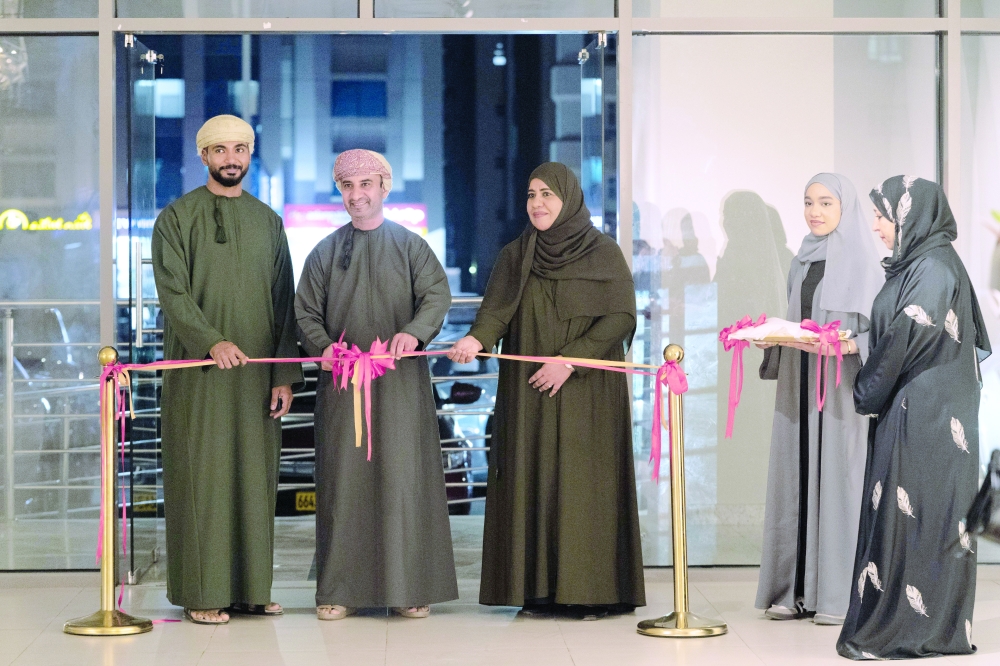
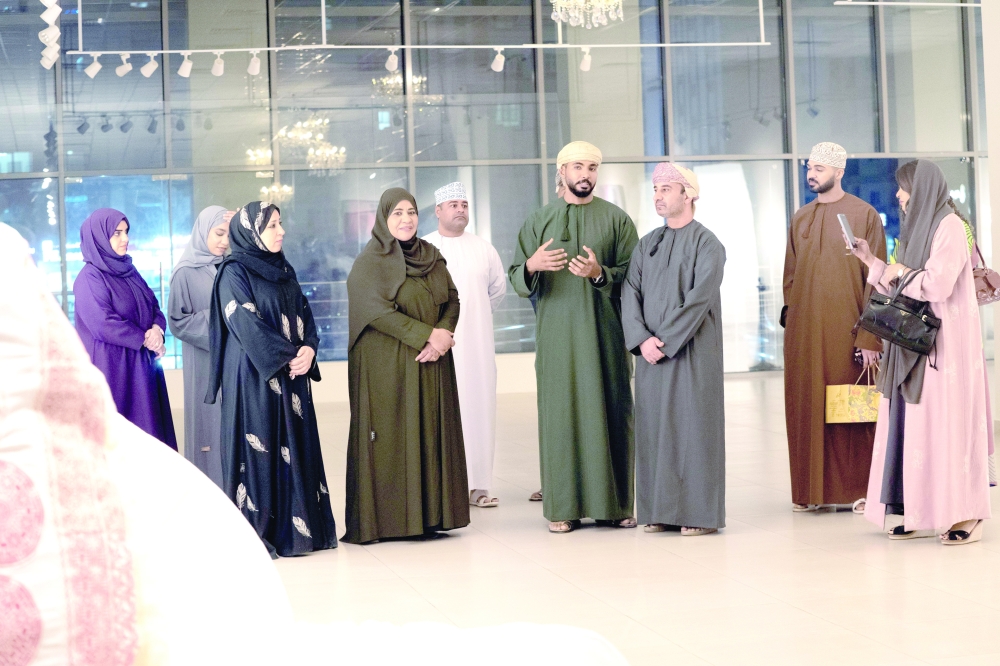
The show was opened under the auspices of Ibrahim Bani Oraba, Assistant Director-General, General Directorate of Arts, the Ministry of Culture, Sports and Youth.
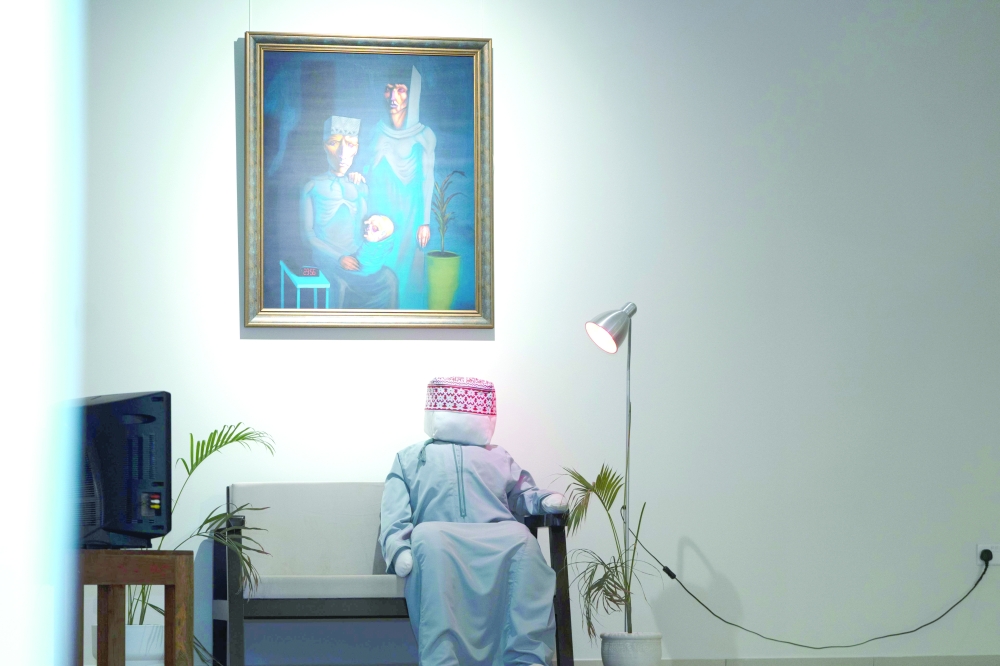
In this dim space, where the lights fall softly on distorted faces and swollen forms, the air feels unusually still, as if the room itself is holding its breath. The figures on the walls stare back with yellowed skin and green tinted cheeks, eyes dulled into a lifeless red.
At first glance, they resemble beings from a forgotten world, yet something in them feels dangerously close. They look like us, they live like us, they continue like us.
Al Harthy stands in the centre of his show, calm and direct, speaking about the idea that shaped every canvas, sculpture and animation in the room.
“There are people who exist in life”, he says, “but they are not truly living. They move, but something inside them has died”.
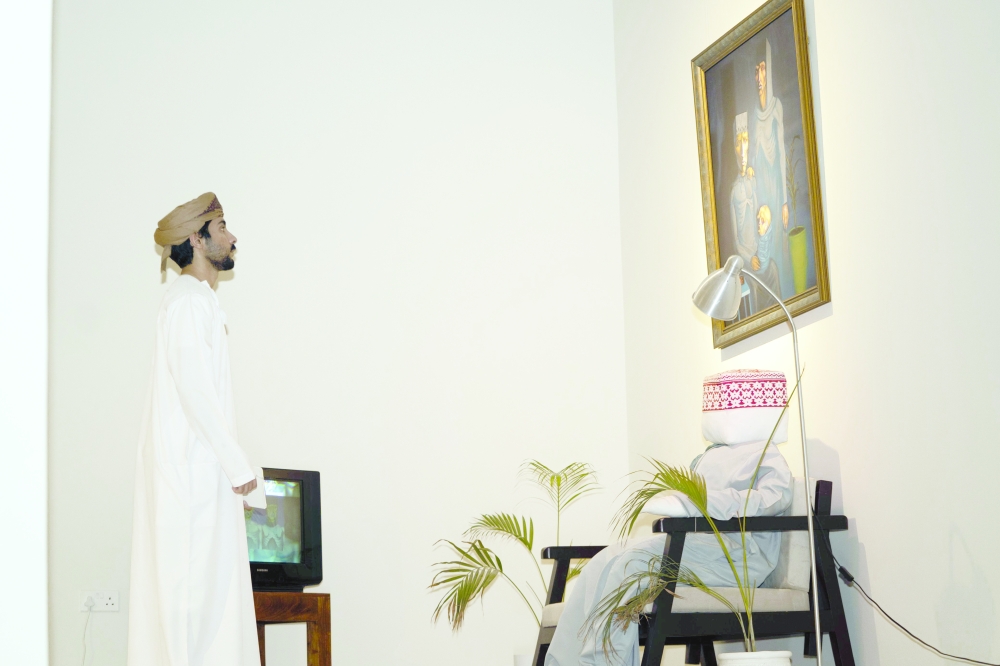
He gestures towards a series of hybrid figures, half human, half rotting, caught between decay and routine. Their bodies sag as though exhausted from the inside, their skin carrying the sickly colours of decomposition. “I used the zombie as a metaphor”, he explains. “This creature is alive but dead. And if you look at the sculptures and paintings, you will notice hints of mummification, stages of deterioration. The skin tones, greens, yellows, show that the body is not natural anymore”.
Despite their decay, these figures continue with their daily tasks. In the exhibition’s video piece, screened inside a retro 90s television, a character is shown mechanically going about his conventional life, landing a job, buying a car, getting married, having children.
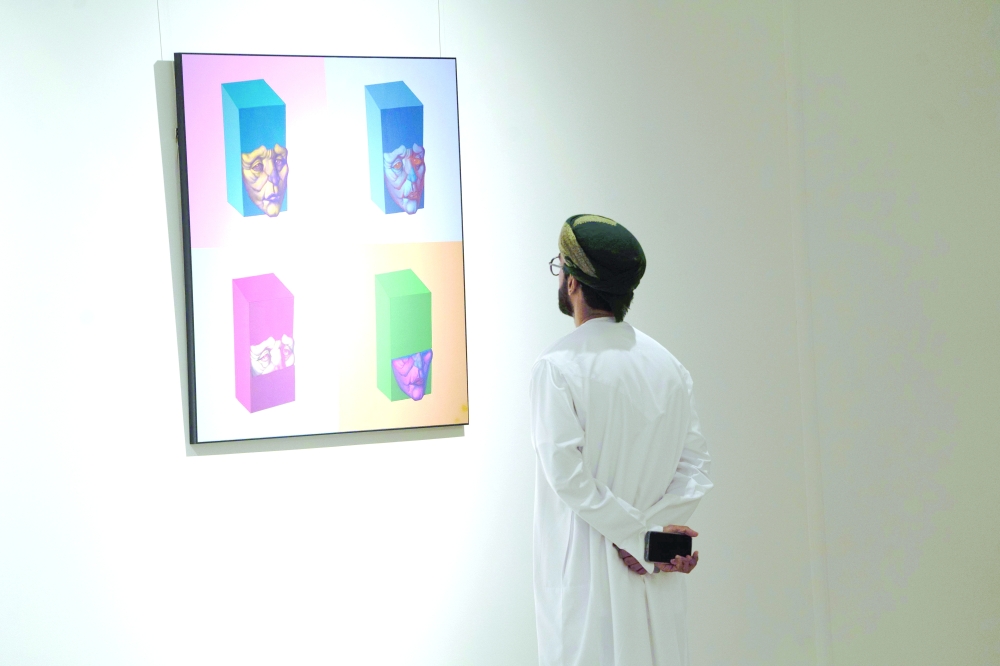
Al Harthy uses this interaction to highlight how easily life becomes a checklist, a path walked without reflection. “They are living their lives”, he says, “but not truly. Not in earnest. They just follow routine, step by step, as if life is carrying them instead of the other way around”.
One of the show’s most striking pieces is an enormous soft sculpture, heavy and swollen, lying on its side. Its unsettling form comes from a specific observation.
“When an animal dies in a river”, Al Harthy explains, “its body swells from the inside. I imagined this figure the same way, dying internally, puffed from within, exhausted, yet still continuing as if nothing is wrong”.
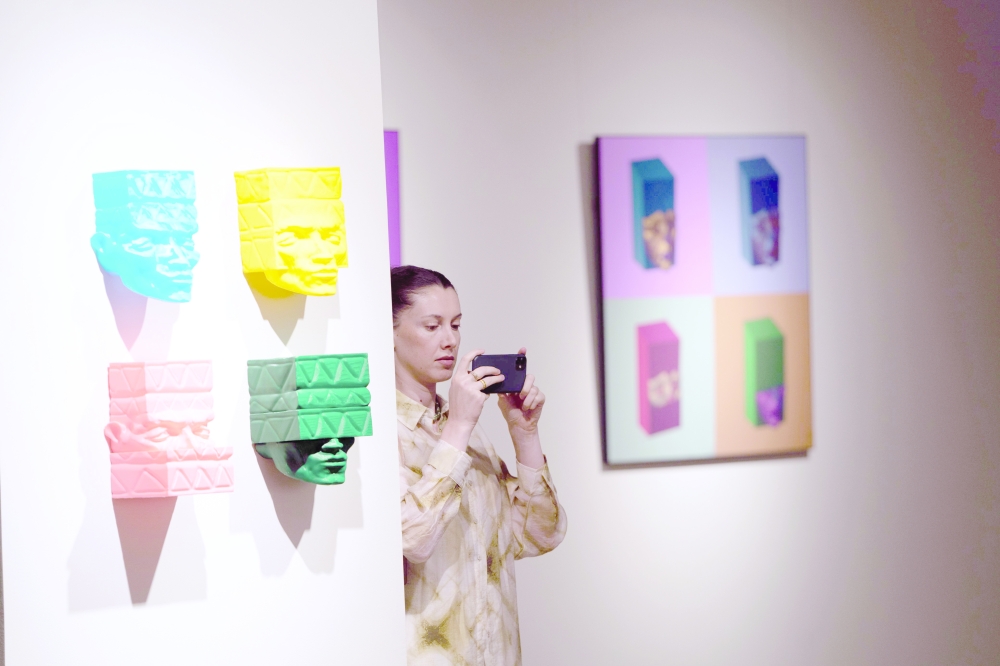
Throughout the exhibition, every figure wears a square on its head or is rather trapped in a consuming cube, a repeated symbol.
“It is about thinking inside the box”, he says. “No one tries to break out of it. That is why the square appears everywhere”.
For Al Harthy, the show is a statement about the evolving art scene in Oman. “Most exhibitions here rely on traditional art, landscapes and portraits”, he says. “I wanted to show that contemporary art exists here too, that there are Omani artists with modern and unusual ideas”. He chose mediums that reflect this shift, digital painting, soft sculpting with fabric, 3D printed forms, graphic design and video animation.
“All of them work together to tell one story”, he says.
As visitors move through the space, their reactions oscillate between fascination and discomfort.
Mohammed al Abri, an architect and visual artist, shares his first impression, “It is strange”, he says. “The shapes are unfamiliar, the red eyes, protruding bones, skin clinging to skeletons. It feels like something from another dimension”.
He pauses before a piece with hollow cheeks and torn clothing. “It looks like a memory of famine or a glimpse into another era. But that is the beauty of it. This kind of art expresses the artist himself, his emotions and stories. In the end, art is a personal vision”.
By the same token, Ahed bin Rashid al Harthy, a visual artist, observes a digital painting with fractured lines and muted colours.
“The idea captured me immediately”, she says. “It is different and new. I have never seen an exhibition with this concept”. “We live this. Routine has made our days almost identical. The exhibition captures and expresses that feeling beautifully”.
What impressed her most was the diversity of techniques and mediums. “The variety gave the exhibition richness”, she says. “The works did not just sit on the walls. They made you part of the experience. You do not just look, you feel”.
As the evening progresses, visitors gather around the swollen sculpture, the boxed heads and the flickering 90s television. Their footsteps echo softly through the gallery, weaving gently into the story Al Harthy has built.
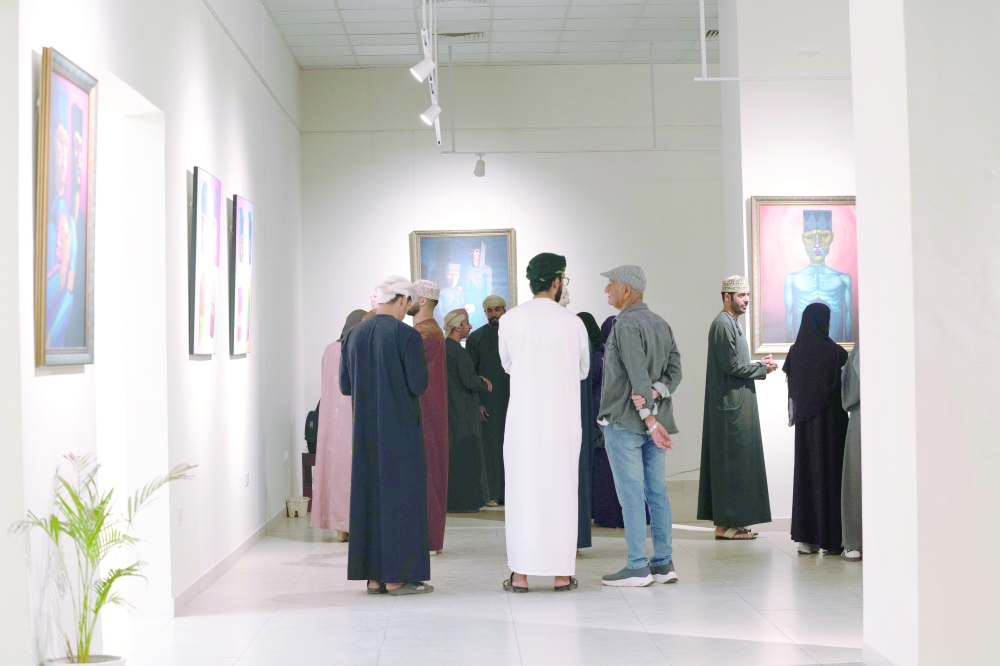
In this dim hall, surrounded by figures who walk yet do not live, a question lingers, which parts of our own lives have turned into habit?
Al Harthy’s exhibition does not answer. It simply holds a mirror to society, revealing that the border between living and merely existing is far thinner than expected.
Pictures by Bilarab Al Kharusi
Oman Observer is now on the WhatsApp channel. Click here