
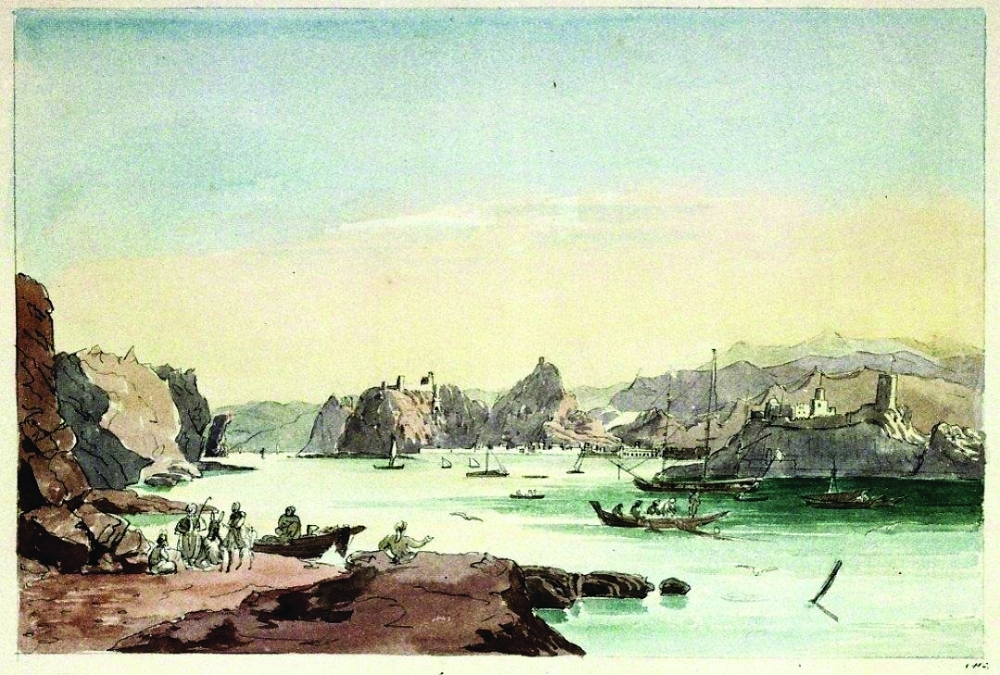





Muttrah has always fascinated western travellers, historians and officials. It has been prominently mentioned in their books, drawings, and maps since the 16th century. Photographs and artworks across different eras have also been a pivotal reference for recording Muttrah's cultural identity, as these visitors paint a vivid picture of the city: its geography, culture and people.
Their accounts highlight its importance as a model of cultural coexistence in the Arabian Peninsula.
"Muttrah's multiculturalism during the 19th and 20th centuries was a result of its strategic location, economic activity and the interactions of diverse communities. The city's demographic makeup or composition contributed to the vitality of the city's social and cultural life", said Dr Hilal al Hajri said, a researcher interested in travel writing, orientalism, comparative literature and Arabic prosody.
He explained that the strategic location of Muttrah on the coast of the Sea of Oman — connected via the Arabian Sea and the Indian Ocean with India, China, Persia and East Africa — made it a vital point of contact between Oman and the wider world.
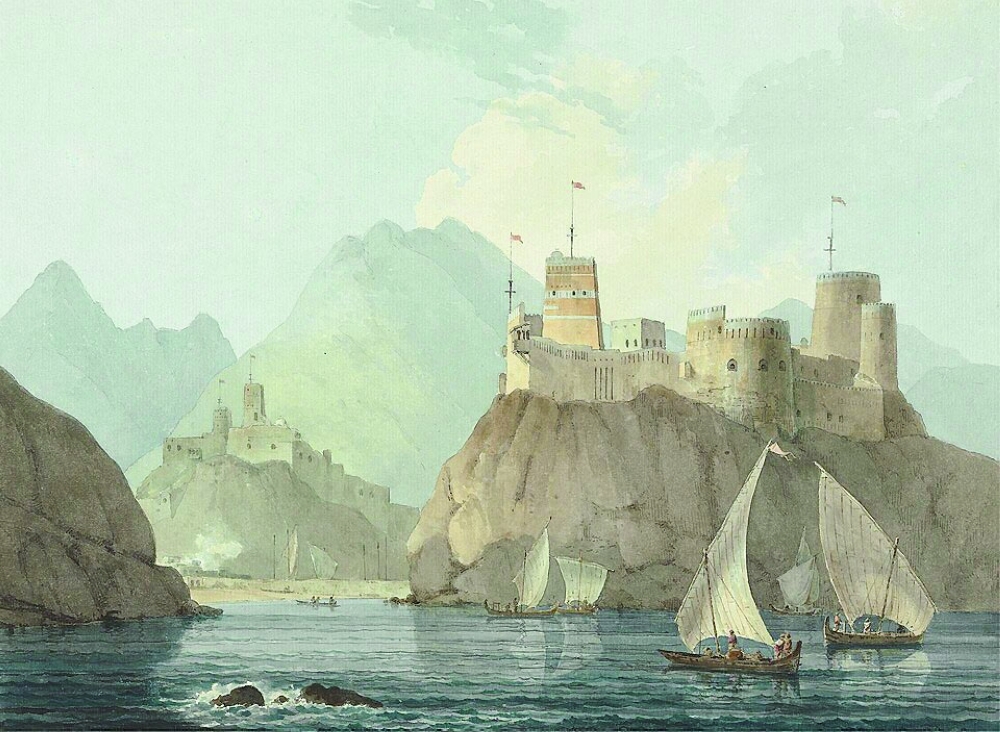
Some travellers note that Muttrah Port was a factory for traditional wooden dhows that facilitated trade across the Indian Ocean, carrying goods such as dates, spices and other items. Indeed, it served as a bridge for the exchange of ideas, beliefs and cultures.
According to American traveller Edmund Roberts, the city was home to a diverse population, including Baluchis, Indians, Persians, Africans and Arabs. Roberts noted that Muttrah Souq (market) was a bustling centre of commercial activity and social interaction, where caravans arriving daily from inside Oman, laden with goods such as dates, wheat and grapes.
This trade brought people together from different ethnicities and religions, fostering a unique cultural environment. British traveller James Bent described Muttrah as "The Commercial Centre of Oman Kingdom". He noted the ethnic diversity in the city's market. Each community had its own distinct neighbourhoods within the city, separated by walls, but they all met in the market which served as a space for economic and cultural exchange.
William Palgrave also mentioned Muttrah's thriving souq and the goods traded there, including Omani carpets, daggers and dates. He noted the presence of Indian mangoes and other imported fruits, underscoring the city's connection to the wider Indian Ocean world.
Edward Stack mentioned that the city's houses shaded by green Mashrabiyas reminded him of Mediterranean architecture. This mix of architectural styles reflects the influence of different cultures on Muttrah city.
Prof Fakhriya al Yahyai, Professor of Art at SQU, said that artists and photographers have helped highlight Muttrah's social and cultural richness. She has studied and analysed more than 105 photographs and more than 42 ancient paintings that capture Muttrah, in addition to a large number of modern paintings done by local and foreign artists, which convey the essence of the society and its culture.
Social life, as she pointed out, “Contributed in enriching the city's visual image by depicting scenes of daily interactions among people, traditional activities, local events, popular celebrations; and customs and traditions that conveyed the community's character and humanitarian warmth. These gatherings also played a prominent role in documenting traditional clothing and men's and women's jewelry, as these images conveyed the identity of the Omani people and their connection to their customs and cultural heritage”.
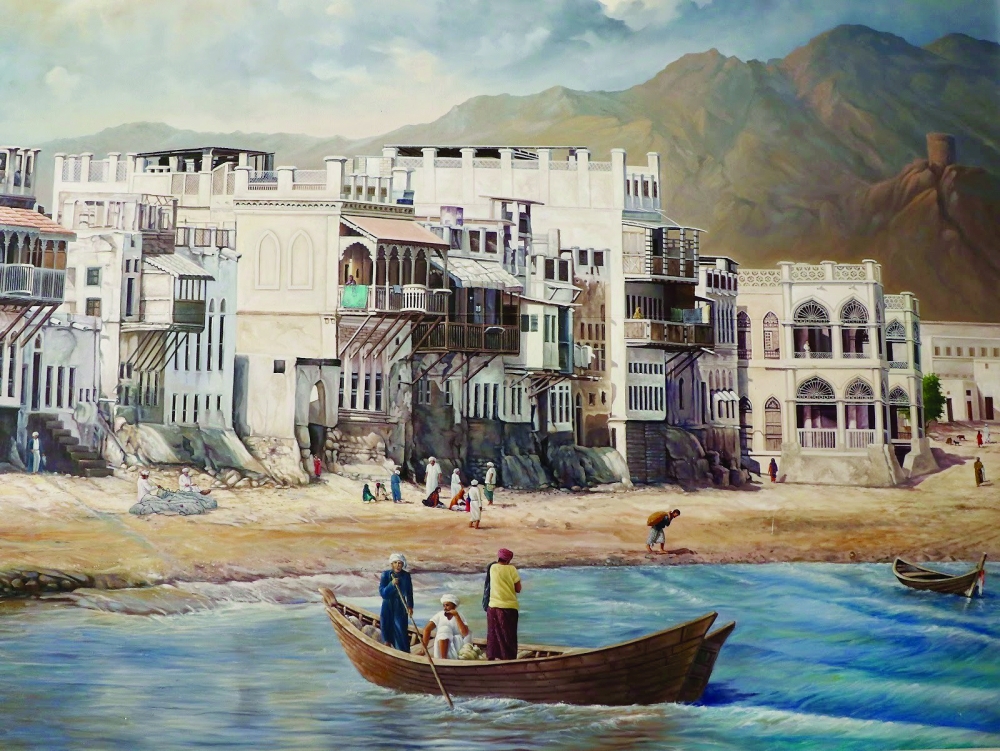
The traditional architecture as well — including castles, forts, narrow alleys and old houses — embodied the authenticity of the place and its ancient history, serving as a symbol of the continuity of the spatial memory that still distinguishes Muttrah today.
"The narrow alleys and traditional houses emerged as a fundamental feature highlighting the authentic urban character of the city, as these scenes presented a vivid picture of daily life and the social structure of Muttrah. Castles and forts were also present in the images as a form of Omani defensive architecture, embodying Muttrah as a fortified historical city with strategic dimensions", she clarified.
Foreign artists, on the other hand, often focus on Muttrah's geographical and strategic location. When documenting social life, they aim to get to know the Omani character, customs and beliefs, while also highlighting the aesthetic dimensions and classical perspective of Eastern life, like the European and Orientalist depictions of the East and its beauty.
New generations still see Muttrah with the same eyes that artists and photographers did in the past because it retains its unique identity and historical prestige till today, despite urban and social changes.
"The city's strategic geographical location, traditional architecture, old markets and waterfront are all elements that preserve the visual and historical identity of the place. These are the same features that gave Muttrah its ancient identity and continue to give it its cultural and historical presence today, creating a visual link between the past and the present, enabling new generations to sense the grandeur of the place and its authentic spirit, even with the passage of time and changing lifestyles", she said.
Visual sources create an emotional connection between Muttrah residents and their land, where they allow the residents to relive and interact with their personal and collective memories. Seeing these works today undoubtedly evokes a sense of belonging and pride; and creates a profound sense of the significance of the place. These Visual sources, therefore, are a means of reviving Muttrah's heritage and reinforcing its cultural identity in collective memory.
Muttrah's visual presence in national and global memory can be enhanced through a package of cultural and artistic initiatives that revive its historical image while keeping pace with modern requirements.
At the national level, as she clarified, “Investment can be made in archiving old artworks and photographs that documented the city's landmarks and making them available through permanent exhibitions in national museums or via interactive digital platforms, allowing new generations to explore Muttrah's visual heritage. Contemporary Omani artists can also be encouraged to produce new works inspired by Muttrah's markets, architecture, sea and social life, thus enhancing the city's continued artistic presence”.
Oman Observer is now on the WhatsApp channel. Click here