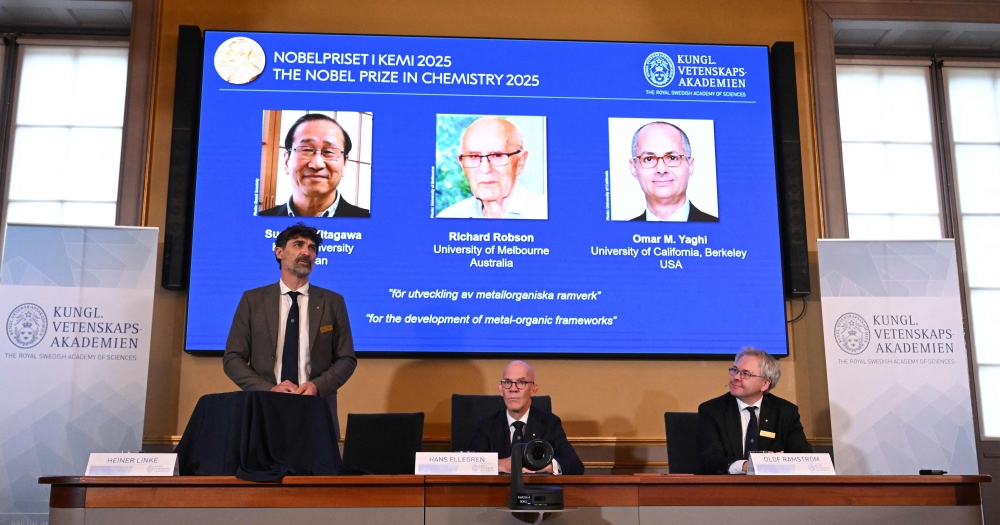
It is Nobel Prize season and at no other time has this award been more discussed internationally. But the literature prize was less the focus of attention this year.
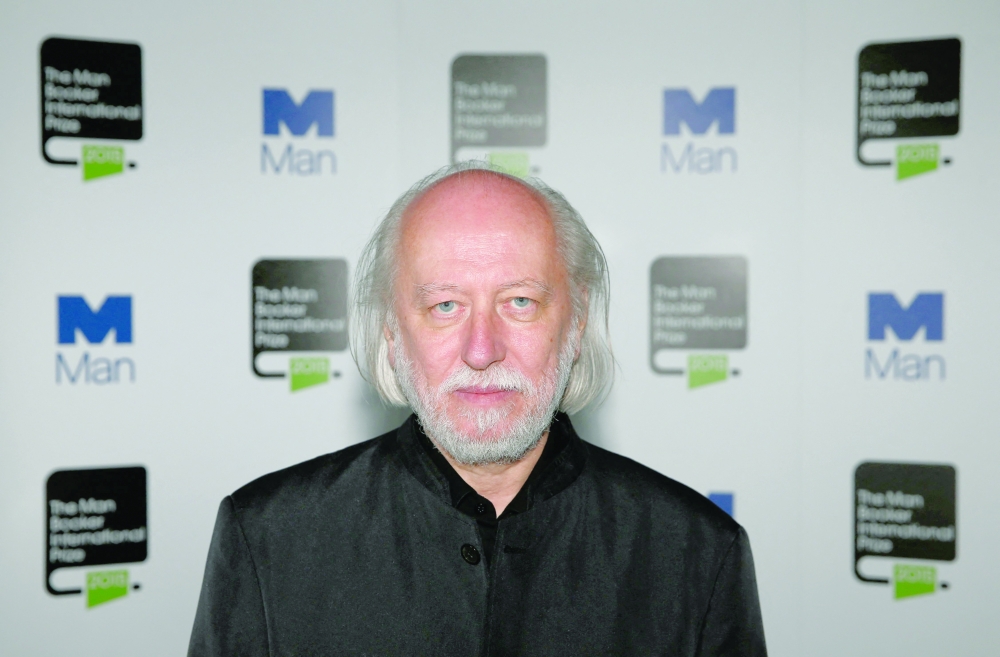
Hungarian writer László Krasznahorkai won the 2025 Nobel Prize for Literature for being a “great epic writer in the central European tradition”. The Nobel committee further praised his work as belonging to a “compelling and visionary oeuvre that, in the midst of apocalyptic terror, reaffirms the power of art”.
And perhaps that is the most important point of literature and the award recognised this power.
As the world is confronted with more strife and challenges which force us to ask basic questions on the future of humankind, the role of art needs to be looked at from a new perspective.
Krasznahorkai’s novels are not an easy read. They are not experimental in any new way, but deep, difficult and troubling. That is because they showcase a world that was finding its way from the rubles of the Second World War and communism.
There are no easy answers for Krasznahorkai. For example, his two famous novels, ‘Satantango’ and ‘The Melancholy of Resistance’ can be considered to be postmodern and even dystopic, depicting a world where the common people are the victim of larger forces which they can neither understand nor control.
The translator of ‘Satantago’, George Szirtes, described the novel as ‘a slow lava-flow of narrative’, evoking the style and the difficulty of themes in it.
The writer struggled with giving a voice to those who are defenceless against forces well beyond them.
An answer that Krasznahorkai found to this turmoil was travel. His early work ‘War and War’ was written over the course of a couple of years’ stay in New York, China and Mongolia. Travel, he said, gave him perspective on the commonality of human experience.
But the same travel also reminded him of the universality of struggle and pain.
Stylistically, Krasznahorkai is experimental and unique. ‘Satantango’, for example, resembles a ‘tango’, with six steps forward and six behind, showing the lack of movement for common people. Each chapter is also a single, undivided paragraph, with no line divisions. This reflects the relentlessly tragic life of its characters.
The Nobel winner’s work shows the literary influences of other European greats like Kafka and Samuel Beckett, both of whom also showcased the ludicrous nature of this world, using a style and form that reflected a distorted world.
Krasznahorkai is no stranger to awards. His novel ‘Seiobo’ won the best translated novel award in 2014 and in 2015, won the Man Booker International Prize. His Nobel Prize places him at a level with such contemporary writers as Han Kang and Abdulrazzaq Gurnah.
Literary awards are known to give writers more attention and readership. Krasznahorkai is not an exception, although his work is harsh and difficult to read.
At the end, it is the power of literature to share hard truths, along with its capacity to hope and dream that makes us want to return to reading. Awards help to guide us into this world of art in more meaningful ways.
Sandhya Rao Mehta
The writer is an Associate Professor, Sultan Qaboos University
Oman Observer is now on the WhatsApp channel. Click here