




MUSCAT, OCT 5
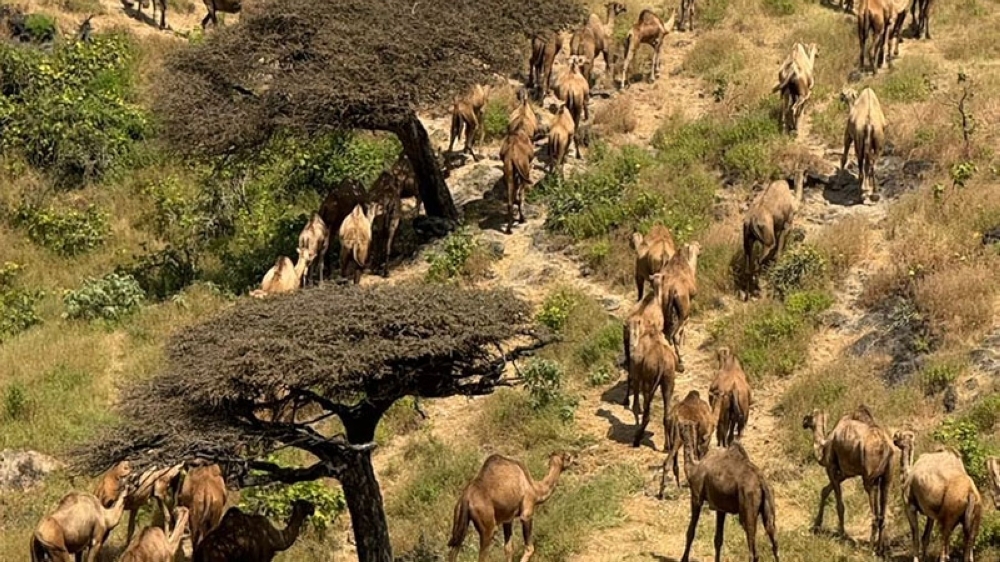
Camel herds began their climb from the coastal plains into Dhofar’s uplands this weekend, marking the start of Khatla — the post-khareef migration that resets grazing from lowland flats to mountain valleys once soils firm up after weeks of drizzle.
Families of herders coordinated early-morning departures from several plains east and west of Salalah, moving in small, cooperative groups that shared navigation, watering stops and night watches. Classic corridors lead towards the Qara, Qamar and Samhan ranges, with overnight halts in wadis chosen for fresh growth, safety and access to water.
While Khatla is a well-loved tradition, this year carries a sharper focus on visitor behaviour. Community leaders and experienced herders have circulated a simple code for weekend sightseers: slow down near crossings, avoid honking, keep cameras at a respectful distance and leave no litter. The aim is to reduce stress on animals, prevent road incidents and protect the fragile vegetation that rebounds after the monsoon.
The migration typically unfolds through October and can extend into November depending on pasture and ground conditions. Herders say timing the ascent after the fog lifts cuts the risk of slips on saturated slopes and spreads grazing pressure more evenly across the escarpments-down in the monsoon, up once the land has stabilised.
Local shopkeepers along feeder roads report a modest uptick in rural spending-fuel, water, bread, tea and camp supplies — on peak days when camel trains pass. Municipal officers view the movement as a complementary draw to post-khareef travel, nudging visitors beyond the coastal strip into Dhofar’s interior without turning Khatla into a mass event.
Safety remains a shared responsibility. Communities are advising visitors to use only designated pull-offs on mountain roads, avoid crowding narrow bends, and never attempt to feed or touch animals. Drone operators are urged to follow local rules and keep well away from herds to prevent spooking.
Culturally, Khatla binds families and neighbours who move together in 'cuts' of five to ten households, pooling labour and experience. Social ties strengthen around the evening camp — stories, tea and quiet watches — while younger herders learn routes and animal care from veterans.
Officials and guides say the tradition dovetails with Dhofar’s push for responsible nature tourism, balancing access with preservation. The message for the season is clear: witness the heritage, follow the code, leave the land undisturbed.
What is Khatla?
A seasonal migration in which camels move from the plains to upland valleys after khareef, under improving 'Sarb' conditions. Routes often pass landmarks such as Ittin Plain and Wadi Darbat, then fan into the mountain system behind Salalah.
Oman Observer is now on the WhatsApp channel. Click here