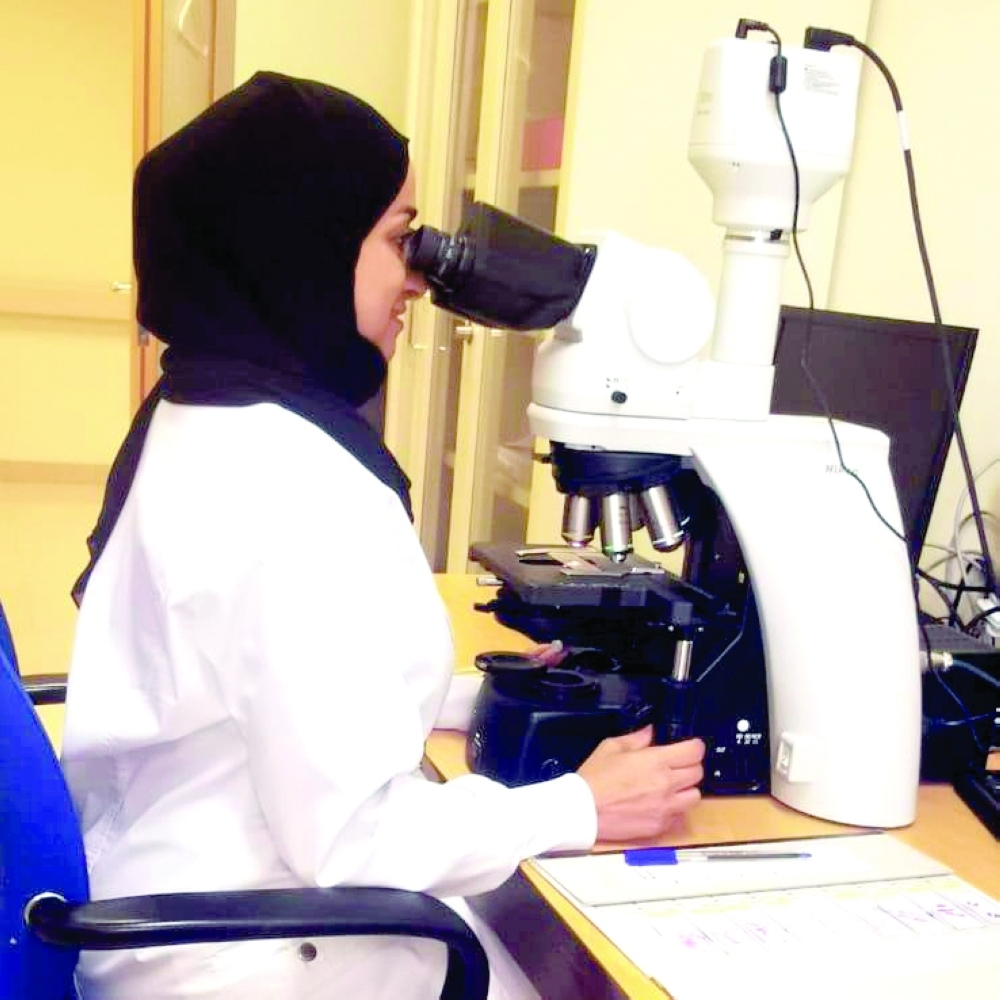





Muscat: Dr Noora Rasool Bakhsh al Balushi, an Omani researcher, reached concrete results in making a model for a 3-D lab cellular milieu mimicking the sophisticated biological and chemical environment of cancerous cells in human body.
The outcome of the three-year study appeared in the Swiss scientific journal “Gel”.
Dr Noora told Oman News Agency (ONA) that certain tumours are sophisticated cellular formations comprising different types of cells, fibre and proteins that secure the rapid growth of cancer cells. “I made a 3-D cellular environment simulating cancer tumour by planting cancer cells, fibre, immune cells and proteins constituting a matrix of functionally programmed peptide sequences and forming a gelatinous substance called a hydrogel.”
Dr Noora pointed out that the research will enhance the current understanding of the nature of cancer and update knowledge associated to environments that are suitable for the growth of cancer cells. She added that this low-cost cellular domain can be used to test cancer therapy drugs and affirm their efficiency before moving the to the next high cost stage of making test tubes for lab organisms and, later, patients.
Dr Noora explained that the results of the study can be used to understand the characteristics and conduct of cancer cells, their speed of growth and propagation and their subdivision. The development of such cellular domains will accelerate the production of highly efficient cancer treatment drugs, besides comprehending the multiple and variable traits of cancer cells.
Dr Noora’s research was supported financially by the Ministry of Higher Education, Research and Innovation, the Ministry of Health, Melbourne Royal University (RMIT) and Deakin University in Australia.
Oman Observer is now on the WhatsApp channel. Click here