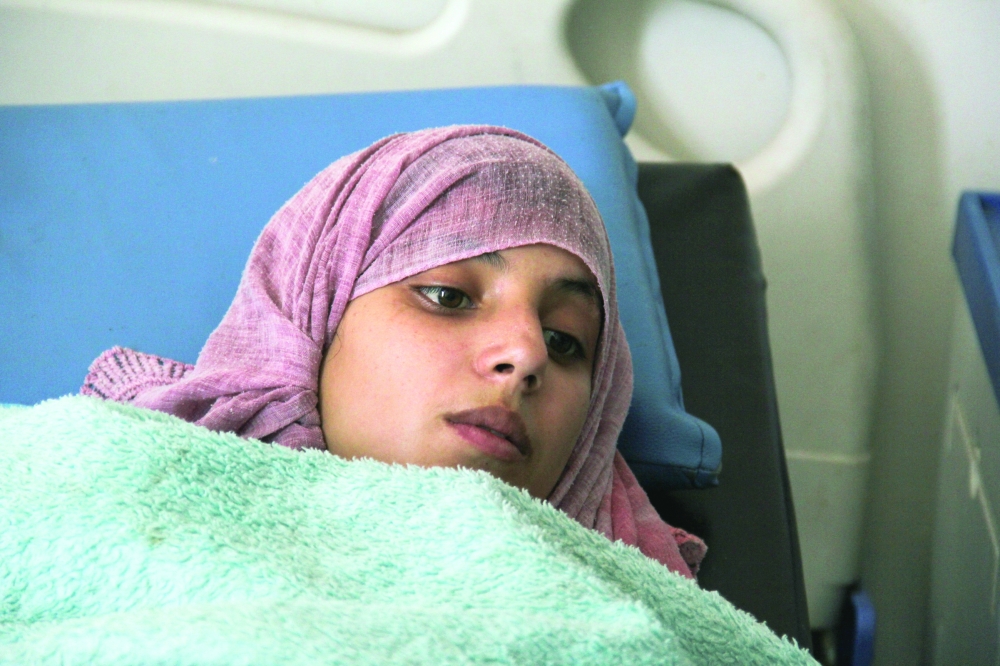


TAIZ: In a hospital in Yemen's Taiz, a 25-year-old pregnant mother of two lay immobilised after a bullet lodged in her spine while she was trapped inside her home without food or water for two days.
The UN and aid agencies say health needs in the besieged city of Taiz are critical, amid acute shortages of medicine, oxygen, surgical gloves, anaesthetic and fuel. Hospitals near Yemen's front lines are facing large influxes of patients, treating up to 700 war wounded in a single week, according to the Red Cross.
Amal al Sabri said she was injured by a sniper bullet in the village of Al Shaqb — perched on the slopes of Mount Sabir overlooking Taiz — as an escalation in fighting between the Saudi-backed government and the Ansar Allah group takes a devastating toll on civilians.
Medics at Al Thawra hospital in Taiz said they could not perform a scan because she was over four months pregnant.
"The bullet entered from the side and is now lodged near the spine. They (the doctors) couldn't remove it because of the fetus,” Sabri said. "Now I am giving up the fetus."
Taiz governorate, which hosts about half of the 281,000 people who have been newly displaced in Yemen since the start of August, has been largely isolated since October 3, with fighting preventing humanitarian supplies from entering and civilians from leaving.
Taiz, Marib and the Red Sea coast are seeing some of the highest casualties, with patients arriving at hospitals with gunshot wounds and complex blast injuries, according to the Red Cross.
"The healthcare system across Yemen is at a breaking point,” said Red Cross spokesperson Hachem Osseiran.
Even before the latest fighting, more than 40% of hospitals and healthcare facilities across the country were already either closed or partially functioning following years of protracted conflict, he said.
There are also concerns about the outbreak of disease as water runs short and rubbish accumulates on the street.
Throughout Yemen, primary care for pregnant women is disrupted. In some hospitals near the front lines, maternity wards are being converted into emergency rooms, Osseiran said.
"Some of them (doctors) have to make a very difficult and painful choice: Do I help this woman deliver her baby, or do I rush to a person who is bleeding out because of a gunshot wound?” he said.
In Taiz city, the UN says community midwives have stopped working due to restrictions on movement.
Not only are health services stretched, but they are also under attack. A hospital in Taiz's Sabir Al Mawadim district was hit by mortar fragments for the second time this month, while a strike on an ambulance killed its driver and a paramedic, according to the UN.
On Monday, another strike that hit near Mocha General Hospital - where medical charity Médecins Sans Frontières supports the maternity and paediatric wards - damaged the building and triggered panic among patients.
"Such incidents are preventing patients from coming to the hospital for fear of their lives,” MSF said. — Reuters
Oman Observer is now on the WhatsApp channel. Click here