A week of Muscatian encounters with people, in real life and on screen, as shared by the writer whose name many Omanis often pronounce as “Bridge”.
Al Hail, late last Saturday afternoon, in a quiet corner of a farm garden. “I have been feeling a bit depressed. I just really hate being ‘poor’!” sighed my beautiful local friend, who is a little neurotic and never one to understate a feeling.
She sat across from me at a picnic table that had cracked under the cruel summer sun. Our phones were inside the house. We both like and fear technology, and do not always want Siri, social media, or bots “listening in” on our conversations.
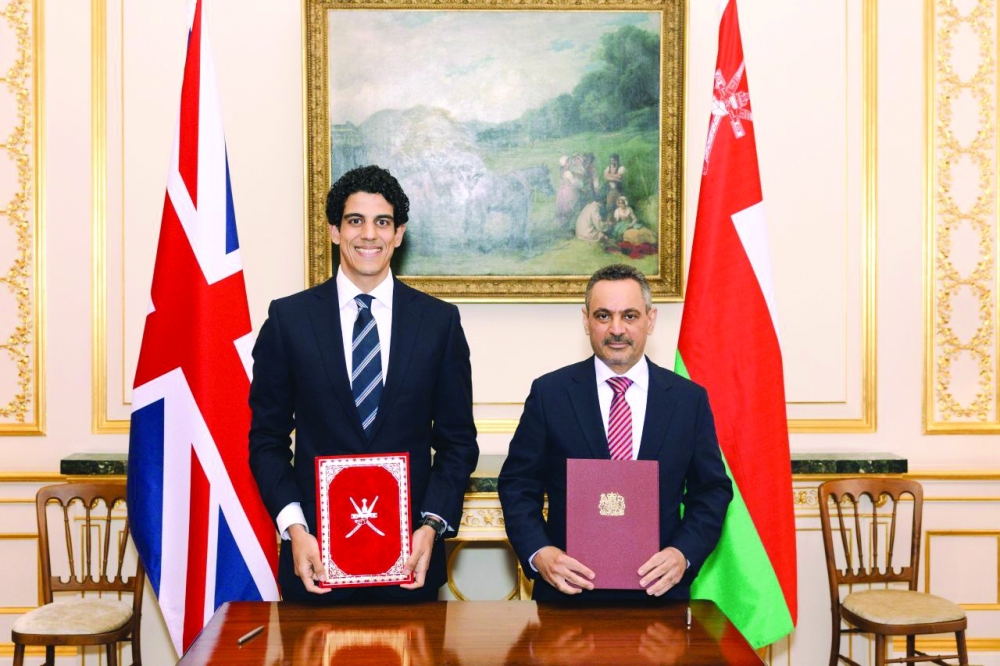
“She deserved to be seated next to a future king,” my guest suddenly mumbled as she stared at the weekend edition of this newspaper lying on the table. It featured a picture of His Majesty King Charles III and His Majesty Sultan Haitham bin Tarik as they met in the UK earlier that week.
As Muscat is essentially just a small town, she was referring to a friend of a friend named Dina Macki, the charming chef and entrepreneur of Omani-Zanzibari roots, partly raised in the UK, who had dined with these Royals and their future successors during that same visit.
My friend kept quiet for a while. I took in her strikingly pretty face, now with a worried look on it. It was a different version of the face I had seen on social media years ago, before I knew her personally, when she was trending in Oman because of her artistic talent. She now has an administrative job she is loyal to but does not particularly seem to enjoy.
As we sat there, still not talking, she watched a butterfly circle overhead while absent-mindedly using her left hand to pet Lucky, our adopted stray black cat, who always seems to think he is a dog.
It felt as though we were in one of those podcasts for women, as I sat there waiting for her to unburden herself.
She looked at me again with her brown eyes, which now almost turned translucent in the sunlight. She was wearing a summer dress with short sleeves since we were in a free zone, while my tanned friend is one of the very few locals I know who likes to sit in the sun.
She returned to her original topic. “I mean, we count our blessings, Alhamdulillah, thank God, and I know it is wrong to use the word ‘poor’, especially when we know what is happening to people in Gaza and Sudan.”
“But my husband and I both work so hard, and still, by the end of each month, after paying the school fee instalments, the children’s activities and the supermarket bills, and going to the beach once a week for peace of mind, we are left with only a few rials in our accounts.”
“I guess I just meant cash-strapped, especially with prices these days, which I feel are mostly due to these stupid wars in the region and Europe.”
I knew what she meant, as she is not alone.
There are a number of Omani families whose incomes look good on paper but who are feeling the squeeze of rising living costs. And I feel like they have always existed.
These families invest most of their money in their children’s education, extracurricular activities and fresh food, only to find that, by the end of the month, little is left in savings.
“People sometimes ask me why I did not send my children to a government school, because they are free, to save money. They keep saying that the Thanawiya can lead to places at good universities around the world, and I know this is true. But, as you once said, everyone learns differently, and that route is not necessarily right for every child.”
“I feel IB suits my kids better, also partly because we speak English, Arabic and Swahili at home. They are now internationally minded learners who think critically and research independently, and as you said, universities worldwide recognise IB as rigorous preparation.”
By Thanawiya, she meant the General Education Diploma pathway, and by IB, she meant the International Baccalaureate, an option currently available only at private schools that charge fees in Oman.
“I mean, I am grateful that we do not have to pay high taxes like my friends in Europe, or like you did after your father died. And two of my kids got scholarships, although one not in the field and country he wanted.”
“I guess most of my Omani friends and family believe in complaining peacefully. I mean, we are not like those crazy looters in the streets of Paris who had to be stopped by that big guy with the long grey hair. Pierre was his name, I think,” she added.
“Most of the middle class in Muscat are like me, complaining and feeling grateful all the time, and all at the same time,” my friend said, suddenly laughing again.
Oman Observer is now on the WhatsApp channel. Click here