

MUSCAT, OCT 26
The National Records and Archives Authority has unveiled more than 2,000 paper and digital documents, photographs and historical artefacts, including materials being presented to the public for the first time, shedding light on the rich history and cultural heritage of Al Batinah South Governorate.
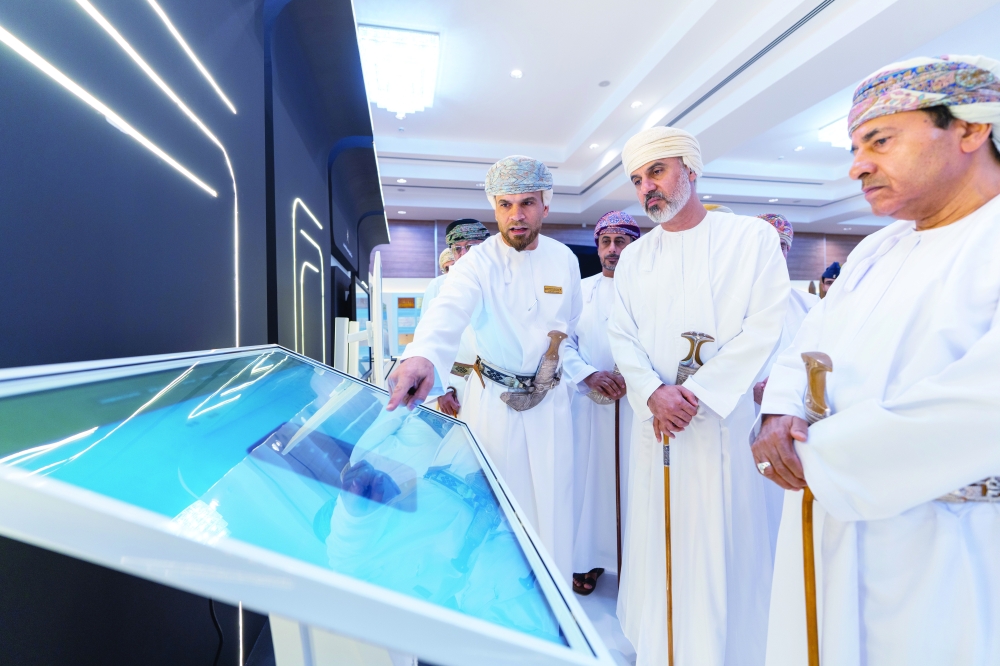
The materials are on display as part of a documentary exhibition accompanying the symposium ‘Al Batinah South Governorate in the Memory of Omani History’, which opened on Monday at the Wali’s Hall in Al Rustaq and will run until October 30.
The symposium, held at the Events Hall near the Courts Complex in Al Rustaq, continues until October 28 under the auspices of Khalid bin Hilal al Maawali, Chairman of Majlis Ash’shura .
Walid bin Ali al Abri, Director of the Research and Studies Department at the Authority, said the symposium aims to trace Oman’s history and civilisation through the ages, highlight the geographical, economic, political and tourism significance of Al Batinah South, and explore the contributions of its people to the country’s development.
It also seeks to document the governorate’s archaeological sites and historical monuments while highlighting the importance of documents, manuscripts and oral accounts in preserving its heritage.
Al Abri said the accompanying exhibition provides a visual insight into the governorate’s past, with historical documents and significant archaeological materials being displayed publicly for the first time.
He added that the exhibition complements the scholarly discussions at the symposium by making historical knowledge more accessible to the public, reflecting the Authority’s efforts to preserve documentary heritage and make it available to researchers and history enthusiasts.
The symposium brings together academics and researchers presenting 27 scientific papers organised around four themes, covering the history of the governorate’s six wilayats.
According to Al Abri, the papers will be published in a special edition of the Authority’s historical and civilisational series on Omani governorates and cities. The publication is intended to serve as a reference for researchers and libraries in Oman and abroad, helping preserve the governorate’s historical legacy for future generations.
The historical and political theme examines the governorate’s strategic geographical position and its historical and geopolitical significance as a meeting point for civilisations and a key corridor for overland and maritime trade. It also explores political developments that shaped the region across different periods.
The economic theme focuses on agriculture, industry and natural resources, alongside trade routes, caravans, land and sea journeys, navigation, shipbuilding, ports, traditional markets and old neighbourhoods. It also examines the role of aflaj, or traditional irrigation channels, springs and tourism assets in shaping economic activity.
The social theme explores lifestyles in the governorate’s mountainous, plain and coastal environments, the influence of climatic and environmental conditions on communities, and the role of customs, traditions and folk arts. It also highlights women’s contributions to society and the significance of waqf, or religious endowments.
The cultural and scientific theme examines traditional educational institutions, including kuttab schools, where children learned to read and recite the Holy Quran, as well as mosques and scholarly councils. It also covers literary and scholarly contributions, defensive fortifications, traditional architecture, archaeological sites and efforts to preserve and develop heritage assets.
The papers further explore the governorate’s representation in the writings of travellers and explorers and in Arab and international media, alongside the role of documents, manuscripts and oral histories in documenting the past and safeguarding Oman’s national memory.
Oman Observer is now on the WhatsApp channel. Click here