




A new report by the International Renewable Energy Agency (IRENA) says the global energy transition will depend not only on expanding renewable power, but also on using electricity to meet a greater share of energy needs.
In its World Energy Transitions Outlook 2026, released on 13 October, IRENA sets out a pathway aligned with limiting global warming to 1.5°C. Under this scenario, electricity would rise from about 23 per cent of global final energy consumption today to 35 per cent by 2035 and more than half by 2050. Renewable power capacity would need to reach about 18.4 terawatts by 2035, rising to 38.2 terawatts by 2050.
The report describes electrification as a way to reduce dependence on fossil fuels across the wider economy. It calls for renewable electricity to play a larger role in meeting energy needs, supported by system-wide reforms. This means the transition is not only about building new power plants. It also depends on whether electricity can be made available and used across sectors that currently rely heavily on fuels.
IRENA presents this shift as relevant to energy security and economic competitiveness, as well as emissions reduction. Greater electrification could help countries reduce exposure to fossil fuel markets, while creating demand for investment in renewable generation and the infrastructure needed to support it. The outlook also highlights the need for energy efficiency to improve alongside electrification, so that rising electricity use does not simply increase pressure on the system.
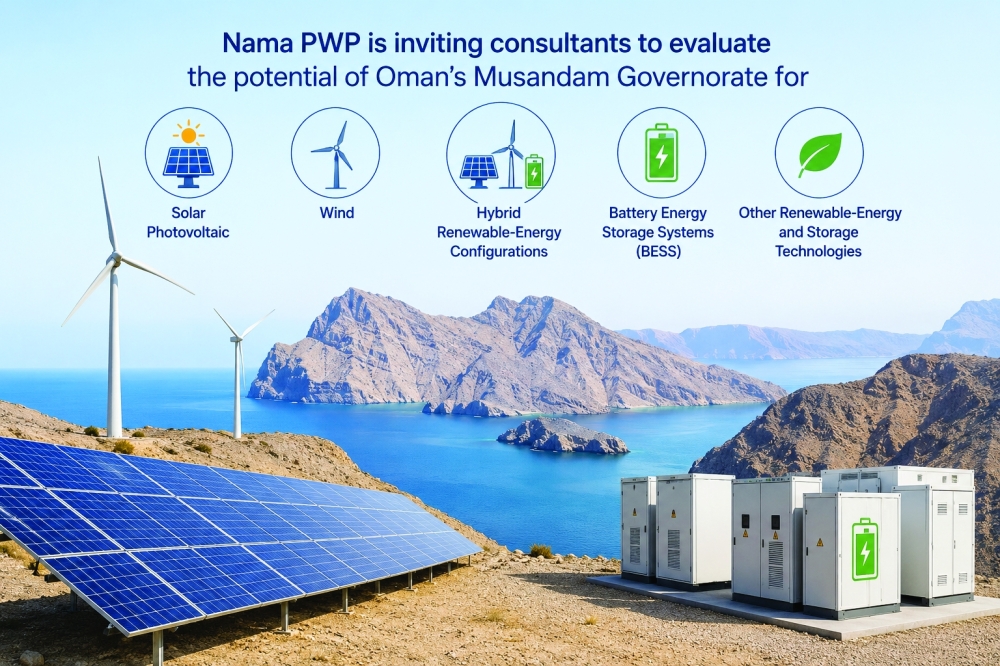
For Oman, the report’s message comes as renewable power is gaining a larger place in the electricity mix. The contribution of grid-connected renewables rose from 4.26 per cent in 2024 to 9.46 per cent in 2025. Electricity generated from renewable sources exceeded four million megawatt hours last year, according to figures reported by the Ministry of Energy and Minerals.
Oman aims for renewables to provide 30 per cent of electricity generation by 2030. The ministry has identified further solar and wind projects as part of the pipeline for reaching that goal. Planned developments include around 5,080 megawatts of solar capacity and 1,720 megawatts of wind capacity across several governorates.
The expansion raises a broader question for the country’s energy transition: how can growing renewable supply support wider changes in energy use? IRENA’s outlook shifts attention from power generation alone to the role electricity can play in reducing reliance on fossil fuels across the economy. For Oman, this invites discussion about where renewable electricity could be put to greater use as new capacity comes online.
The global pathway in IRENA’s report is not an Oman-specific forecast, and its targets should not be read as national commitments. It does, however, provide a framework for considering the choices facing countries as they expand renewable generation. The report’s central message is that clean power capacity and its use must advance together.
For Oman, the challenge will be to maintain the pace of renewable development while finding more ways to put clean electricity to work. As the country moves towards its 2030 target, the transition will be measured not only by how much renewable power it generates, but also by how effectively that power supports the wider economy.
Oman Observer is now on the WhatsApp channel. Click here