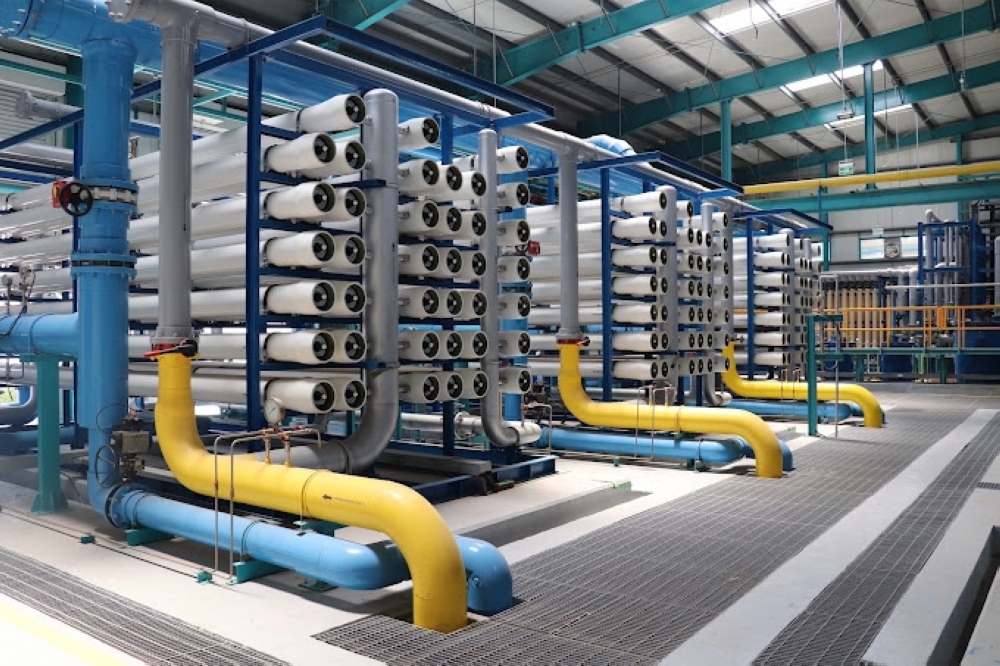
As one of the world’s most water-stressed countries, Oman faces an increasingly complex challenge in securing reliable freshwater supplies for a growing population, expanding industries and agricultural sector. Rising temperatures, declining groundwater reserves and the impacts of climate change are placing additional pressure on already limited water resources. While desalination has long been the country’s primary solution, the future may lie in combining it with another strategic asset: renewable energy.
Traditionally, desalination has been an energy-intensive process powered largely by natural gas. Although highly effective, conventional desalination consumes significant amounts of electricity and contributes to greenhouse gas emissions. As Oman accelerates its clean energy transition, renewable-powered desalination is emerging as an opportunity to improve both water security and environmental sustainability.
The International Renewable Energy Agency (IRENA) notes that renewable energy technologies, particularly solar photovoltaic and wind power, are becoming increasingly cost-competitive for desalination applications. Falling renewable electricity costs now make it feasible to produce freshwater with substantially lower operating costs over the lifetime of a plant, while reducing carbon emissions.
Oman is well positioned to benefit from this trend. The country enjoys some of the highest solar irradiation levels in the world, with vast areas suitable for utility-scale solar developments. Coastal regions also offer favourable wind resources, particularly in the south, creating opportunities for hybrid renewable energy systems capable of supplying electricity to desalination facilities throughout the year.
Modern desalination technologies have also become considerably more efficient. Reverse osmosis, now the dominant technology globally, requires significantly less energy than older thermal desalination methods. When powered by renewable electricity, reverse osmosis plants can substantially reduce both operating costs and emissions.
Worldwide, several countries are already demonstrating the potential of renewable-powered desalination. Saudi Arabia has begun integrating large-scale solar generation into water production projects, while Australia and Spain have explored renewable energy to supply desalination plants during periods of peak renewable generation. These experiences provide valuable lessons for countries seeking to decarbonise water production without compromising reliability.
For Oman, renewable desalination aligns closely with the objectives of Oman Vision 2040, which prioritises economic diversification, environmental sustainability and improved resource efficiency. Expanding renewable energy into water production could also reduce domestic natural gas consumption, allowing additional gas supplies to support higher-value industrial activities or exports.
The approach may prove particularly valuable for remote communities. Smaller solar-powered desalination units can provide freshwater to isolated coastal settlements where extending national water infrastructure is costly. Such decentralised systems can improve resilience while reducing dependence on fuel deliveries or grid connections.
Agriculture could also benefit. Water scarcity remains one of the principal constraints on farming in Oman, particularly as groundwater aquifers face increasing pressure. Renewable-powered desalination could support high-value agricultural production in selected coastal regions, although careful management would be required to ensure economic viability and responsible water use.
However, challenges remain. Renewable electricity is inherently variable, requiring energy storage or flexible plant operations to maintain consistent freshwater production. Battery storage, thermal storage and intelligent energy management systems are increasingly helping overcome these limitations, enabling desalination plants to operate more effectively alongside intermittent renewable generation.
Another important consideration is the environmental management of concentrated brine discharged from desalination plants. Continued investment in improved brine treatment technologies and responsible marine management will remain essential regardless of the energy source powering desalination.
Research is also progressing rapidly. Engineers are developing more energy-efficient membranes, advanced filtration systems and integrated renewable-powered water treatment technologies that could further reduce costs while improving operational performance. Digital technologies, including artificial intelligence, are also beginning to optimise desalination operations by forecasting renewable electricity availability and adjusting production accordingly.
Oman has already established itself as a regional leader in renewable energy investment through major solar and wind developments. Extending these capabilities into the water sector represents a logical next step that could strengthen both energy security and water resilience simultaneously.
As climate change intensifies pressure on freshwater resources across the Middle East, the relationship between clean energy and water production is becoming increasingly important. Rather than viewing energy and water as separate infrastructure challenges, countries are beginning to integrate them into a single resilience strategy.
For Oman, renewable-powered desalination offers more than an environmental benefit. It represents an opportunity to secure long-term water supplies while supporting the country’s transition towards a lower-carbon economy. With abundant renewable resources, growing technical expertise and a national commitment to sustainable development, Oman is well placed to demonstrate how clean energy can help address one of the region’s most pressing challenges.
Oman Observer is now on the WhatsApp channel. Click here