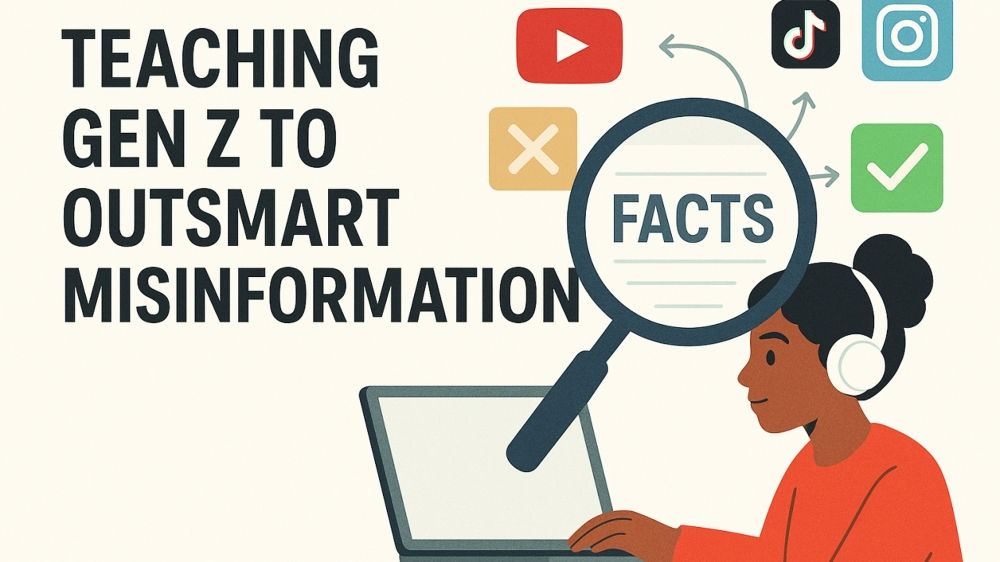





For much of the previous generation, the morning newspaper, television bulletin, or trusted news websites provided a relatively clear distinction between news, commentary, and rumour. For Gen Z, that distinction is rapidly disappearing.
Platforms such as Instagram, YouTube, TikTok, and X have increasingly replaced newspapers and television news as primary sources of information. I have heard many young people say, “I don’t read newspapers or watch news, but I saw it on social media.”
Yes, the convenience is undeniable. News reaches users within seconds, often through a short video, social media post, or influencer’s commentary. However, the speed and accessibility of these platforms also raise an important question about the credibility of the news and its source.
Unlike established news organisations, social media posts do not necessarily pass through professional editorial or fact-checking processes.
As a result, inaccurate, misleading, or deliberately manipulated information can spread rapidly, reaching millions before its authenticity is questioned. Such misinformation and disinformation can create serious national security risks.
Unesco has warned that social media can accelerate and amplify misinformation and disinformation, posing risks to social cohesion, peace, and stability. Such information can be particularly damaging during elections and other events that are critical to democratic processes.
Virality substitutes credibility
For Gen Z, a social media post does not necessarily have to be true to be believed. If content goes viral, it is often treated as credible. The problem, however, is not that Gen Z uses social media.
Digital platforms have made information more accessible to young people, often providing faster access to news and information that may not be readily available in print media for various reasons. The growing ability of Gen Z in India to mobilise and organise protests within minutes has demonstrated the immense influence of social media and digital communication.
The problem is also evident in areas such as health and personal finance. Social media platforms are flooded with videos claiming to offer cures for diabetes, remedies for baldness and various beauty treatments, often without credible medical evidence. Yet an attractive video, confident presentation, or a large number of views can create an impression of expertise and authority.
Financial misinformation can be equally damaging. Individuals without the necessary qualifications or expertise sometimes present themselves as wealth managers or financial experts on social media.
Their advice may encourage members of the public to make financial decisions based on incomplete, misleading, or inaccurate information.
Mis-selling is another area where social media is increasingly being misused.
National security risks
The consequences become even more serious during wars, conflicts, elections, natural disasters, and national emergencies.
During conflicts in West Asia, for example, social media has been used to circulate old photographs, manipulated videos, and misleading claims presented as current events. Such content can create unnecessary fear and confusion among citizens and may deepen tensions between communities.
Governments in several countries, including the Sultanate of Oman, have consequently warned citizens about the consequences of publishing or sharing misleading material, particularly during sensitive situations.
During elections, the stakes are even higher. False information can influence voters, intensify political divisions, weaken trust in democratic institutions, and create national security threats.
Gen Z must learn to verify
The challenge, therefore, is not to discourage Gen Z from using social media, but to promote greater digital and media literacy. Virality should never be mistaken for credibility. Before accepting or sharing information, users must try to verify its authenticity.
In an age where information can travel within seconds, the ability to distinguish facts from misinformation has become an essential skill.
Remember, social media itself is neither inherently good nor bad. It is a powerful communication tool whose impact depends largely on how it is used.
In the digital age, the ability to distinguish fact from fiction is no longer merely a personal skill; it is a civic responsibility. A generation that reads books, consumes trusted news, and learns to verify information before sharing it can help protect not only itself but also social harmony, public trust, and the democratic future of its country.
Adv R MadhusoodanannThe writer is the Executive Advisor to the Board, Global Money Exchange, Muscat
Oman Observer is now on the WhatsApp channel. Click here