




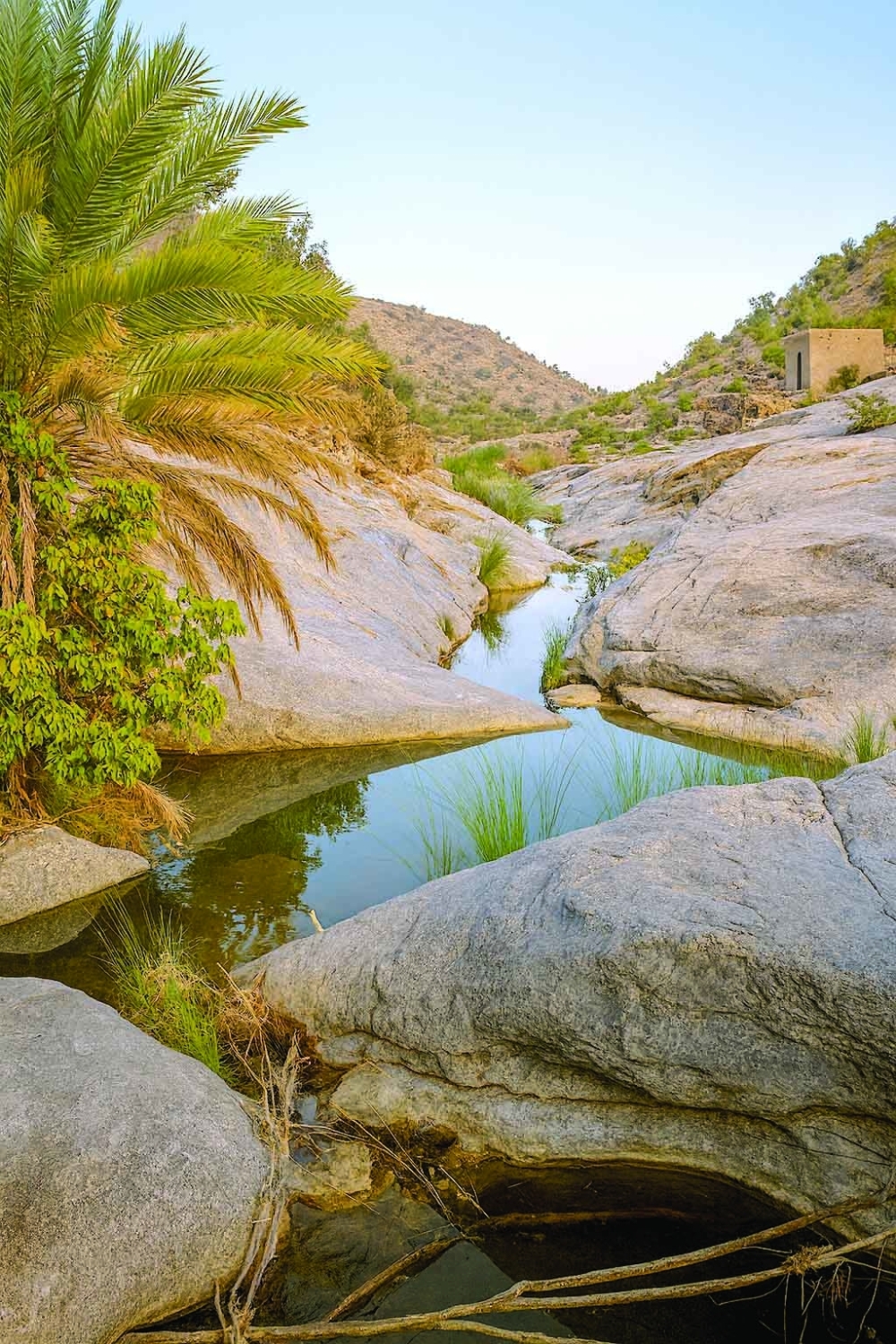
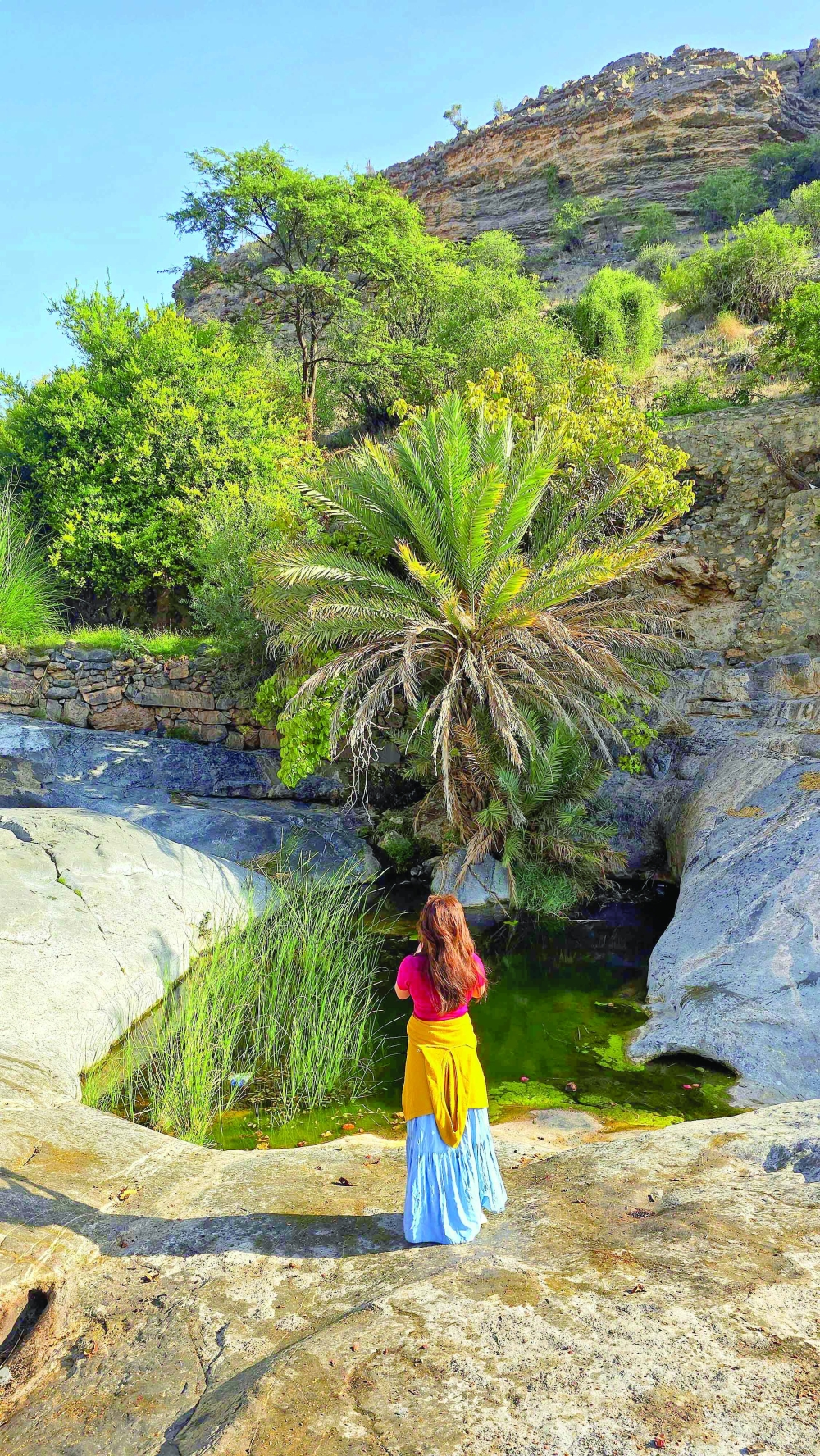
Hidden between two cliffs on Al Jabal Al Akhdhar, it is not a place one simply finds on Google Maps. From the road above, patches of green can be seen far below, divided into plots belonging to different families. Yet the wadi hides an agricultural world of roses, grapes, mulberries, onions, garlic and, during autumn, some of the finest pomegranates we have tasted.
We found it through Malik al Amri.
We have known Malik for years. Over time, he became a friend and our go-to guide whenever we wanted to understand Al Jabal Al Akhdhar beyond its familiar viewpoints. As founder of Cady Tours, he has a talent for making things happen. More importantly, he knows the mountain through family and memory.
We made the two-hour drive from Muscat and met him at a petrol station near the cliff opposite Wadi. Thick clouds covered the mountain as Malik led us towards a pathway used mainly by farmers.
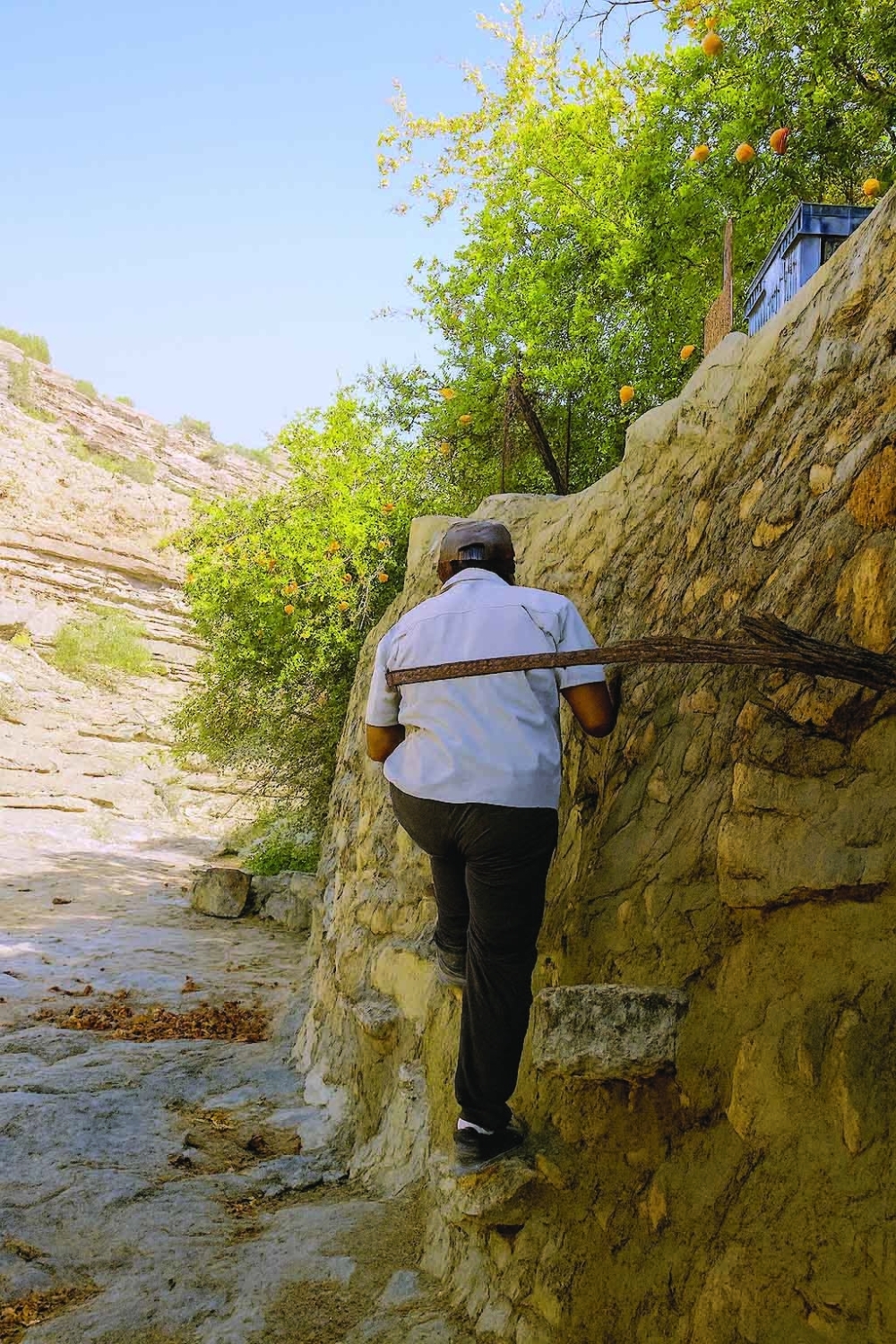
The hike took about 15 minutes. We descended towards the wadi dividing the cliffs, with Malik pointing to a dam that helps supply water to the farms. To enter the gardens, we climbed a concrete wall using protruding steps. Beyond it, wooden posts and mesh fences marked the boundaries between properties.
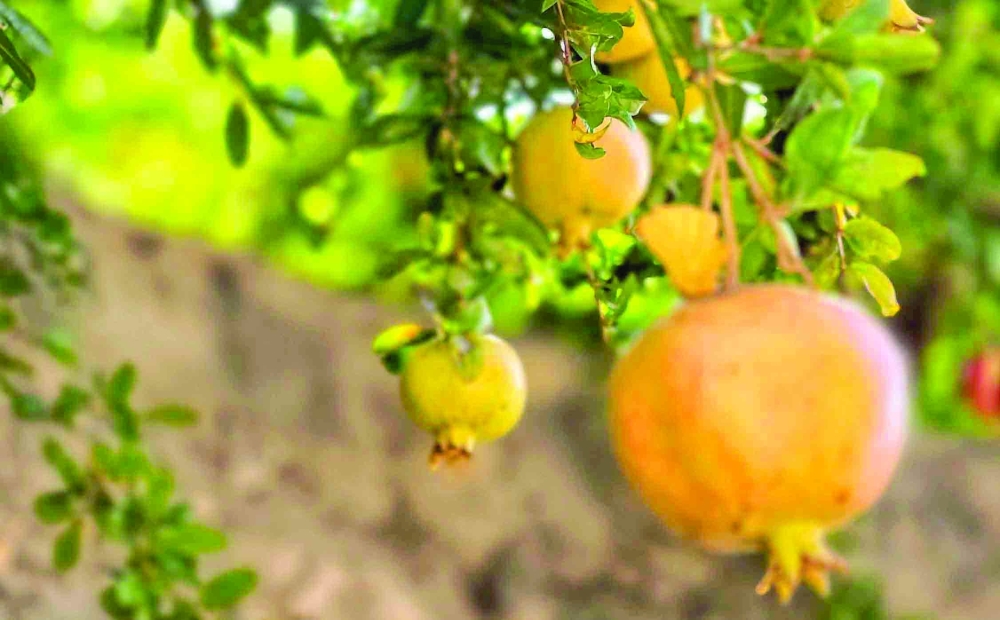
Then the pomegranate trees appeared.
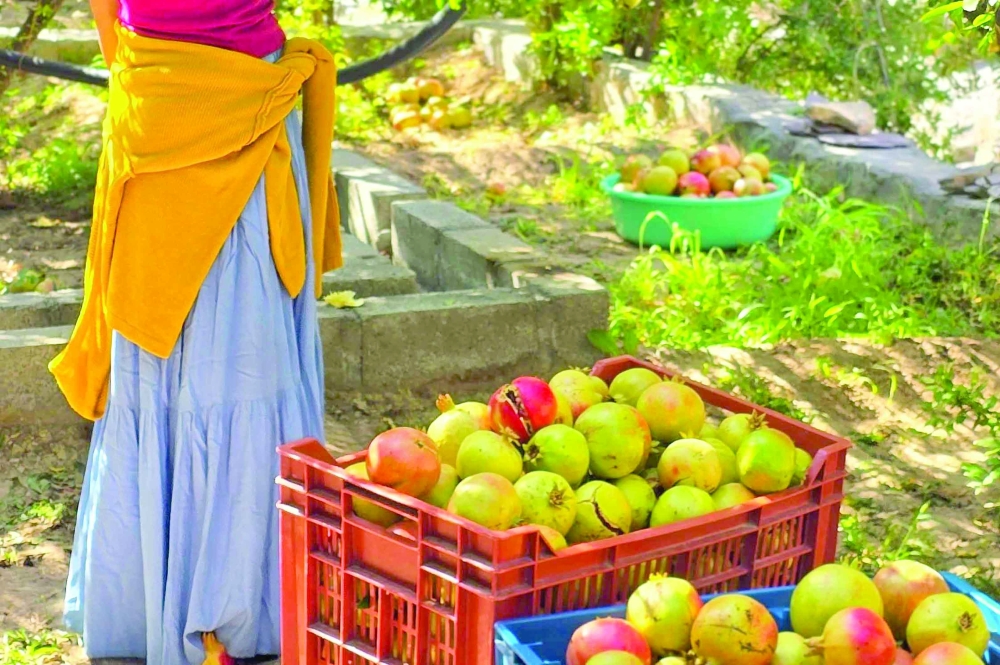
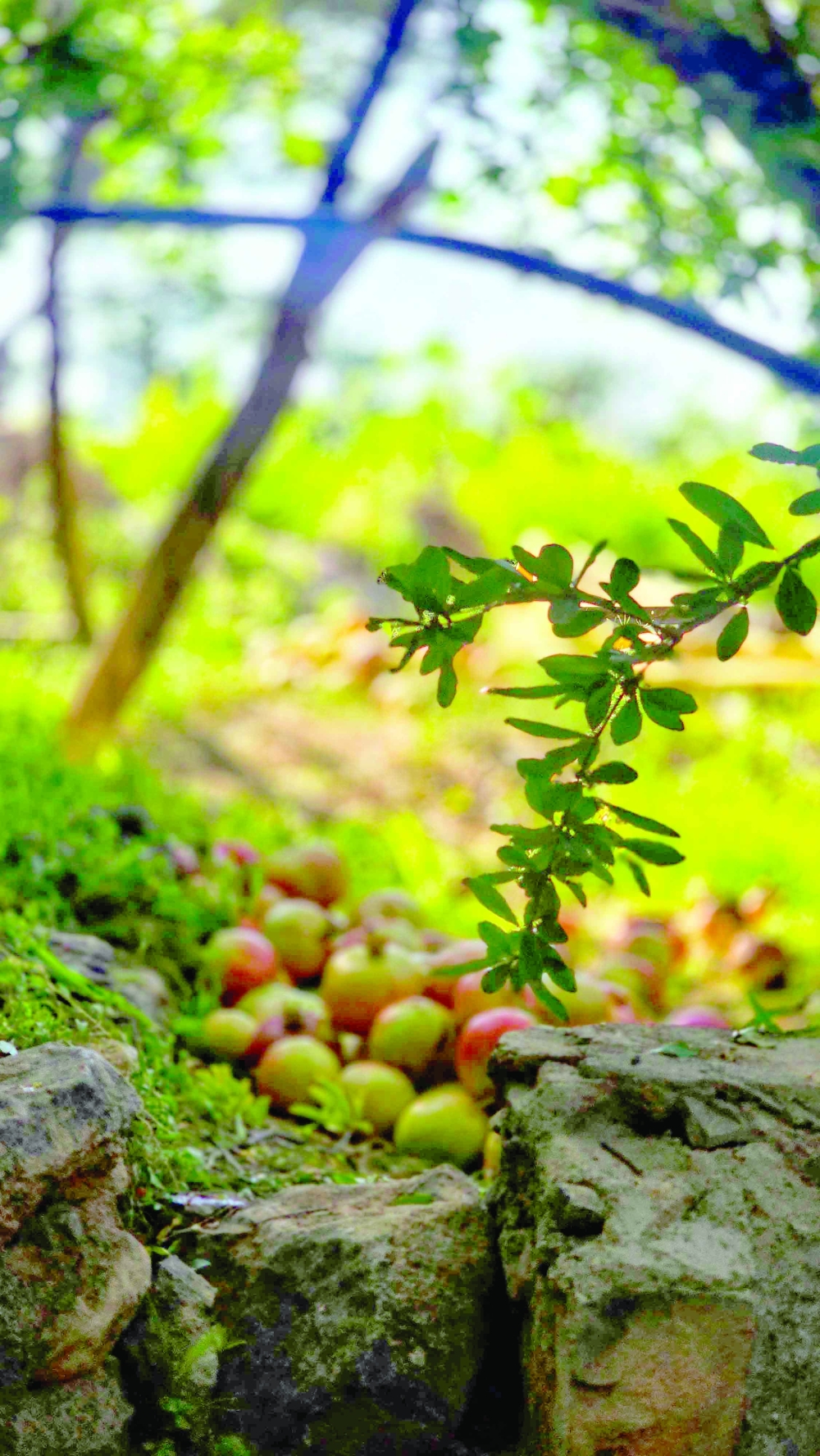
Their branches bent beneath red-and-yellow fruit, some hanging at eye level, others tucked behind leaves. It was less a polished tourist farm than a living family garden. Beautiful precisely because it had not been arranged for visitors.
Malik’s cousin explained that the family once came here together. This was where he and Malik spent their childhood, when harvest meant parents, siblings, cousins and children gathering among the trees. They remembered pomegranates so large that, as children, they compared them to their heads.
Those memories tied the farm to the family’s DNA. Yet the gatherings have changed. The elders grew older. Younger members moved away or found modern jobs. Today, only a few cousins remain involved in farming. Others return occasionally, although the harvest is still divided according to each family member’s share. No one takes more because another relative is absent.
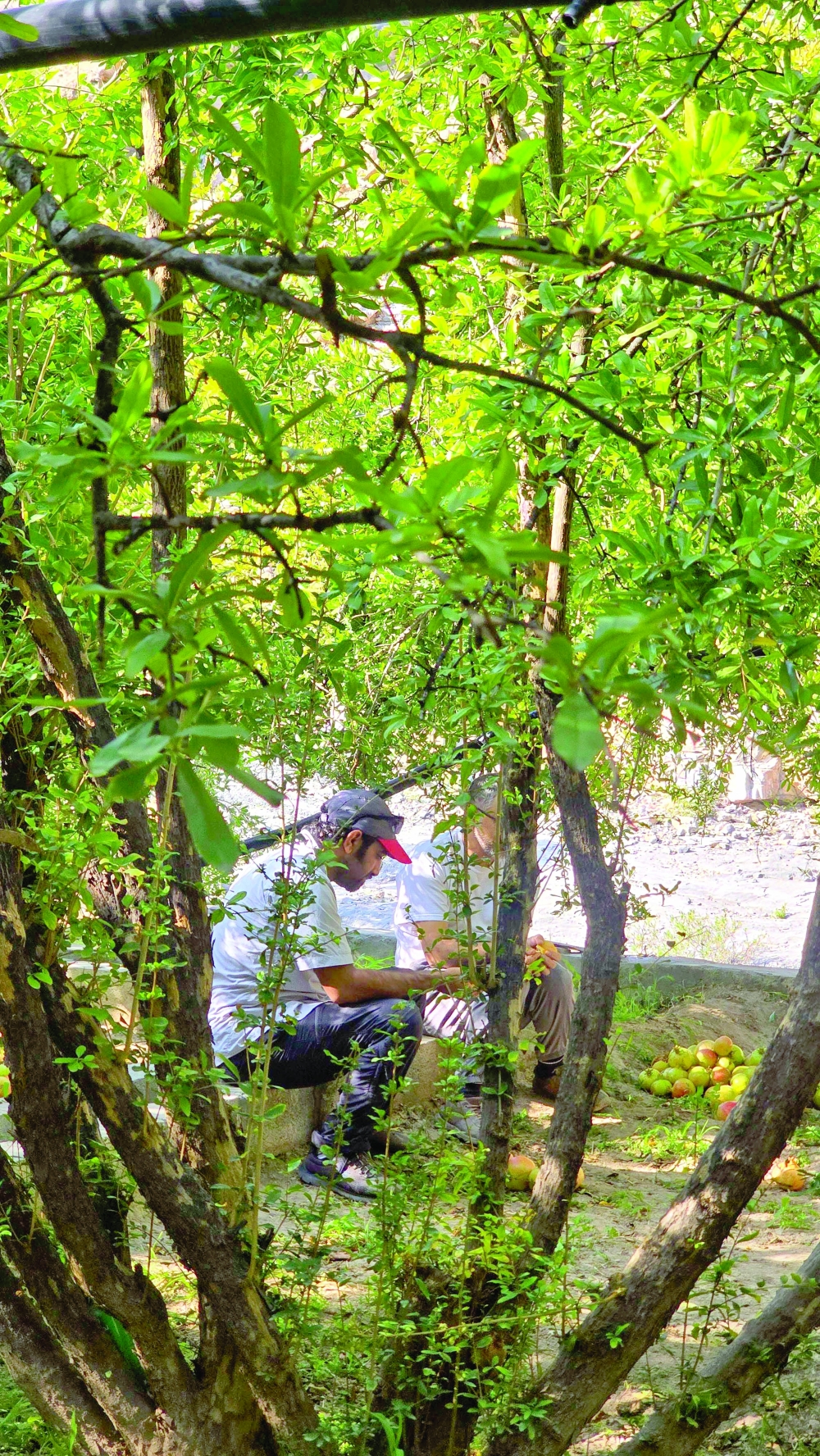
Under the canopy, we watched farmhands work through the trees. Some of those trees, the cousins told us, were older than they were.
There are around 20 gardens spread along Wadi. During pomegranate and rose seasons, farmers negotiate the difficult path to tend and collect their crops. At other times, the terraces produce vegetables or grass for goats. Every patch seems to have a purpose.
But memory can become a measure of change. Malik and his cousins have noticed that the fruit is not always as large as it once was. Water availability varies, while aphids, fruit moths and diseases can damage or crack the crop. Pomegranate trees require regular irrigation during the hottest growing months, precisely when water is most valuable. Farming on steep terraces also means pruning, clearing, watering, protecting and harvesting involve manual labour.
The problem extends beyond Wadi. Across Al Jabal Al Akhdhar, an ageing generation of farmers and the movement of young people towards other professions are changing how orchards are managed. Researchers have also warned that rising temperatures, declining rainfall and the erosion of traditional knowledge are placing pressure on the mountain’s agricultural system.
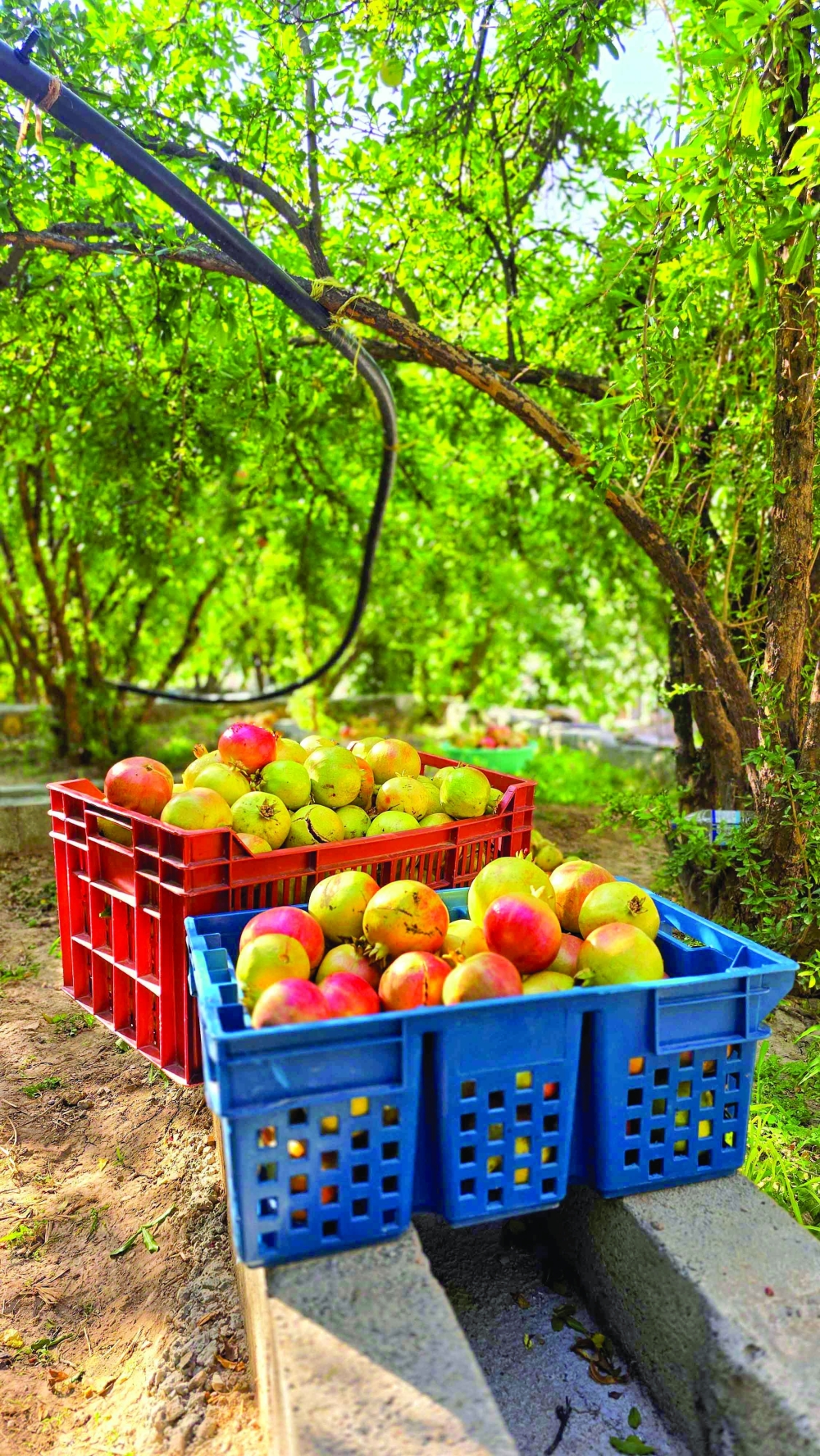
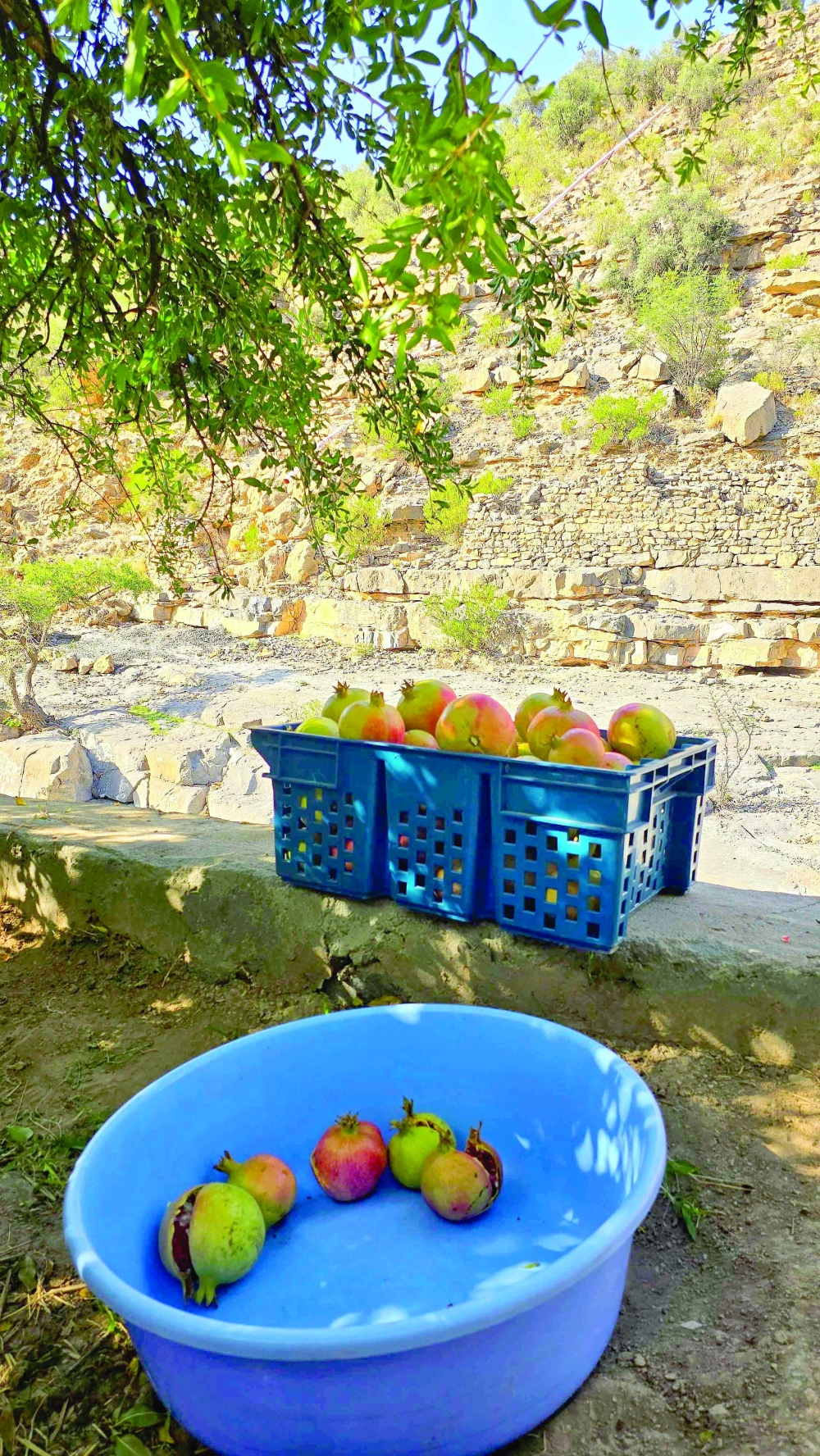
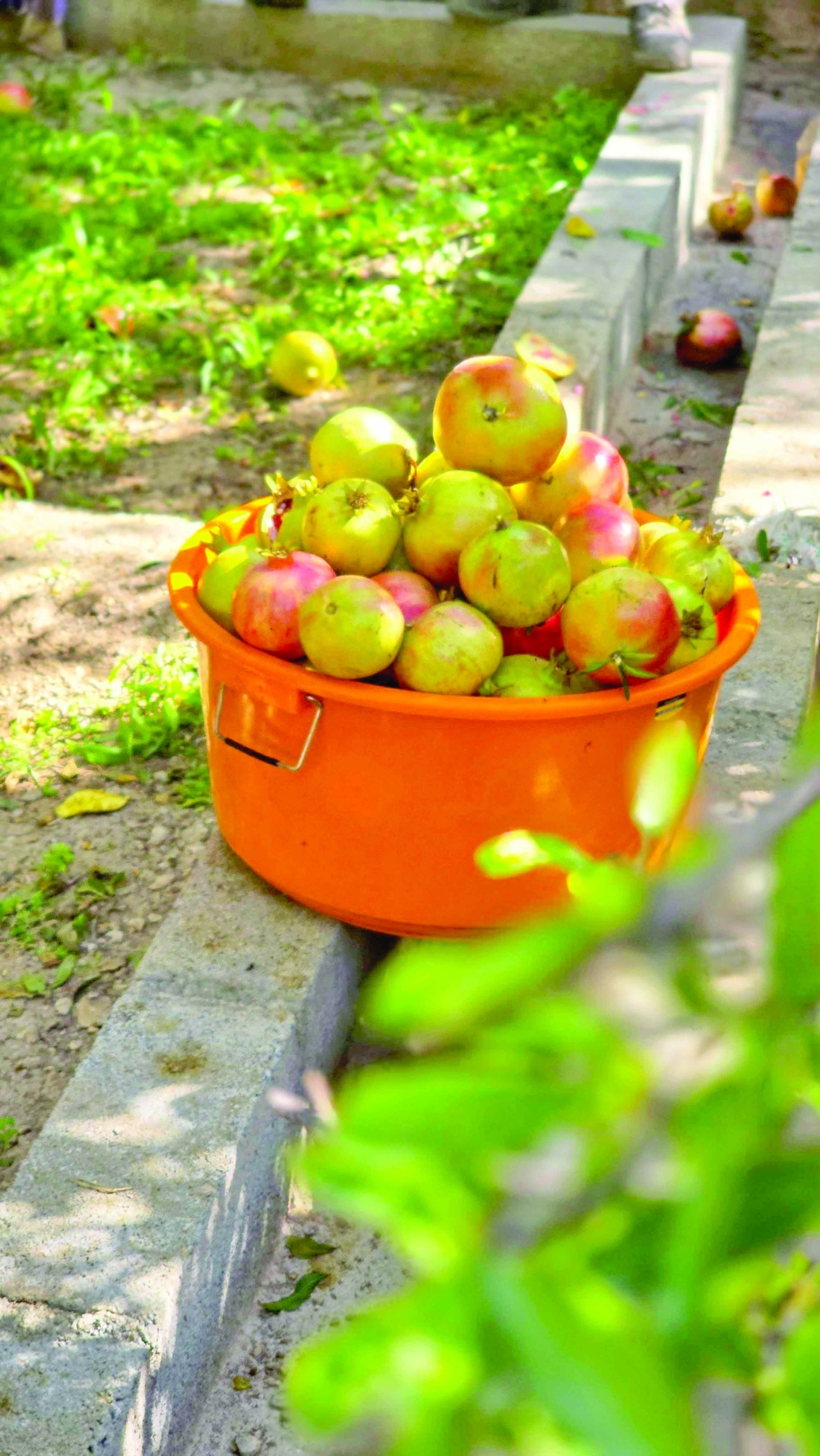
Some owners therefore auction the crop while it remains on the tree. Buyers taste the fruit and bid for trees, taking responsibility for collecting and marketing the harvest. Previous auctions have priced a tree at roughly RO 50 to RO 70, although bids change with weather, quality and demand.
Consumers sometimes complain that Al Jabal Al Akhdhar pomegranates cost more than imported varieties. Malik’s answer was practical: the price is not merely for a piece of fruit. It carries months of work, uncertain water, pest control, difficult access and the risk that part of the crop will never reach the market. For many small farmers, the objective is not extravagant profit but recovering what they spent keeping the trees productive.
By noon, we were ready to climb back. We ended with cups of kahwa beneath the trees. The wadi remained cool under the cliffs, while goats bleated beyond the fences. On the trail, donkey hoofprints remained undisturbed.
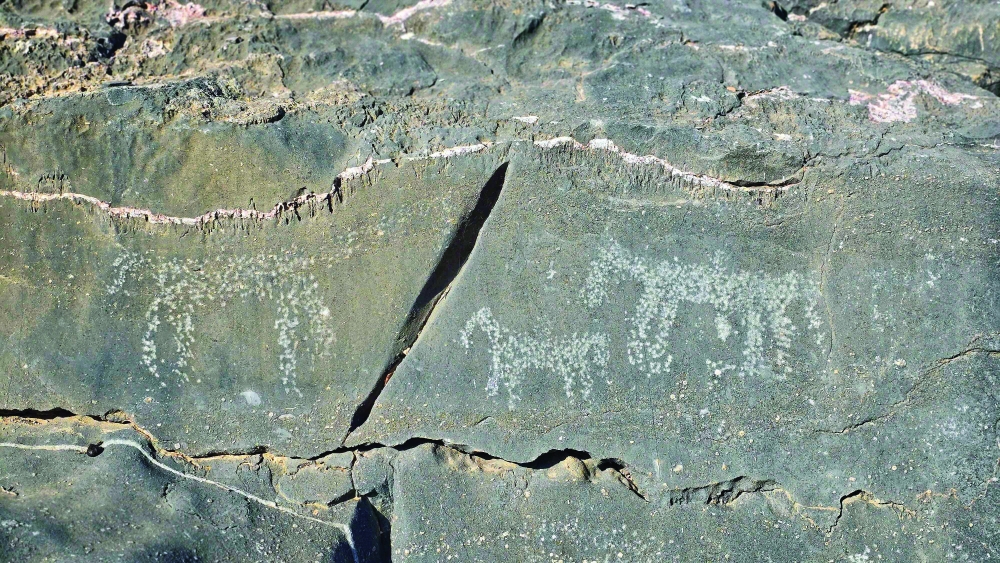
Before leaving, Malik showed us petroglyphs etched into the rock: figures of animals and people made by inhabitants long before us. There are several such sites nearby.
They offered a final reminder that Wadi has been more than a secret place to pick pomegranates. It is a landscape of work and inheritance. Every tree survives because someone walks down, tends it and returns for the harvest. The question is whether the next generation will continue making that journey.
Oman Observer is now on the WhatsApp channel. Click here