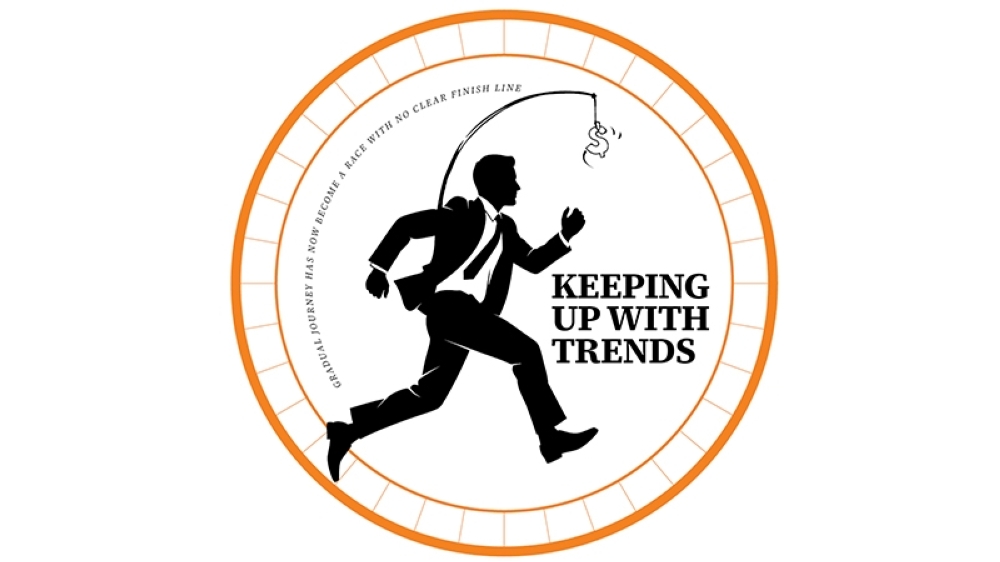
The Internet is changing with new protocols, players, and models; keeping pace with the speed of change is becoming nearly impossible. The main innovation that skyrocketed Internet growth was the World Wide Web, which created seamless worldwide access to information. This innovation was further driven by the web becoming open and accessible. The Internet has grown into an infrastructure of global connections among people, businesses, governments, and devices. A couple of vital questions face consumers, governments, and businesses: first, how will the Internet evolve in the coming years? Will the future of the Internet be centralized in the hands of a few dominant players, or decentralized, with new entrants gaining access and profitability? Will the new rules, regulations, ownership structure, and AI systems be accessible, open, accountable, and transparent?
Generally, internet interactions can happen in three ways. First, consumers may visit a company's homepage directly; second, they can interact through search engines or paid Google advertisements; and third, they can purchase products or services on intermediary platforms like Amazon, Booking.com, or other marketplaces. Some behavioral patterns could persist, and others could change. Consumers may still visit a company website directly, but instead of navigating the home page, they may frequently interact with the company’s AI agents. Platforms like Amazon could retain their role in the value chain with their interface. Discoverability, that is, the search space may significantly change. In the traditional web model, users type keywords, search options, and click the link of their choice. Earlier, consumers were actively involved and owned the experience. But now, in the agentic web or emerging AI-mediated model, systems like Perplexity, ChatGPT, Gemini, and Claude will own the experience end to end. They become powerful horizontal platforms, operating across sectors rather than being confined to a single field like e-commerce, travel, or insurance; they can do everything. This paradigm shift creates a formidable challenge for companies. If AI platforms increasingly handle consumer transactions and requests, businesses may lose consumer connectivity and visibility. As a result, the digital value chain will begin to reshape. The key question is how much consumer traffic, transaction revenue, customer data, and brand loyalty flow to the original business, and how much the AI platforms that control discoverability and the interface capture. In the future, businesses will compete not only for product and service sales but also for ownership of the consumer relationship.
The way we engage with the Internet could also change substantially. AI models introduce a new interaction possibility that will allow consumers to engage with intelligence in a totally new way. Until now, we have had a browser-based experience, but now agents can act based on consumer intent, requiring a new generation of evolving interfaces. Text-based assistants, voice interfaces, digital assistants, robots, and other conversational systems may give consumers more ways to engage with digital intelligence. Businesses that control these interfaces may gain a powerful advantage as they can influence product discoverability, provider choice, and complete transactions. In this perspective, control of the interface may become control of distribution.
Businesses face different bottlenecks. General-purpose AI models do not automatically understand businesses, as they do not necessarily understand proprietary data, business processes, internal rules, customer relationships, or technology architecture. To be genuinely useful, an AI system must connect securely to the organization’s data, software, and workflows. Hence, integration will become the source of competitive advantage. Scaling agentic AI depends not only on powerful models, but also on governed data, interoperability, orchestration, and human accountability.
The internet will shift from an attention to an action economy. In the emerging model, AI systems could compete to comprehend intent and complete tasks. The central question will be whether businesses can remain connected to customers when an AI agent increasingly stands between the customer and the company.
Oman Observer is now on the WhatsApp channel. Click here