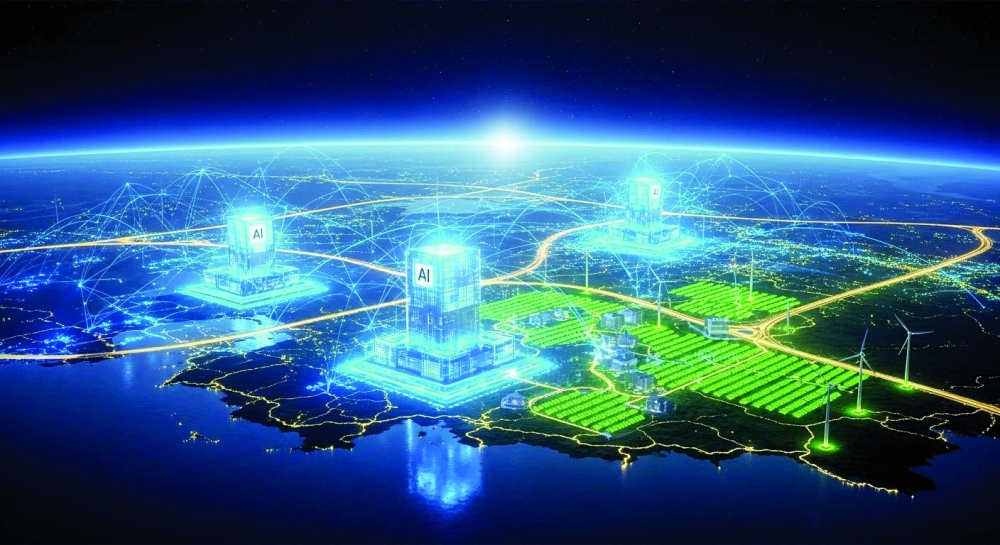
Oman is stepping boldly into the age of AI. With the establishment of an Artificial Intelligence Special Zone in Muscat, the message is clear: the future is not something we are simply waiting to arrive. We are preparing for it, investing in it and creating a place within it.
It is exciting progress, yet perhaps the most interesting question is not what artificial intelligence will eventually be capable of doing, but what this will require us to become.
For generations, we have prepared children for adulthood by placing enormous value on knowledge. Learn the information, achieve the grade, collect the qualification and hopefully secure the career. Today, answers that once required hours in a library can appear on a screen within seconds.
AI can analyse, calculate, translate, organise and generate ideas at remarkable speed. Knowing things is no longer quite the advantage it once was; knowing what to do with what we know may become far more important.
That changes the conversation around education, parenting and our own development. If technology can increasingly provide information, perhaps we need to focus more deliberately on the strengths that make us human: judgement, curiosity, emotional intelligence, creativity, resilience, empathy, intuition, integrity and our ability to connect with others. These may not always be the qualities that receive the highest grades, yet they could become some of our greatest advantages.
Preparing children for that future cannot only be about making them technologically capable. Undeniably, they should understand AI and learn how to use the tools shaping their world. However, a child can be technologically brilliant and still struggle with life. They can find an answer instantly, while being terrified of getting something wrong.
Or master a programme, while struggling to manage frustration, resolve conflict, trust their judgement, or adapt when life does not go according to plan.
Some of the most important preparation for tomorrow still happens in ordinary moments: when children become bored and create something for themselves, when we resist immediately solving a problem for them, or when they navigate disagreement, make a mistake, or experience disappointment.
These moments quietly strengthen resilience, imagination and independent thought, abilities no technology can develop on their behalf.
The same applies to adults. AI can give us back time, remove repetitive tasks and help us work in ways previous generations can barely imagine. There is no wisdom in resisting useful progress simply because it is unfamiliar, although there is wisdom in noticing what we slowly stop doing for ourselves.
If every question receives an instant answer, do we become less comfortable with uncertainty? If every idea can be generated for us, do we exercise creativity less? If every decision can be optimised, do we gradually stop trusting our own judgement?
The challenge of the AI era is not proving that humans are smarter than machines. That feels like the wrong competition altogether, and one we will not win when it comes to speed, information, or sheer processing power.
Our real advantage lies in becoming better at what technology cannot replace: connecting, questioning, discerning, adapting, understanding nuance and bringing meaning to what we create.
Oman is preparing its technology for the future, and perhaps alongside that progress, we must become equally deliberate about strengthening ourselves.
The smartest person in tomorrow’s room may not be the one who knows the most. It may be the one who knows what deserves questioning, what requires compassion, what cannot be outsourced and what should never be surrendered for convenience.
As machines become faster and more capable, our greatest advantage may be remembering the strengths that were ours all along. The more intelligent our technology becomes, the more intentionally we must develop what makes us unmistakably human.
Oman Observer is now on the WhatsApp channel. Click here