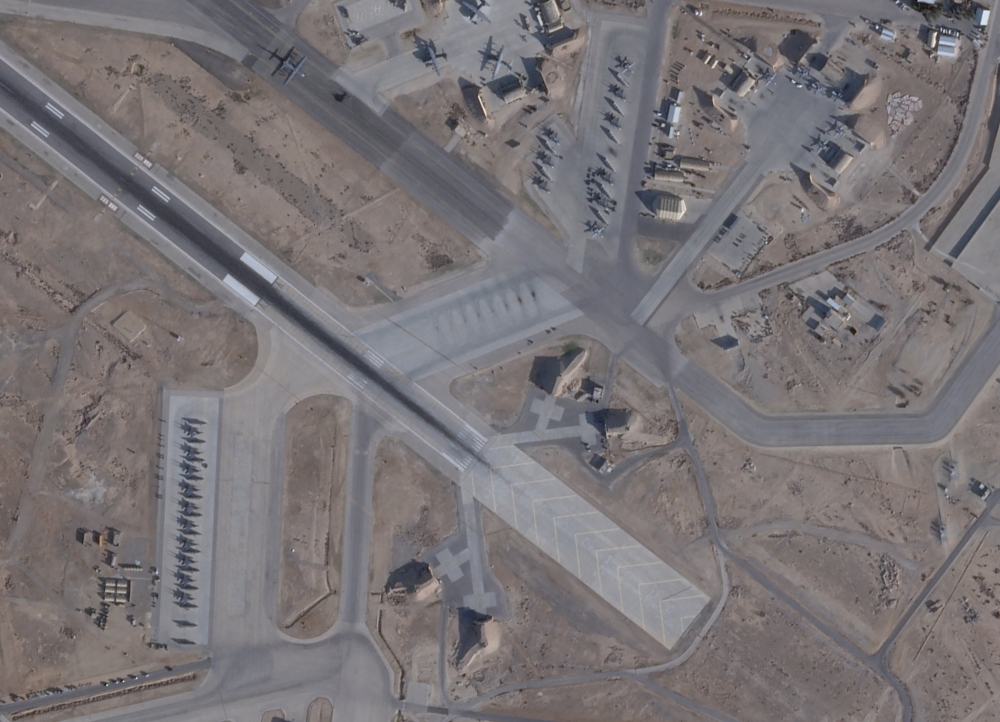





The Iranian attack that killed two U.S. soldiers and left one service member missing on Friday was the fourth in five days on U.S. forces in Jordan, multiple U.S. officials said. Taken together, the attacks have wounded dozens of U.S. service members and damaged several helicopters.
The flurry of attacks and the losses they have caused are a sign that Iranian forces not only still have ample missile stocks but have also become more adept at evading U.S. air defense systems, said the U.S. officials, who were speaking on the condition of anonymity to discuss operational matters.
Jordan, which hosts major U.S. air bases, grew in importance in the run-up to and the early days of the war, as the Pentagon shifted several troops from Bahrain, the United Arab Emirates, and Qatar to relatively more secure locations in Jordan and Israel. The country’s role in U.S. operations has only increased as other U.S. allies in the region have restricted Washington’s ability to base troops on their territories and to fly aircraft over them, the U.S. officials said.
In early July, Iran widened its attacks in the region, including Jordan for the first time since Iran and the U.S. signed a ceasefire agreement in June.
The U.S. officials offered a recounting of the last five days of Iran’s attacks on Jordan, which the Pentagon has not yet discussed in detail publicly.
The first attack to hit U.S. forces in Jordan struck a residential facility at King Faisal Air Base, wounding as many as five U.S. service members, they said. The second hit a base in eastern Jordan, where U.S. Black Hawk helicopters were operating, damaging a significant number of them.
Then, Iranian missiles hit Jordan’s Muwaffaq Salti Air Base in Azraq, which is the same base where the troops were killed on Friday, the officials said. The earlier strike wounded about 20 U.S. troops rushing to take cover in bunkers. No one was killed in that barrage. But on Friday, when the Iranians struck the base again, two U.S. service members were killed, and four others were injured, according to U.S. officials. Other personnel were evaluated for minor injuries and returned to duty.
The Pentagon declined to comment.
On Friday, the Iranian army said it had launched a drone attack targeting fuel tanks at the U.S. base in Azraq. The Revolutionary Guard also said it had used missiles and drones to target aircraft shelters at the base, according to the Fars News Agency, a semiofficial news outlet affiliated with the Guard.
Jordan’s location allows the United States to conduct “more efficient air operations across Syria, Iraq and the broader region,” said David Deptula, a retired Air Force lieutenant general who was a main architect of the 1991 Persian Gulf air war.
“Friday’s attack was therefore not just an attack on a base,” he said in an email Saturday. “It was an attack on the U.S. regional coalition and an attempt to make the political cost of hosting American forces greater than the security benefit.”
The U.S. military announced Saturday evening that it had launched retaliatory strikes to degrade Iran’s threat to shipping in the Strait of Hormuz and to “swiftly punish Islamic Revolutionary Guard Corps forces who launched attacks against American service members in Jordan.”
Even before those strikes, President Donald Trump signaled that he planned to increase strikes on Iran in the next week and intended to hit more Iranian infrastructure, including bridges, electrical power plants and distribution systems.
This article originally appeared in The New York Times.
Oman Observer is now on the WhatsApp channel. Click here