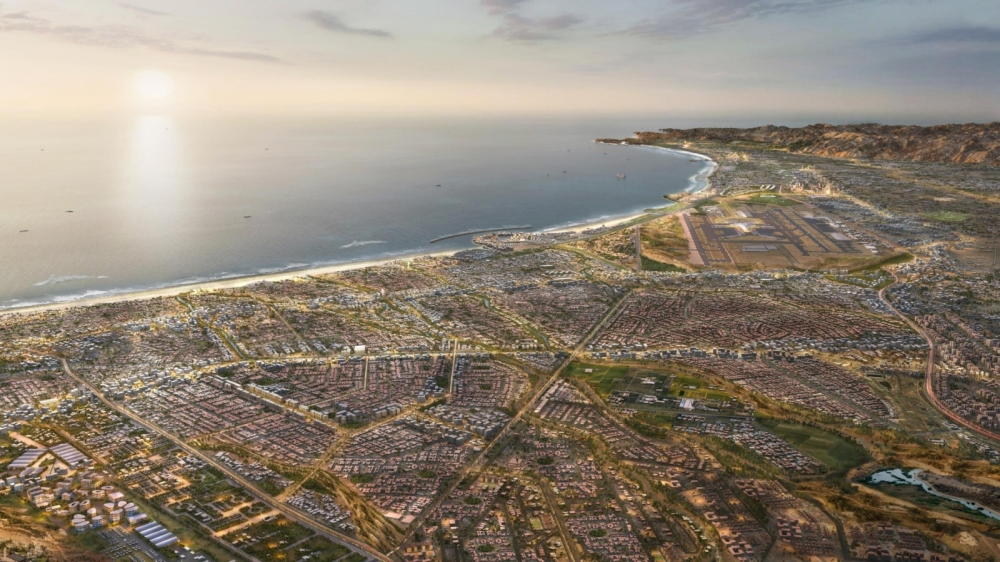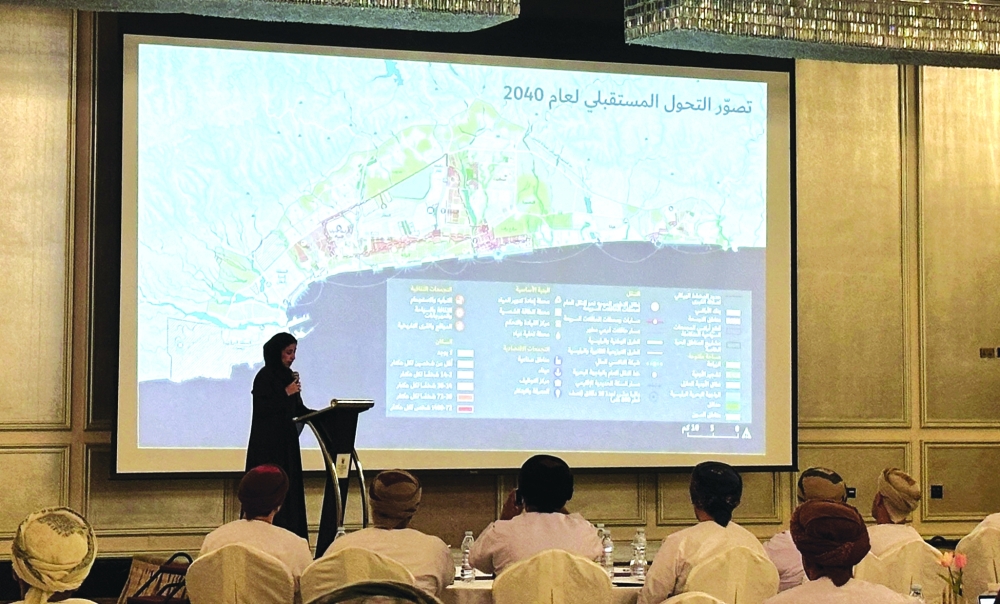





SALALAH: The final Greater Salalah Structure Plan has outlined an estimated RO 4.3 billion investment programme through 2040, identifying 261 proposed interventions to support the city’s long-term economic, urban and infrastructure development.
Presented on Monday, July 13, during a workshop on the final general framework of the plan, the programme comprises 114 proposed capital projects and 147 technical assessments covering transport, infrastructure, economic diversification, environmental resilience and strategic urban development.
Capital projects account for an estimated RO 4.26 billion, while technical studies and assessments represent approximately RO 59 million.
The figures are planning estimates presented under the structure plan and do not constitute approved government expenditure or confirmed investment commitments. Individual initiatives would remain subject to detailed planning, financing, procurement, regulatory approvals and implementation decisions.
The proposed financing model assumes an almost equal public-private split, with around RO 2.17 billion, or 51 per cent, expected from public investment and approximately RO 2.15 billion, or 49 per cent, from private capital.
The framework proposes implementing the programme in three phases between 2026 and 2040.
The first phase, covering 2026–2030, carries an estimated investment requirement of around RO 1.40 billion and focuses on enabling infrastructure and priority development initiatives.
Indicative projects include public transport schemes, renewable-energy facilities, desalination and wastewater infrastructure, waste-to-energy, healthcare and education facilities, tourism clusters, logistics-related studies and coastal-resilience measures.
The second phase, from 2031 to 2035, is estimated at approximately RO 1.25 billion, while the final phase, covering 2036–2040, accounts for around RO 1.65 billion.
Initiatives indicated across the later phases include heritage development, additional healthcare and education facilities, a convention centre and a proposed home-port project.
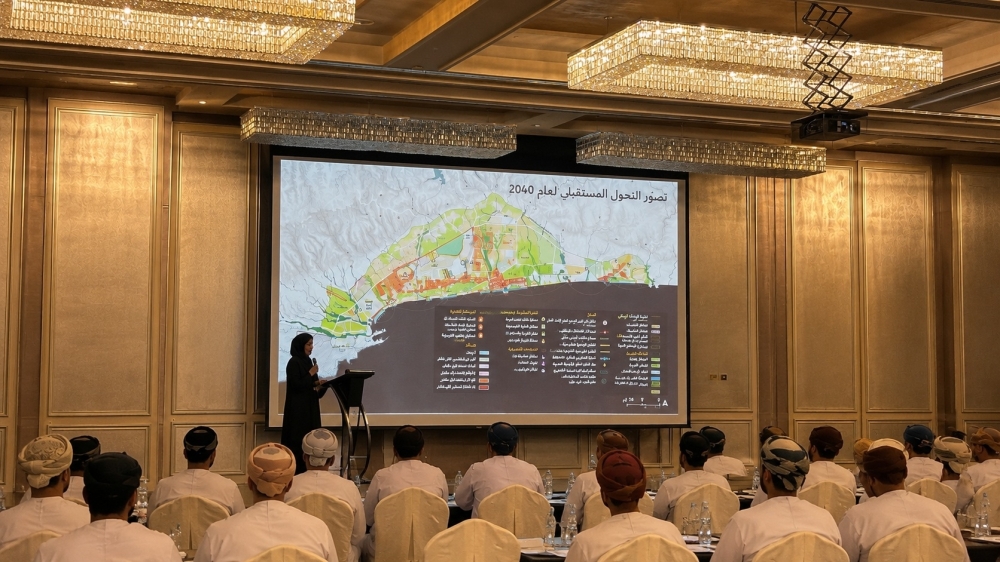
Strategic spatial development receives the largest proposed allocation at approximately RO 1.89 billion, or about 44 per cent of the overall investment requirement.
Infrastructure systems account for around RO 1.34 billion, while sustainability and climate-related measures are estimated at approximately RO 469 million. Transport initiatives account for about RO 344 million, with further proposed investment in heritage, natural-resource management and programmes supporting economic growth.
The framework also identifies six priority investment locations: the Airport City Logistics Hub, Port and Free Zone, Raysut Pharmaceutical Precinct, Innovation District, Civic Precinct and Taqa Heritage Quarter.
These locations are intended to support activity across logistics, manufacturing, pharmaceuticals, research, public services, tourism and heritage-led regeneration.
Planning scenarios presented during the workshop project Greater Salalah’s population rising from around 378,500 in 2024 to nearly 613,000 by 2040, while employment could increase from approximately 191,750 to more than 357,000.
The planning model also projects gross domestic product increasing from about RO 3.6 billion to around RO 10 billion over the same period. The figures are scenario-based and would depend on investment delivery, productivity growth, market conditions and private-sector participation.
Eng Aseela al Busaidi, Technical Director of the Greater Salalah Structure Plan at the Ministry of Housing and Urban Planning, said the framework brought the city’s economy, housing, transport, environment, infrastructure and heritage together within a single spatial system.
“We are not dealing with separate projects, but with an integrated system in which every project supports the others and every investment creates added value for its surroundings,” Al Busaidi said.
She described the structure plan as an integrated roadmap towards 2040, combining a more diversified economy, a more vibrant city, a more efficient transport network, a more sustainable environment, resilient infrastructure and a firmly rooted cultural identity.
Al Busaidi said completing the plan marked the beginning of implementation rather than the end of the planning process.
“Real success will not be measured by what is written in reports, but by what we collectively achieve on the ground,” she said, stressing that continued cooperation among government entities and other stakeholders would be essential to translate the vision into tangible projects and strengthen Salalah’s position as a leading economic, tourism and urban centre in the Sultanate of Oman.”
Oman Observer is now on the WhatsApp channel. Click here