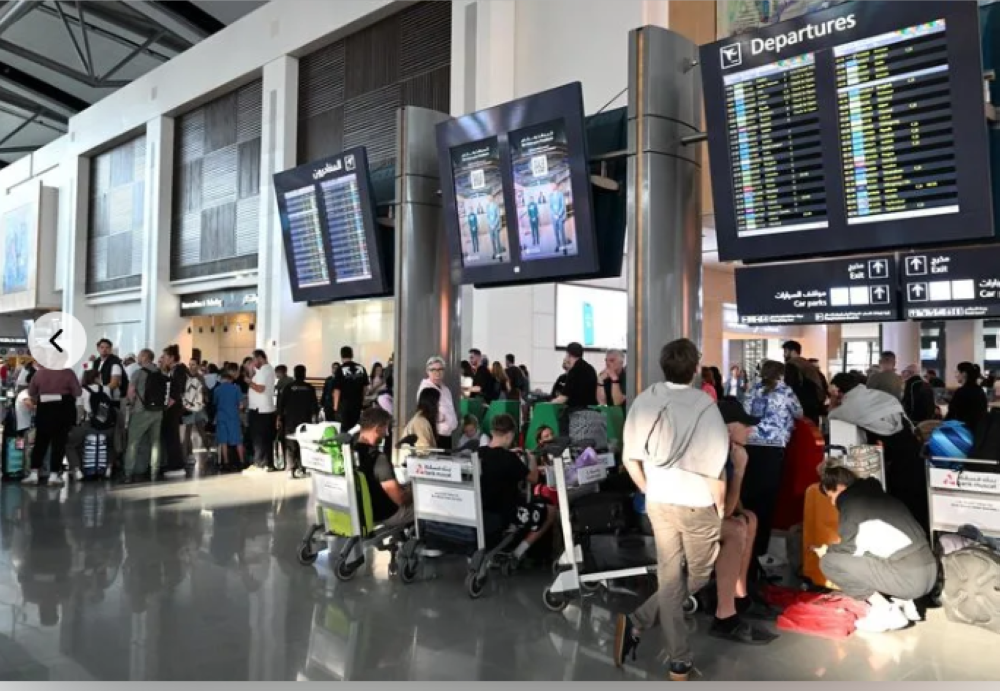





According to the International Air Travel Association (IATA), forward ticket sales in May remained 30% below May 2025 levels, and bookings increased steadily between March and May, indicating a gradual resumption of connections between the Middle East and global air travel markets.
While bookings to the Middle East remain below 2025 levels, they have recovered steadily since April. This shows the lasting appeal and importance of the region in the global air transport network.
The rerouting and admirable agility of other regions, which helped compensate for the capacity lost in the Middle East because of the disruptions, is likely a temporary phenomenon and not a structural modification to the network.
Barring any deterioration in the geopolitical situation in the region, we expect it will gradually recover the traffic lost.
Booking trends in other regions have been mixed. While forward bookings for summer travel to Asia Pacific, Europe, and North America remained around or above 2025 levels, growth slowed between March and May.
Relative to the same month in 2025, bookings fell from an index level of 143 to 100 in Asia Pacific, from 102 to 91 in Europe, and from 107 to 99 in North America. Undoubtedly, some of the lost momentum in bookings in these three large markets is a consequence of higher fuel and ticket prices. Since late February, jet fuel prices have roughly doubled, inevitably affecting ticket prices.
However, the evolution is also evidence of how the global air transport network responds to any local disruption. At the height of the disruptions in the Middle East, Asia Pacific expanded its bookings the most.
As the Middle East is again able to satisfy more traffic, other regions are giving back some of their gains. The sharper declines in summer bookings seen in Africa and Europe in April and May also illustrate their reliance on Middle Eastern transit hubs.
“Air passenger demand was down 2.2% year-on-year in May on the impact of the conflict in the Middle East. The decline was centered on carriers in the Middle East with a 28.4% year-on-year fall. That’s a significant improvement on the 46.6% decline recorded for April, a sign of the region’s resilience. Notably, we also saw year-on-year contractions in demand in both North America and Asia, largely related to domestic market conditions in the US and China.
May demand appeared to be largely resilient in the face of high fuel prices and airfares. While the sharp drop in oil prices is an encouraging development, the challenges created by the war will likely persist for some time. Oil supply through the Strait of Hormuz remains uncertain, and it is likely to take time before the benefit of lower oil prices is reflected in ‘normalized’ jet fuel pricing. In the meantime, airlines that are operating on a 2.0% margin will have little choice but to continue testing demand resilience with higher fares that attempt to cover elevated fuel costs,” said Willie Walsh, IATA’s Director General.
Oman Observer is now on the WhatsApp channel. Click here