




Books have long stood at the heart of every civilisation’s intellectual life. More than containers of knowledge, they preserve memory, transmit ideas and connect generations. Omani society was no exception. For centuries, Omanis devoted remarkable care to collecting, copying, binding and preserving books, and today Omani manuscripts can be found in libraries and private collections across the world.
During the late nineteenth and early twentieth centuries, Zanzibar became one of the most important centres of Omani cultural activity. Omani scholars, merchants and intellectuals living there encouraged the copying, printing and circulation of books. The island also received publications from Egypt, the Levant and India, making it a gateway through which new ideas reached Oman. Thanks to the busy trade routes of the Indian Ocean, books travelled alongside textiles, household goods and other merchandise carried by merchants and sailors.
These maritime networks did more than move goods; they connected scholars across the Arab and Islamic world. Omani intellectuals exchanged books, newspapers and journals with their counterparts abroad, while wealthy individuals often financed the printing of Omani works, continuing the publishing tradition established by the Sultan’s Press in Zanzibar. As a result, early printed books gradually became as common in Omani libraries as handwritten manuscripts.
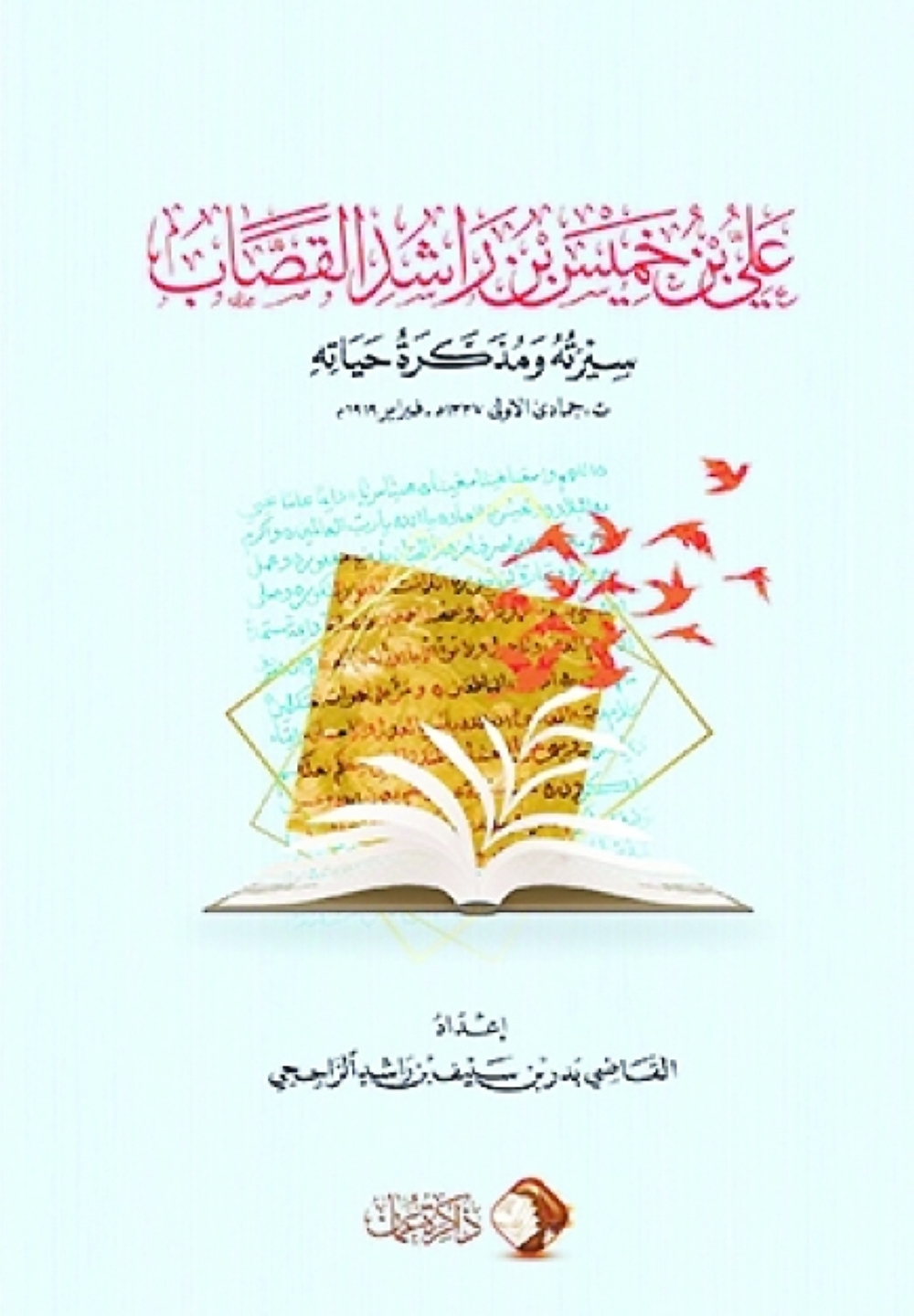
One of the most valuable records of this vibrant literary culture is the diary of Ali bin Khamis al Qassab, written between 1908 and 1919. Published by the Oman Memory Centre in 2019, the diary documents his travels and commercial activities between Oman and Zanzibar, but it also offers a remarkable picture of everyday intellectual life. Through its pages, readers discover how books were bought, sold, borrowed, exchanged and carefully preserved.
Al Qassab himself was far more than a merchant. He was an author, manuscript copyist and book collector who spent several years in Zanzibar before settling in Al Rustaq in 1912. He studied under distinguished Omani scholars, including Saif bin Nasser al Kharousi and Shaikh Salim bin Mohammed al Rawahi. He also wrote two books of his own and maintained an impressive personal library that was later transferred to another important private collection.
His correspondence reveals the excitement surrounding newly published books. In a letter written in 1910, Al Qassab informed his friend Saif bin Hamad al Khudhuri that Shaikh Abdullah bin Hamid al Salimi’s long-awaited commentary on the 'Musnad of Al Rabi‘ had finally arrived. He urged him to secure a copy quickly because only a limited number were being distributed among scholars and students.
Other letters show books travelling regularly between friends and colleagues. In one message written in 1917, Al Khudhuri informed Al Qassab that he had dispatched several requested books through travellers heading to Oman. The letter also mentions another recently published work that was proving difficult to sell, describing it as “a slow-moving commodity” despite its scholarly value. Such remarks provide rare evidence of the early book market in Oman and reveal that not every publication enjoyed commercial success.
The diary also preserves detailed inventories of Al Qassab’s personal library. One list records forty-four titles covering an impressive range of subjects, including Islamic law, theology, grammar, rhetoric, poetry, astronomy, medicine, history, logic and devotional literature. Some entries even combine several works under a single heading, illustrating both the diversity of his collection and the broad intellectual interests of educated Omanis during the period.
Books were not merely collected; they were actively traded. On one occasion, Al Qassab recorded receiving fifty copies of The First Drop of Rain by Mohammed Faraj al Najjar. He carefully listed the names of fifteen buyers, the number of copies each purchased and whether payment had been completed. By the end of his record, thirty-five copies had been sold, although he did not mention what became of the remaining stock.
Other entries describe consignments of books sent to him specifically for sale. Among them were multiple copies of The Pillars of Islam, complete with prices and records of individual sales. These details demonstrate that books had become recognised commercial goods circulating through established trading networks rather than remaining confined to scholarly circles.
Equally revealing are Al Qassab’s meticulous records of borrowed books. He noted the name of every borrower, the title borrowed and the date of each loan. His collection circulated among scholars, teachers and students, reflecting a culture in which knowledge was shared as readily as it was owned. Works on theology, grammar, hadith, poetry and even Al Ghazali’s 'The Revival of the Religious Sciences' appear in these borrowing records.
The diary contains many other glimpses into the practical world of books. Al Qassab carefully recorded purchases of notebooks, pencils and writing materials, together with the costs of binding books. During a stop in Karachi in 1919, he paid to have books professionally rebound and even lent money to others for the same purpose. These entries suggest that Karachi had become an important regional centre for bookbinding and publishing, serving readers across the Indian Ocean.
Taken together, Al Qassab’s diary paints a vivid picture of a society deeply committed to learning. Books were treasured possessions, valuable trade goods and essential tools of scholarship. They crossed seas with merchants, travelled in the luggage of pilgrims and students, passed from hand to hand among friends, and found permanent homes in private libraries. More than a personal journal, Al Qassab’s diary is a remarkable historical document that reveals how books helped connect Oman with the wider intellectual world during the early twentieth century, preserving a culture in which the written word occupied a place of lasting honour.
Books on the Move: Buying and Exchanging Books among Omanis (1908–1919) by Awad al Luwaihi
Translated and adapted by Badr al Dhafari
Oman Observer is now on the WhatsApp channel. Click here