




MUSCAT: Sultan Qaboos University (SQU) reaffirmed its commitment to advancing its infrastructure and enhancing the educational environment through a series of completed, ongoing, and future development projects aligned with Oman Vision 2040.
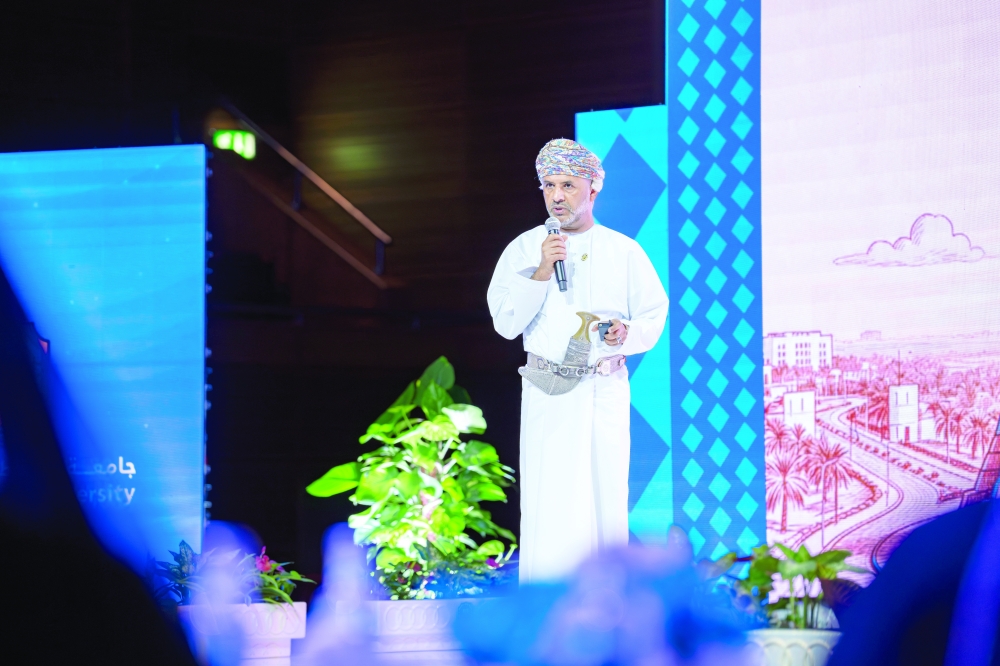
HH Sayyid Dr Fahd bin Al Julanda al Said, Vice-Chancellor of SQU, recently stated that the university made significant progress in 2025 by completing and equipping a virtual reality laboratory, alongside the development of active learning classrooms across six colleges.
An active learning laboratory equipped with thirty-three 3D computers was also established, in addition to a food innovation laboratory and the upgrade of the animal laboratory.
Sayyid Dr Fahd said that SQU also developed meeting and study spaces within the main library, upgraded sports facilities and established business incubators, all aimed at fostering an interactive and innovation-driven academic environment. Several halls and facilities were also renovated to further support productivity and institutional excellence.
In terms of ongoing projects, the university is currently implementing a number of initiatives that address various academic and operational needs. These include the construction of a new College of Law building, the establishment of a ground station for receiving satellite imagery for research purposes, new laboratories and facilities for the College of Engineering, particularly in the field of drones, and the expansion of the College of Nursing. Additional efforts include the renovation of female student housing facilities and the construction of a new administrative building for staff.
Looking ahead, SQU is pursuing a range of strategic projects designed to elevate the quality of campus life and academic delivery. These include the development of a student residential city for male students in partnership with the private sector, as well as a new housing complex for female students with a capacity exceeding 700 residents. Plans also include the expansion of the College of Arts and Social Sciences and the College of Economics and Political Science, enhancing campus accessibility for people with disabilities, and further upgrading facilities to improve the overall student experience.
The university’s future vision also encompasses the establishment of an Emerging Technologies Unit, a research centre complex, a veterinary clinic, and new facilities for the earthquake monitoring centre. These initiatives aim to strengthen research capabilities and provide a comprehensive environment that supports innovation and academic excellence.
Dr Nasser bin Musabah al Zaidi, Deputy Vice-Chancellor for Administrative and Financial Affairs, highlighted that the male student residential city project is designed to accommodate up to 6,000 students upon completion, with the first phase expected to house 2,000 students. The development will feature integrated facilities, including sports amenities, a mosque and a commercial area.
He explained that the project has progressed significantly, having been introduced to the investment sector in Oman and reaching an advanced stage prior to awarding it to a developer. The first phase is expected to be delivered within three to four years.
Oman Observer is now on the WhatsApp channel. Click here