There are moments in history when the world seems to lean towards darkness — when the language of war grows louder than the language of reason, and the space for dialogue narrows to almost nothing. The escalating tensions between Iran and Israel have brought the region to such a moment. And yet, not all voices have been raised in anger. Some have chosen to remain calm; Oman is one of them.
In the Sultanate of Oman, diplomacy is not an emergency response; it is a way of being. It is a belief, carefully nurtured over decades, that even the most complex conflicts can be softened — not through power, but through persistence, patience and trust. And in a time when escalation can feel predictable, that belief becomes a quiet act of courage. Muscat has become, once again, a place where the world can exhale.
While others draw lines, Oman erases the idea that those lines must be permanent. It keeps channels open when they are most at risk of closing. It speaks to all parties — not to take sides, but to ensure that dialogue itself does not become a casualty of war. In doing so, it preserves something essential: the possibility of a different outcome.
Because wars do not end when the fighting stops. They end when the conversation begins again. This is why that day when leaders recently arrived in Muscat carries a meaning deeper than its headlines. On that day, they arrived not for a ceremony, but for a purpose. The leaders’ meetings with His Majesty Sultan Haitham bin Tarik were shaped by urgency but guided by wisdom.
In the quiet of those rooms, something powerful took place. A shared understanding that the region does not have to move blindly towards escalation, that there remains another path, however narrow, towards de-escalation and stability.
Oman has always understood that peace is not loud. It does not arrive with a parade or sudden victory. It grows slowly, often invisibly, in conversations that never make headlines and decisions that are felt long before they are seen. It is built by those willing to listen when it is easier to speak, to wait when it is easier to react, to believe when it is easier to surrender to certainty.
Oman’s power lies in its refusal to be hurried by the speed of conflict. While others escalate in real time, Oman slows time down. It creates pauses — small, fragile, but essential. And in those pauses, options reappear.
Geography has given Oman a front-row seat to the crisis, positioned at the edge of the Strait of Hormuz, where every shake in the region is felt in global markets and maritime security. Hence, instead of turning that position into leverage for pressure, Oman has transformed it into a platform for stability — engaging quietly, persistently, to ensure that the flow of trade does not become another casualty of war.
Oman has built something rare: a reputation for saying what it means and meaning what it says — without further explanation. It does not speak for effect; it speaks for outcome. And because of that, even opponents listen. Of course, there are no guarantees. The path from tension to peace is rarely straight, and the current ceasefire remains fragile, exposed to the smallest spark.
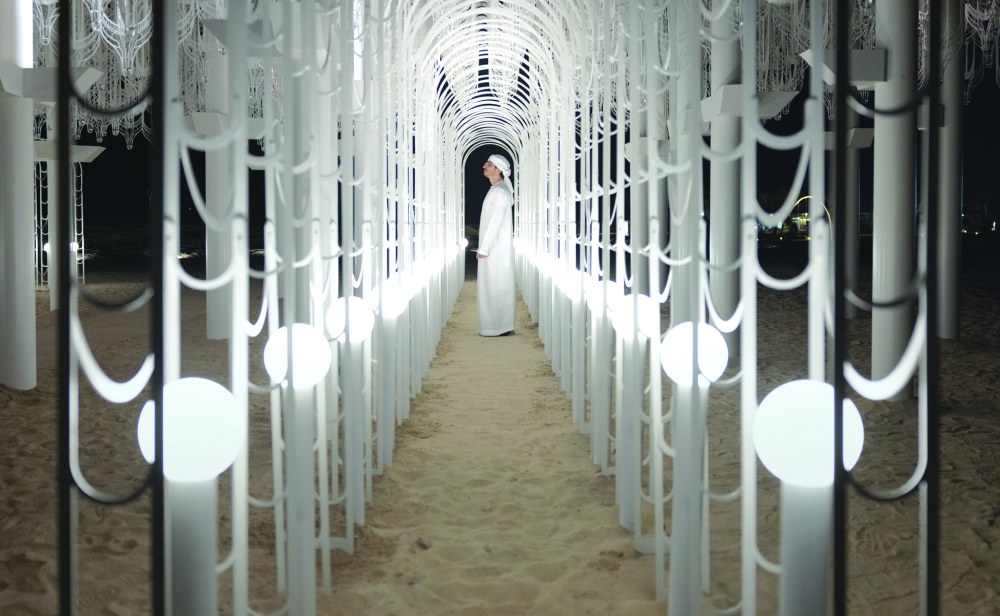
Oman builds corridors where none seem possible. It constructs quiet passageways between adversaries who no longer speak publicly, shaping conversations that move beneath the surface. And in a crisis where every public word can inflame, the unseen becomes powerful.
In a region often defined by its storms, Oman has become something else entirely: a source of light between them. Not a light that blinds or demands attention, but one that endures — steady, patient and unwavering. A light that reminds the region, and perhaps the world, that even in the most uncertain of times, peace is not beyond reach. It is simply waiting — for those with the courage to choose it.
Oman Observer is now on the WhatsApp channel. Click here