




Star Suhail, known internationally as Canopus, is the second-brightest star in the night sky — an ageing supergiant nearly 65 times the size of our sun and around 25 million years old.
But across the Arabian Peninsula, Suhail’s meaning has always gone far beyond astronomy.
For generations, the star marked the end of the summer heat and the beginning of a gentler season. Sailors and travellers relied on it as a celestial compass through shifting land and sea routes.
Farmers awaited its rise as a sign to begin planting winter crops. Poets drew from its symbolism of hope, while Wadi dwellers understood it as a silent warning of possible floods. Suhail, in essence, was a guide — cultural, agricultural, spiritual.
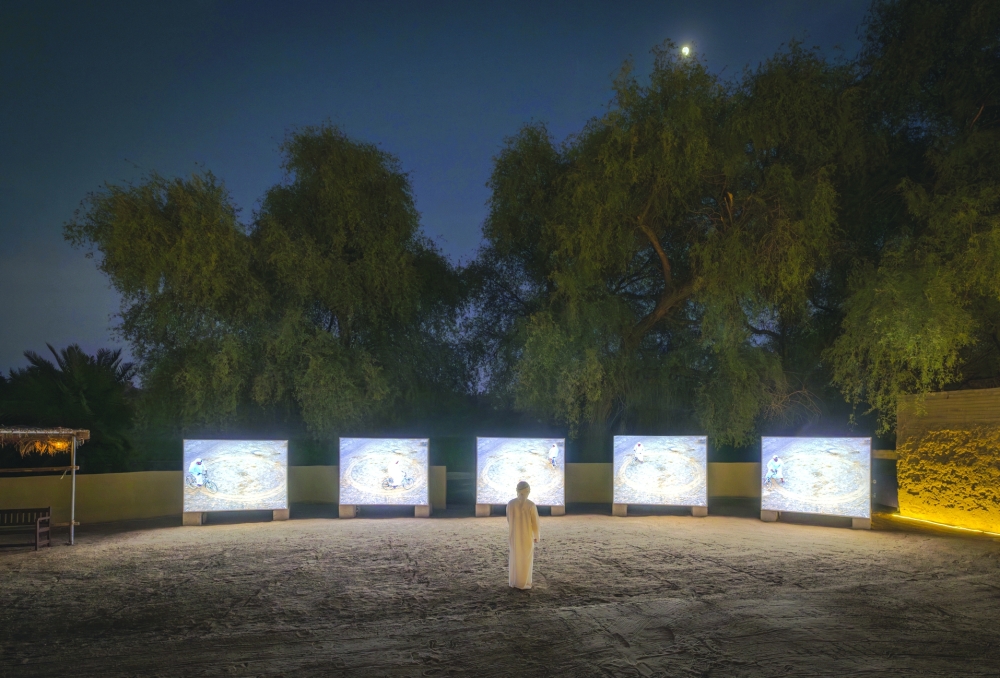
In its second edition, the Manar Abu Dhabi public art exhibition turns to this ancestral relationship with Suhail and with light itself. “This year’s exhibition, titled ‘The Light Compass: Suhail Is Your Guide’, is inspired by age-old navigation and astronomy; and how these systems shaped nomadic travel, sea journeys and even prayer times”, explained curator Khairuddin Hori.
“People observed the sun, moon and shadows, creating songs, cultural practices and simple instruments from this knowledge. We wanted to place this traditional wisdom side by side with contemporary art — how we create, shape and interact with light today”.
Launched in mid-November by the UAE’s Department of Culture and Tourism, the exhibition brings together 22 artworks by 15 local and international artists, spread across three distinct sites in Abu Dhabi. Each artwork interprets the central theme in its own way.
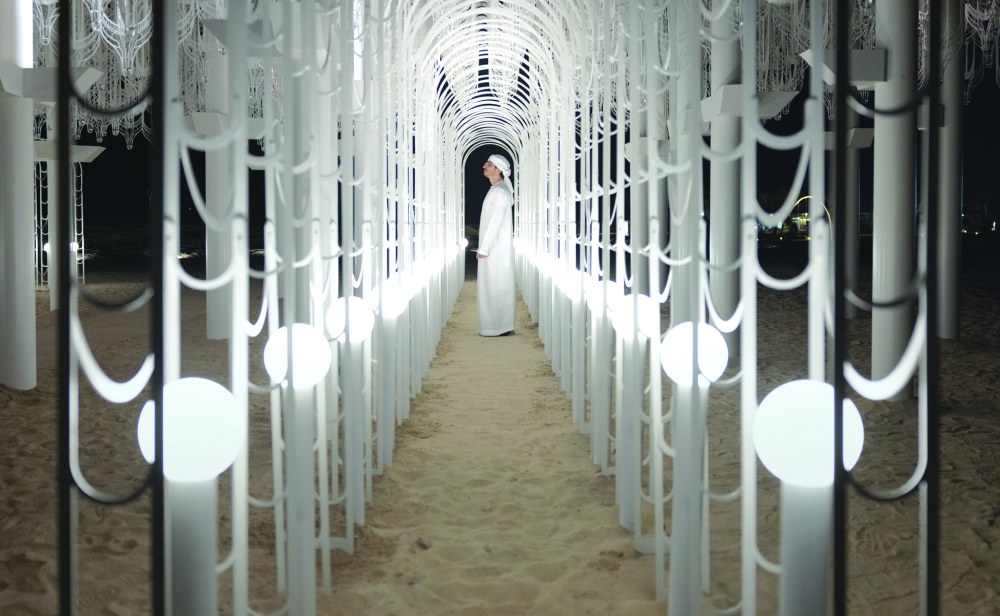
Some pieces lean into literal interpretations — such as Abdalla Almulla’s ‘Guiding Drapes’, an architectural installation set within a restored traditional courtyard in Al Jimi, drawing from the wedding lights once hung on Emirati homes.
Others explore the idea more conceptually — like Kristen Breg’s mirrored sculpture ‘Compound Eyes’ on Al Jubail Island, inspired by the multi-faceted vision of insects and the interplay of reflection.
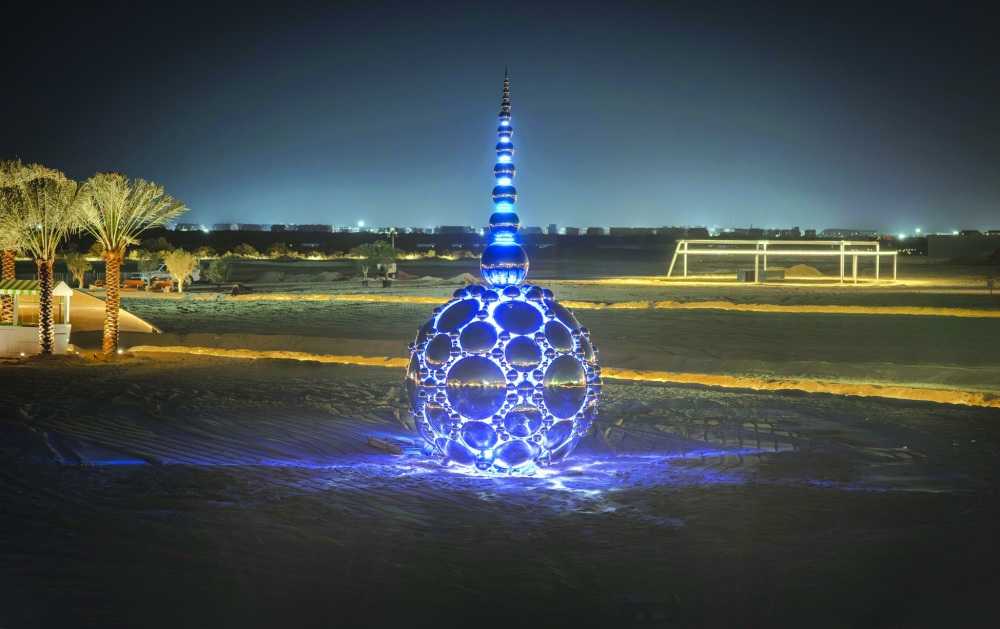
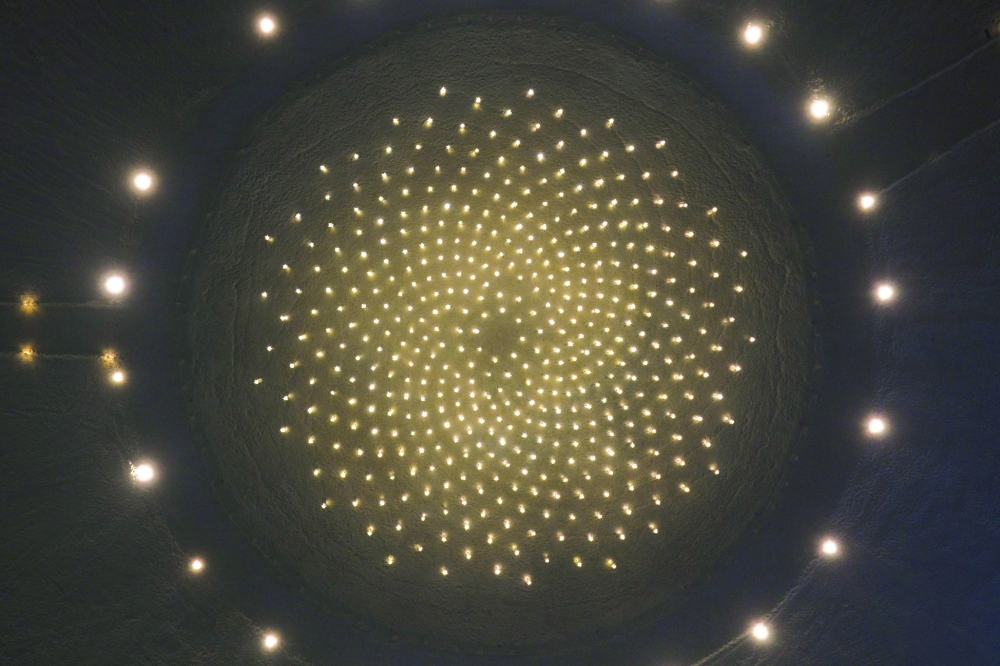
One of the most striking examples of art meeting technology is ‘Pulse Canopy’ by Rafael Lozano Hemmer. Inside a canopy of light beams in Al Ain, visitors place their hands on three sensors that read their heartbeats. Instantly, beams converge overhead, creating star-like formations paired with the rhythm of their pulse — turning each person into a constellation.
Across the exhibition, the blend of still, immersive, analogue and dynamic works creates a multi-sensory exploration of light’s power.
The choice of locations — Souq Al Mina, Al Jubail Island and Al Ain — amplifies the narrative as the curators explained to Observer why each site was chosen.
Souq Al Mina, home to a single monumental installation, reflects its legacy as Abu Dhabi’s earliest port and gateway of movement. Al Jubail Island, hosting 15 artworks, offers a nature-rich landscape shaped by mangroves and archaeological traces.
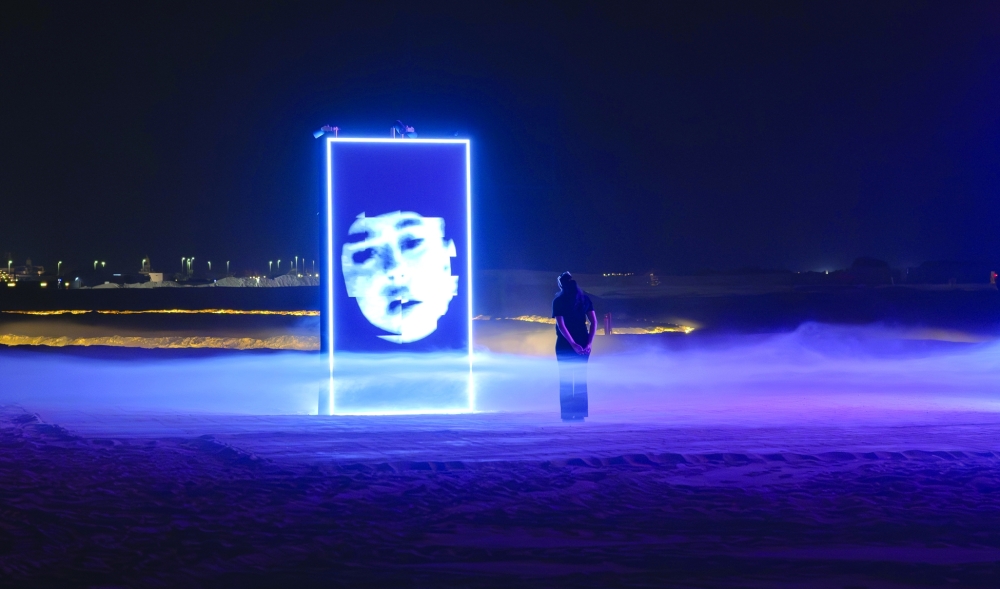
In Al Ain, seven installations sit within Unesco-listed heritage sites across Al Jimi and Al Qattara Oases, bringing contemporary art into dialogue with deep history.
Open until January 4, 2026, Manar Abu Dhabi is free to the public and includes guided tours, talks, artist workshops, live performances, wellness activities and curated food pop-ups across its locations — inviting visitors to follow Suhail once more, not across deserts or seas, but through art, memory and light.
Oman Observer is now on the WhatsApp channel. Click here