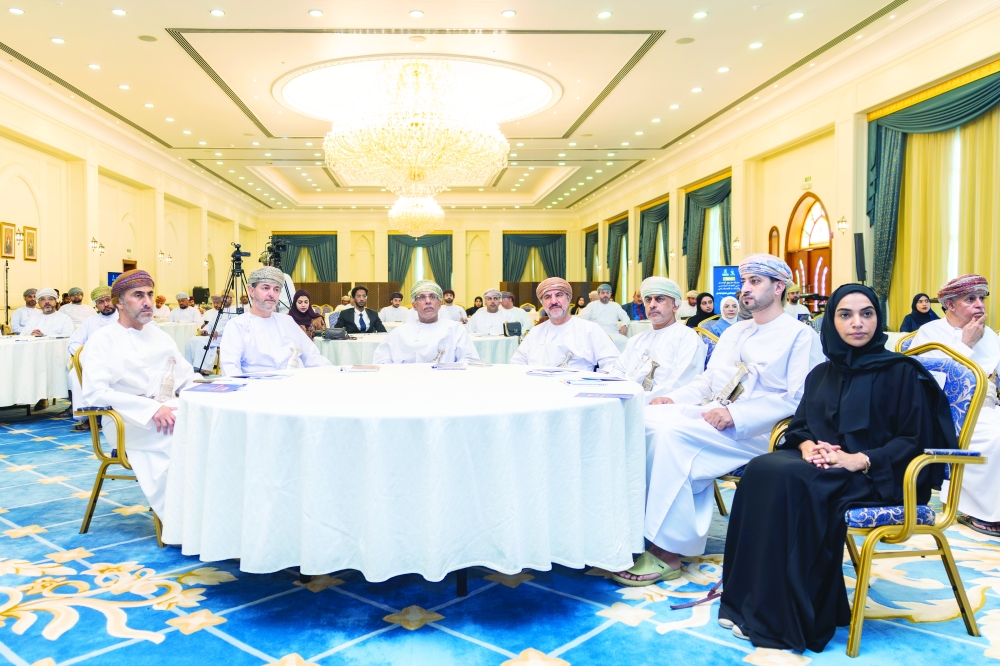





MUSCAT: The Oman Human Rights Committee held a seminar on Monday titled 'Protecting Human Rights in the Digital Space and Artificial Intelligence' at the Diplomatic Club in Muscat, in celebration of Arab Human Rights Day. The event was held under the auspices of Dr Yahya bin Nasser al Khusaibi, Under-Secretary of the Ministry of Justice and Legal Affairs, and attended by representatives from government institutions, the private sector, civil society and international organisations operating in Oman.
The seminar reflects the Committee’s ongoing efforts to raise awareness of human rights while keeping pace with rapid digital and technological transformations. It builds on last year’s successful celebration under the theme 'The Right to Food', which received recognition from the Arab Permanent Human Rights Committee at the Arab League.
This year, the focus was on AI and human rights, emphasising that technology should serve humanity while protecting rights. Algorithms and intelligent systems must not violate privacy or reinforce discrimination but should promote fundamental rights and freedoms, particularly in health, education and employment.
Dr Rashid bin Hamad al Balushi, Chairman of the Committee, highlighted that this year’s celebration comes amid rapid digital change, requiring a balance between technology and human rights to ensure AI serves humanity and preserves dignity. He announced the launch of the Digital Transformation Project to enhance beneficiary experience using AI, improving complaint handling and service delivery in line with Oman Vision 2040 objectives.
Saleh bin Yahya al Maskari, Head of Global Affairs at the Foreign Ministry, emphasised the importance of protecting human rights in the digital space and AI. He noted that the digital space is an extension of daily life where individuals exercise rights in education, communication and work, stressing the need to address system breaches, data misuse and the ministry’s role in promoting international cooperation for safe and equitable digital innovation.
Counsellor Jamal bin Salem al Nabhani, member of the Arab Charter Committee, noted that Oman’s accession to the Charter reflects its positive stance on regional initiatives, highlights the reality of human rights, and demonstrates genuine government-committee partnership, stressing the importance of responsibly exercising rights amid the Fourth Industrial Revolution.
During the seminar, three working papers were presented. Hassan al Lawati, Head of the National Programme for AI and Advanced Digital Technologies, emphasised that the National AI Agenda aims to localise technology, enhance sector competitiveness and establish governance frameworks centred on humans.
Hamid bin Abdullah al Harrasi, Director of the Sectoral Skills Unit at the Oman Society for Information Technology, stressed aligning technological innovation with human rights safeguards, empowering the digital community, and promoting technological culture to support responsible technology use and Oman Vision 2040 goals.
Abdulaziz bin Ali al Saadi, Director of Legal Affairs at the Committee, highlighted that AI enhances rights monitoring and facilitates access to justice, while adhering to ethical standards protecting privacy and preventing bias, with international experiences confirming AI as a practical tool serving humanity and safeguarding human rights.
Oman Observer is now on the WhatsApp channel. Click here