




Two people have been killed in Oman on Friday after drones came down in Suhar, as Gulf nations remain caught in the crosshairs of the war the United States and Israel launched on Iran, sparking Tehran’s retaliation across the region.
The incident comes two days after Oman’s unequivocal condemnation of the continued targeting of its territories.
One of the drones hit the Al Awahi Industrial Area, killing two expats and injuring others.
The other one fell in an open area with no injuries recorded, the agency also said, adding that the authorities were investigating the incident.
President Donald Trump said the US was going to be hitting Iran "very hard over the next week", shortly after issuing a partial 30-day waiver for purchases of sanctioned Russian oil, hoping to ease prices fuelled by the US-Israeli war on Iran.
Trump has previously said the war is "complete" and also promised to guarantee the safety of vessels in the Strait. In a Fox News interview aired on Friday, Trump said the US would escort shipping there "if we needed to".
After nearly two weeks of war, 2,000 people have been killed, most of them in Iran, but many also in Lebanon and a growing number in the Gulf, which has for the first time in decades of Middle East conflicts found itself on the front line. Several million people have been displaced from their homes.
US forces have also suffered casualties. The US military confirmed that all six crew members aboard a refuelling aircraft that crashed in western Iraq were dead.
Iran fired more missiles and drones at Israel; and Iranian drones were reported flying into Kuwait, Iraq, the United Arab Emirates, Bahrain and Oman.
The Israeli military launched strikes across Tehran and continued to attack the Iranian-allied Hezbollah militia across Lebanon and in the capital Beirut.
It said its air force had struck more than 200 targets in western and central Iran over the past day, including ballistic missile launchers, air defence systems and weapons production sites.
Iranian Press TV said a woman had been killed by an air strike close to a rally in Tehran for Quds (Jerusalem) Day, one of many across Iran in support of Palestinians living in Israeli-occupied territory.
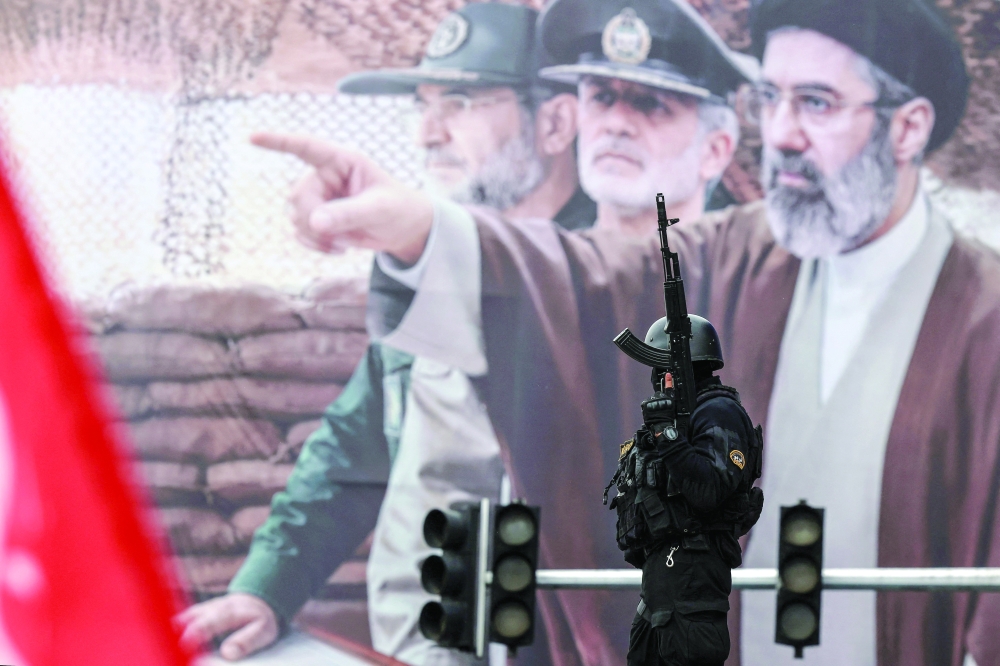
But President Masoud Pezeshkian, Foreign Minister Abbas Araghchi and security chief Ali Larijani attended the rally in a gesture of defiance, despite an assertion by US Defence Secretary Peter Hegseth that the leadership were "cowering" underground.
"People are not afraid of these attacks. As you can see, people have come out in this rain, under these hardships", judiciary chief Gholamhossein Mohseni-Ejei said at the march. "We will not back down in any way".
Iran's new Supreme Leader Mojtaba Khamenei is wounded and likely disfigured, Hegseth said on Friday, questioning Khamenei's ability to govern after nearly two weeks of US and Israeli attacks on Iran.
No images have been released of Khamenei since an Israeli strike at the start of the war that killed much of his family, including his father and wife. His first comments came in a statement read out by a television presenter on Thursday. In the statement, he vowed to keep the Strait of Hormuz shut and called on neighbouring countries to close US bases on their territory or risk Iran targeting them.
"We know the new so-called not so supreme leader is wounded and likely disfigured. He put out a statement yesterday. A weak one, actually, but there was no voice and there was no video. It was a written statement", Hegseth told a briefing. — ONA/Reuters
Oman Observer is now on the WhatsApp channel. Click here