




Riyadh - The Global Labour Market Conference (GLMC) in Riyadh examined how high-impact sectors can drive job creation, workforce readiness, and inclusive economic growth amid global labor market transitions.
Ahmed al Khateeb, Minister of Tourism of the Kingdom of Saudi Arabia, highlighted tourism as one of the world’s largest employment-generating sectors, accounting for approximately 10 percent of global GDP and supporting around 370 million jobs worldwide.
He noted that women hold approximately 45 percent of tourism jobs globally, while youth account for around 80 percent, underscoring the sector’s importance for inclusive participation.
Al-Khateeb emphasized that Vision 2030 has enabled the development of new sectors in Saudi Arabia, including education-linked tourism and cultural tourism. He noted that the Ministry of Tourism has a clear mandate to prepare young Saudis for careers in the tourism sector.
This effort is supported by significant investment in training and development programs.
He added that Saudi Arabia is seeking to create between 400,000 and 600,000 new jobs in the hospitality industry, with a focus on ensuring that young people are equipped with the skills required to succeed and progress within the sector.
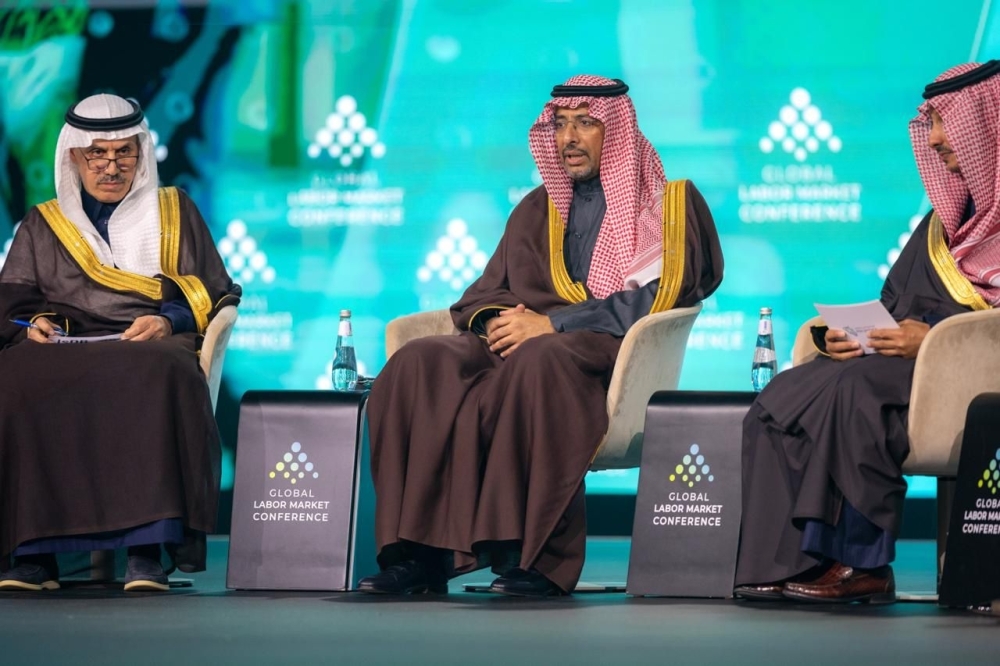
Bandar al Khorayef, Minister of Industry and Mineral Resources of the Kingdom of Saudi Arabia, emphasized the role of governments in shaping future-ready labor markets by setting the right policy frameworks, supporting the adoption of new technologies, and ensuring education systems promote continuous upskilling and reskilling.
He highlighted the importance of the private sector in promoting supportive working environments and providing on-the-job training, noting that global competitiveness depends on close cooperation between public and private actors.
Within this context, Al Khorayef referred to the launch of an Occupational and Skills Framework for the Mining and Industrial Sectors, which covers more than 500 occupations and details the skills required for each role. He noted that the framework supports the wider training ecosystem and enables a clearer understanding of labor market requirements across a range of sectors, contributing to the long-term competitiveness of the Saudi economy.
Dr Muhammad Sulaiman Al Jasser, Chairman of the Islamic Development Bank Group, highlighted infrastructure as one of the most inclusive sectors for job creation, generating both direct and indirect employment through strong multiplier effects. He noted that infrastructure projects deliver broad economic and social benefits, with financing in the sector supporting long-term national development outcomes.
Prof. Dr. Vedat Işıkhan, Minister of Labour and Social Security of the Republic of Türkiye, emphasized the continued importance of manufacturing to national and global economic growth. He underscored the need to promote decent, just, and sustainable jobs while addressing informality in labor markets.
Hind Aboud Kabawat, Minister of Social Affairs and Labor of the Syrian Arab Republic, addressed the labor market challenges associated with post-conflict recovery, including the return of displaced populations. She noted that while these challenges are significant, they also present opportunities to benefit from the international experience and skills acquired by returning workers.
Overall, the ministerial discussion underscored the shared importance of skills development, institutional reform, and cross-sector collaboration in building resilient labor markets. Participants highlighted the need for policies that align education, training, and labor demand to support sustainable job creation and inclusive growth where relevant.
WORLD BANK HIGHLIGHTS CHALLENGES, OPPORTUNITIES.
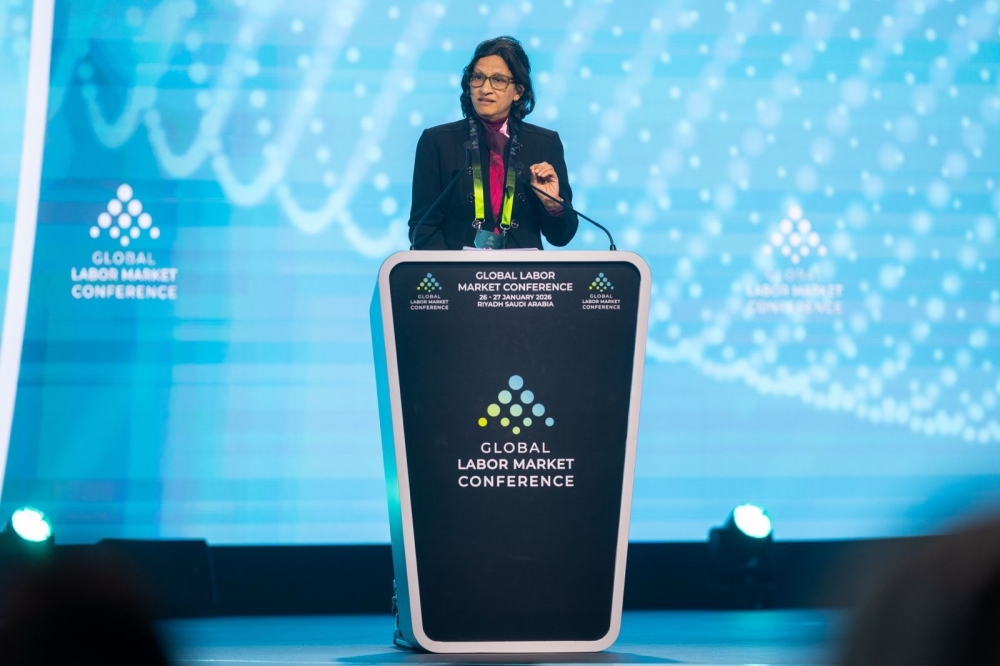
Dr. Mamta Murthi, Vice President for the People at the World Bank, who delivered a keynote address focused on the need for workforce systems to evolve in line with rapid changes in the global economy.
Dr Murthi highlighted the collaboration between the Kingdom of Saudi Arabia and the World Bank as a model for translating evidence-based policy into tangible economic opportunities for firms of all sizes, while advancing inclusive job growth. She emphasised that sustained investment in people is central to unlocking human capital and requires a fundamental shift in how finance is structured and how workforce transformation is delivered.
She noted that labour market challenges and opportunities vary significantly across regions. In particular, she highlighted that Sub-Saharan Africa and South Asia have strong potential to drive future growth if their young populations are provided with relevant and market-aligned skills.
Dr Murthi drew attention to persistent challenges in skills development, including education systems that prioritize inputs over outcomes, training programs designed for outdated job roles, skill mismatches, and the inability to scale effective solutions. She also highlighted the risks of supply-driven approaches that are insufficiently connected to labor market demand.
To address these challenges, Dr Murthi outlined three major shifts required in workforce development.
These include the adoption of industry-led solutions, embedding market-driven approaches to unlock job opportunities across value chains, and prioritising sector-based reforms to enable long-term ecosystem transformation before system-wide change. Central to these shifts is deeper engagement with employers, positioning them as key drivers of skills development and job creation.
Dr Murthi also detailed the World Bank’s expanding knowledge and learning agenda. This includes the development of a new Human Capital Index that incorporates higher education and on-the-job learning, enabling governments to better identify skills gaps. She emphasised the integration of education, skills, and labor market diagnostics into economic and fiscal policy advice.
She outlined key initiatives under this agenda, including an Annual Labour Market Academy, a Global Expert Advisory Panel, and practical guidebooks to support short-term, targeted workforce interventions. She also noted that the World Bank will publish a report on Saudi Arabia’s progress in the labor market and skills reform.
Dr Murthi concluded by underscoring the importance of designing inclusive workforce policies from the outset and integrating them into the global labor economy. She emphasized the need for interdependence and coalition-building across governments, industries, and knowledge institutions to translate evidence into action.
Oman Observer is now on the WhatsApp channel. Click here