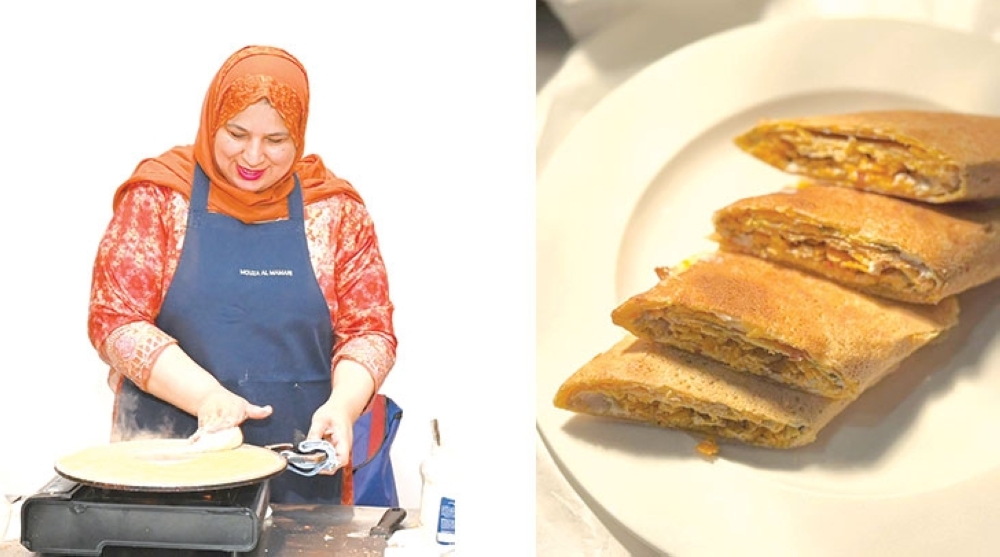





At every festival’s tent, hotel courtyard and national celebration she enters, the first thing people notice is her flame. A quiet flame, steady, intentional and rooted. It flickers in front of her as she moves with practiced ease, rolling dough, lifting it, stretching it until it becomes impossibly thin. This is not just cooking. It is storytelling. And the storyteller is Moza al Mammari, an Omani woman whose determination, talent and love for tradition have transformed a childhood dream into a cultural mission.
Today, Moza is known across the Sultanate of Oman for her live preparation of khubz rakhal, the delicate, paper-thin Omani bread. But her journey began long before her name appeared on event rosters and hotel invitations. It began in the fourth grade, when she first imagined becoming a cooking instructor, teaching all kinds of dishes. As she grew older, her dream transformed: “After high school, I realised I wanted to revive Omani heritage inside and outside the Sultanate of Oman”, she explains.
When she began her university studies, her vision sharpened further. She wanted to bring traditional Omani cooking into hotels, reviving heritage not in theory, but in a living, visible way. Most hotels turned her down. They couldn’t imagine why live cooking of traditional bread deserved a place on their platforms. But Moza persisted, knocking on doors until one finally opened. Intercity Hotel Muscat welcomed her idea and from that moment, her path began to expand. Nowadays, her phone doesn’t stop ringing, requests come in from government institutions, private companies, national events and heritage festivals.
Fundamentally, Moza’s upbringing has made a massive impact on her craft. In fact, her cooking style is rooted in her family’s legacy. “I was deeply influenced by my mother and grandmother”, she says. Their kitchen was her first classroom and from them she inherited not just recipes, but intuition, the real heart of traditional cooking. She still relies on their methods, though she adds her own touches, especially in presentation and flavour balance.
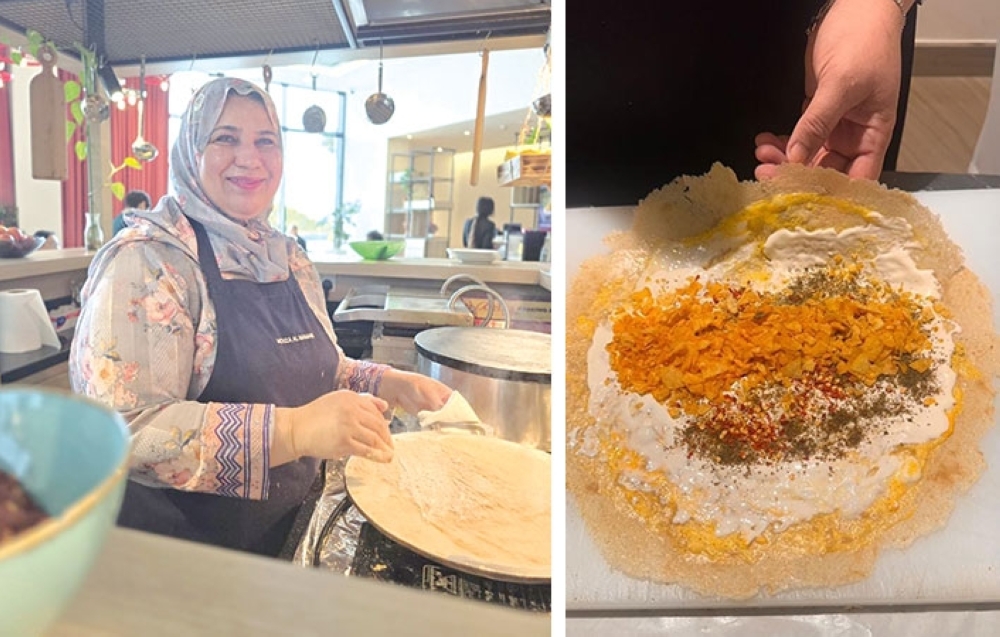
To watch Moza prepare rakhal is to watch heritage come alive. Her setup becomes a stage; the dough, a script. Guests gather around as she works in rhythmic motions, mixing, kneading and smoothing the dough in one swift movement over the hot pan. The fragrance of ghee rises, warm and familiar. And with each bread, she invites people back to their childhoods.
The comments she cherishes most echo that nostalgia:
“You reminded us of our mothers”.
“This tastes exactly like the bread from our childhood”.
“You brought back old memories”.
For Moza, preserving and reviving these memories is her greatest reward.
But her path has not been without challenges. Many people underestimated traditional Omani dishes. Others mocked her idea, or dismissed heritage cooking as “simple”. Then there were practical difficulties: events without proper kitchens, high ingredient costs and the logistics required for live cooking stations. Yet Moza kept pushing forward, driven by her faith in her craft and by her belief that Omani cuisine deserves a proud place in modern spaces.
She now participates in heritage festivals, weddings, national gatherings and corporate events. She offers a variety of flavours too, classic rakhal, or bread layered with honey, cheese, chocolate, spices and more. She even created package systems tailored to client tastes. Flexibility is part of her signature. “I listen to people”, she says. “I prepare everything based on their choices”.
Looking ahead, Moza’s most sought after dream is to own a fully equipped mobile rakhal truck, allowing her to move easily between major events. She also hopes to teach training workshops, passing the craft on to the next generation so that the tradition doesn’t fade. “This heritage must continue”, she says firmly.
She sees a bright future for traditional Omani food at events. As people grow more interested in cultural identity, they seek authenticity and food is one of the most powerful forms of identity. Oman, she adds, has preserved its culinary traditions remarkably well, even when modern twists are introduced, such as new presentations of shuwa.
Social media has also played a major role in her rise. It helped people discover her work, her presence and her authenticity. But she acknowledges its challenges, the competition, the negativity and the risks of misrepresentation. “It is a double-edged sword”, she says. “If used incorrectly, it can harm the project”.
Through it all, Moza al Mammari stands as a symbol of the modern Omani woman: determined, deeply connected to her roots and bold enough to carve space for tradition in a fast-changing world. Her work proves that heritage is not something stored in books or museums — it is something lived, cooked, kneaded and shared. Every time she stretches a sheet of dough over the flame, she is not just making bread. She is preserving memory. She is passing on culture. She is honouring the hands that taught her. And she is showing that Omani women can carry heritage forward, one beautiful, golden circle at a time.
Oman Observer is now on the WhatsApp channel. Click here