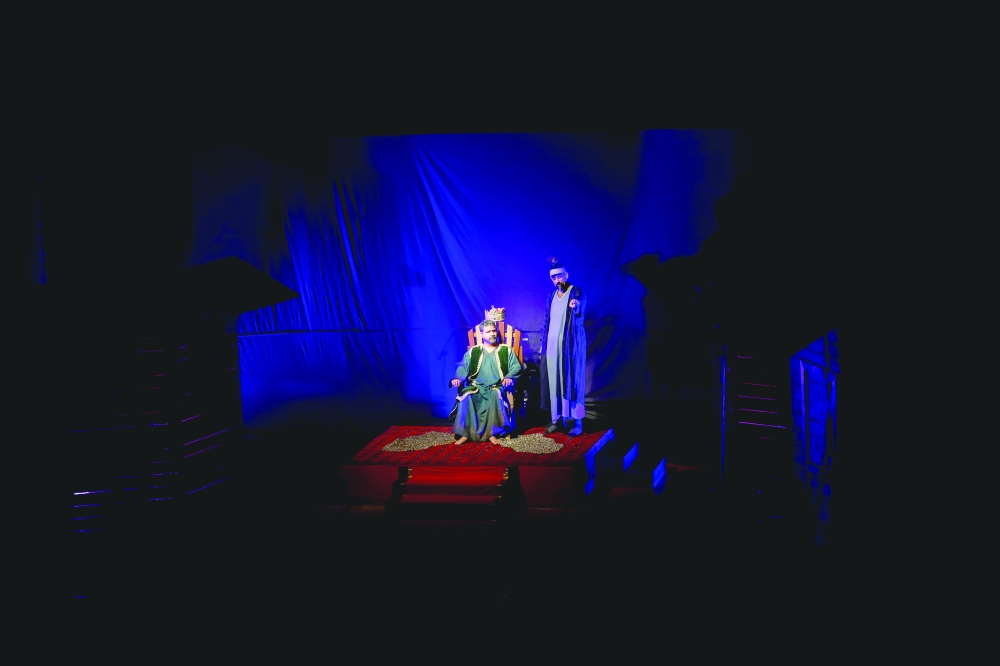





In a daring and thought-provoking performance that stripped away illusions and confronted the uneasy bond between authority and the people, the play The Rose-Coloured Glasses took centre stage at Azzan bin Qais International School on Monday.
Adapted from Mohamed bin Saif al Rahbi’s play Who Killed Shahryar and directed by Nooh al Hasani, the play offered an unflinching critique of power, corruption and the struggles of ordinary citizens, capturing the restless pulse of the street and the anguish of those unheard.
The performance was part of the Noor Cultural Forum, a six-day event organised by the Noor Association for the Blind, the first of its kind in Oman. The forum gathers blind artists and intellectuals from 14 Arab countries, including the GCC states, Egypt, Tunisia, Jordan, Algeria, Iraq and Yemen, to showcase their talents in literature, theatre, music and visual arts.
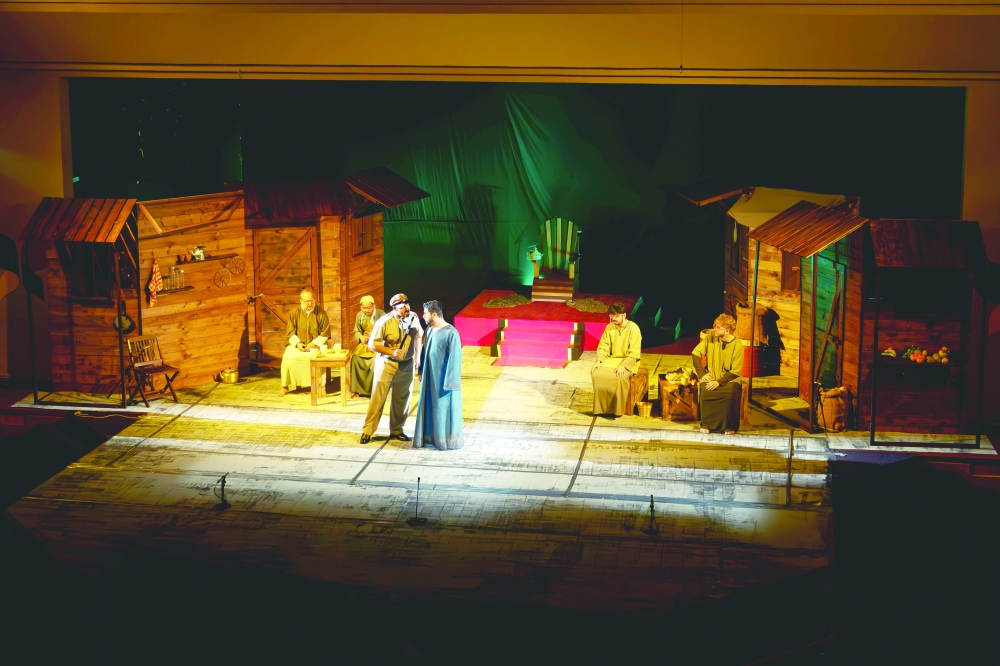
From its opening scenes, this version of The Rose-Coloured Glasses struck a sharp tone of social inquiry. The dialogue between a merchant and his friend, arguing over inflated prices, quickly revealed the play’s investigative voice and inquisitive language. Beneath the humour and sarcasm lay raw frustration with economic injustice and the widening gap between ruler and ruled.
The narrative gained momentum in earnest when a poor, disheveled old man emerged as the voice of defiance, a symbol of the people’s suppressed courage. Standing before authority, he dared to question oppression and mock the hollow illusion of happiness imposed by the state.
“Why don’t you wear rose-coloured glasses?” the policeman demands.
“Because I can’t afford them”, the old man replies, his tone dripping with irony. “Of course, I’m overjoyed by the birth of the king’s son!”. This exchange crystallised the play’s central metaphor: a society forced to view its reality through rose-coloured lenses, to pretend that all is perfect while poverty and injustice spread unchecked.
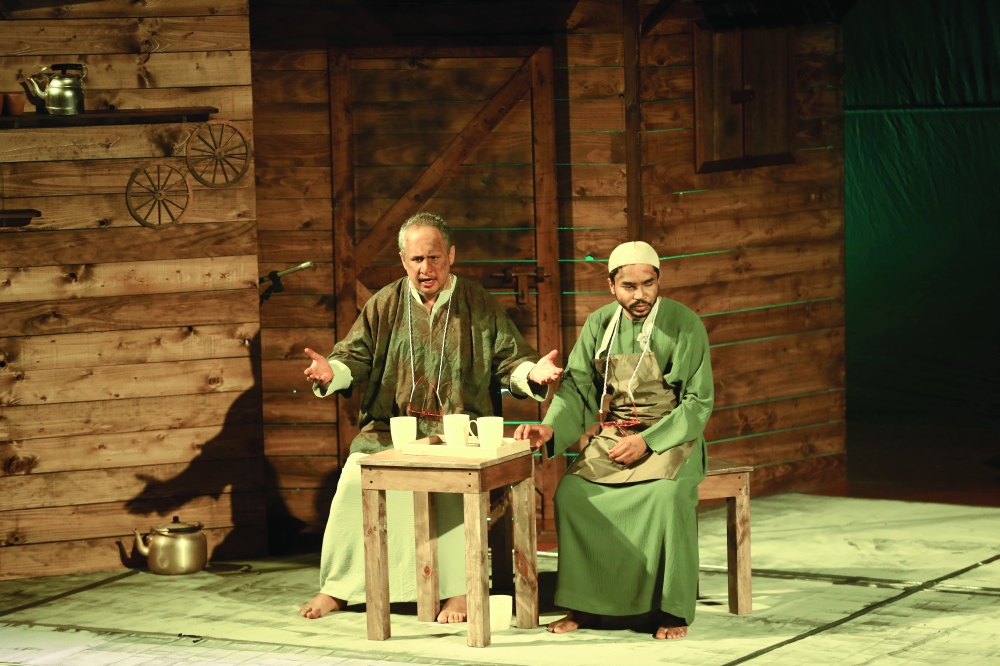
Throughout the performance, the minister emerges as a master manipulator, distorting facts and painting false portraits of prosperity. The play’s pacing accelerates until it reaches a chilling revelation: the old man, the people’s voice of resistance, is in fact the King himself in disguise, wandering among his citizens to witness their suffering firsthand.
But the truth arrives too late. In a tragic final act, the corrupt minister murders the King and crowns the infant prince as heir, symbolising the endless cycle of manipulation and inherited tyranny. The play closes not with resolution, but with a haunting repetition, a system destined to perpetuate its own deceit.
Director Al Hasani approached the politically charged material with bold minimalism. The scenography defied theatrical conventions, the stage reduced to a stark open space with a single staircase as its centrepiece. A moving chorus of dancers and singers flowed across the stage, transforming from passive spectators into the voice of the people, mirroring the shifting political mood.
The artistic strength of The Rose-Coloured Glasses was anchored by a dedicated creative team whose combined effort elevated the performance beyond mere storytelling. Under the general supervision of Tahir al Harassi and with Mohammed al Ruqadi preparing the production, the team demonstrated meticulous attention to thematic and visual detail.
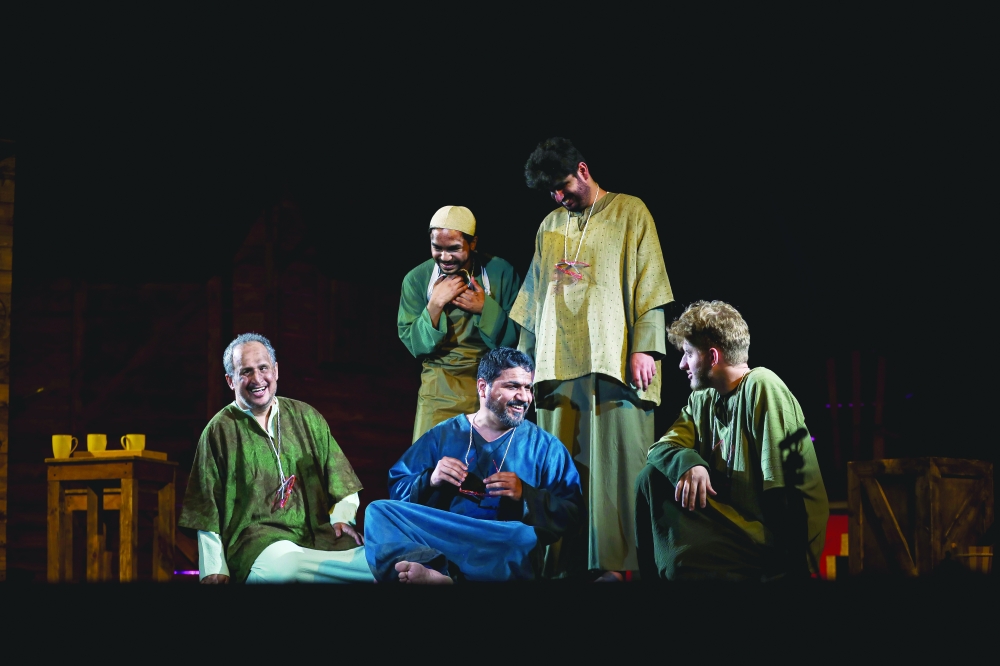
Assistant directors Mohammed al Shamakhi and Amer al Wahaibi ensured fluid transitions and strong ensemble chemistry, while stage managers Zahir al Sarmi and Mohammed al Mabsali maintained an impressive sense of rhythm and coordination throughout the show.
The visual tone was shaped by Mahmoud al Balushi and Amjad al Shraiqi, whose work in set design and costume subtly captured the contrast between illusion and decay. Their use of simple yet symbolic props enhanced the play’s metaphorical weight. Meanwhile, Noor Al Huda al Battashi’s striking makeup artistry transformed the old man’s appearance, accentuating his weariness and grit; and added a haunting realism that deepened the audience’s emotional connection.
Omani actress Amina Abdulrasool praised The Rose-Coloured Glasses as a deeply meaningful and beautifully executed production. She described Mohammed al Rahbi’s writing as creative, purposeful and rich with symbolic depth. Abdulrasool commended the visually impaired cast for their exceptional performance, noting that while they lack sight, their inner vision and emotional awareness are remarkably strong. She expressed admiration for Imran
al Rahbi’s commanding portrayal of both the King and the old man; and applauded the entire ensemble for delivering a powerful, inspiring and artistically refined performance.
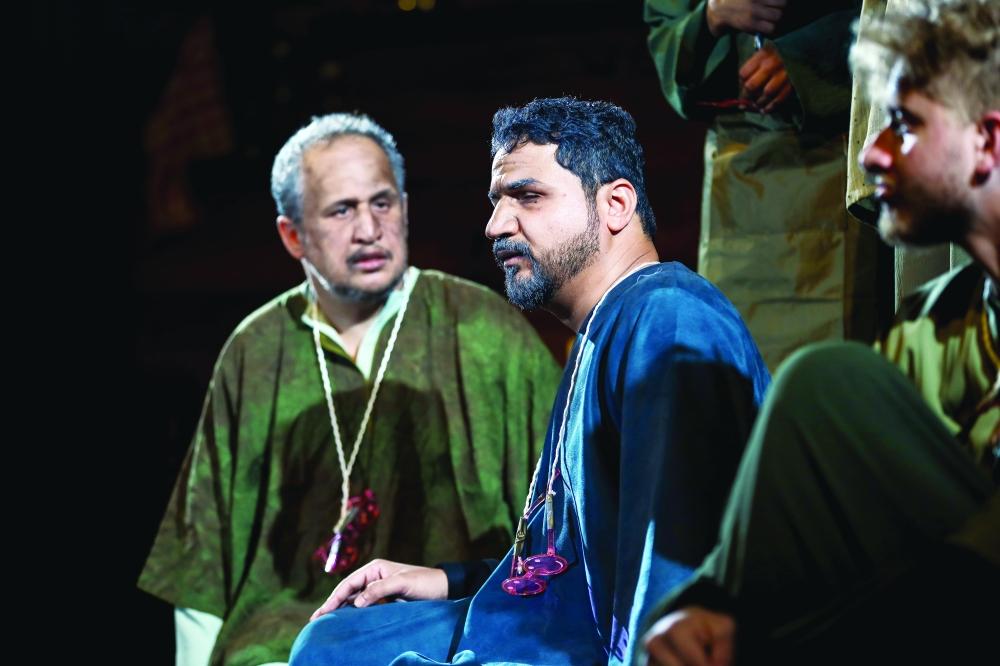
Dr Said al Siyabi, Assistant Professor of Theatre Arts at Sultan Qaboos University, also noted the effective use of theatrical elements within the play such as lighting, music, costumes and stage movement, particularly the symbolic role of the rose-coloured glasses prop, which conveyed multiple layers of meaning. He concluded by expressing gratitude to all participants, affirming that the performance left a memorable mark on the Omani theatre scene and contributed to expanding the creative boundaries of inclusive performance.
Fundamentally, The Rose-Coloured Glasses proved to be more than an ordinary performance as it embodied the spirit of the Noor Cultural Forum and turned art into an instrument of truth and empowerment. Through theatre, music and dialogue, the event seeks to amplify the voices of the blind and visually impaired, affirming their place in shaping the Arab cultural landscape.
As the curtains fell, the audience was left with a lingering question, not about who killed the king, but about who dares to remove the rose-coloured glasses and truly see.
Oman Observer is now on the WhatsApp channel. Click here