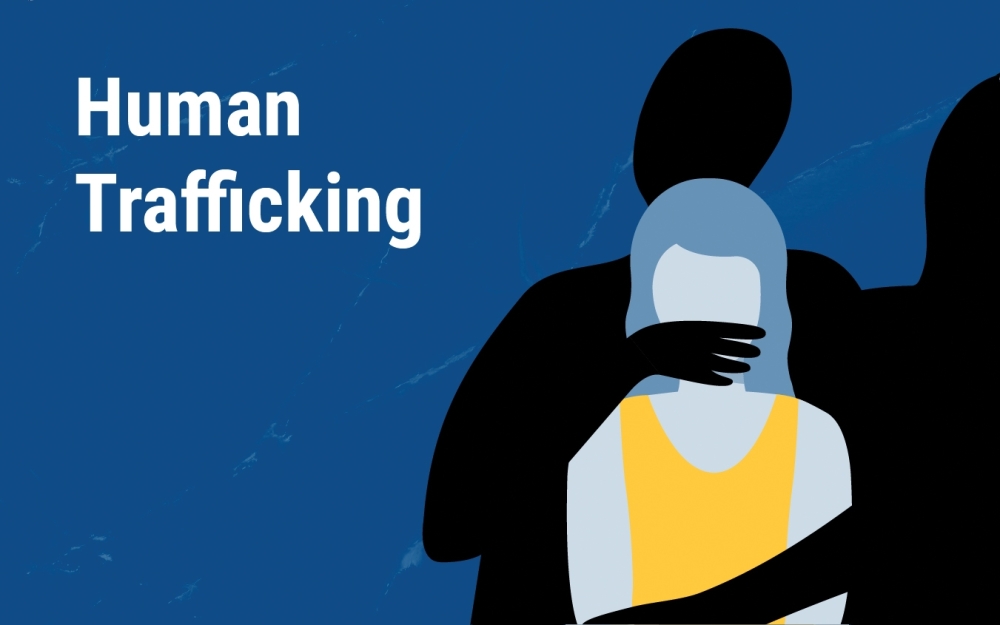
The Royal Decree 78/2025 promulgated the Law on Combating Human Trafficking last week and was published in the Official Gazette on Sunday. It canceled the Law on Combating Human Trafficking issued under Royal Decree 126/2008, as well as all that contradicts the attached law or contravenes its provisions.
As per
Article 1 of the Law, the crime of human trafficking includes exploitation - The unlawful use of a person, including prostitution, any form of sexual exploitation, slavery, practices similar to slavery, domestic servitude, forced labor, forced labor, begging, the unlawful removal of human organs and tissues for trafficking, or conducting biomedical research on persons.
Sexual Exploitation: The use of one or more persons in activities or practices of a sexual nature by unlawful means, such as coercion, deception, or exploitation of weakness or need, for the purpose of achieving material or non-material gain.
Slavery: Putting a person in a situation where the right of ownership is exercised.
Forced Labor: Forcing a person to perform work or service without remuneration.
Forced Labor: Work or service imposed on any person under the threat of any penalty.
Article 17 on penalties states that anyone who commits the crime of human trafficking shall be punished by imprisonment for a period of no less than three years and no more than 10 years, and a fine of no less than RO5,000 and no more than RO100,000.
Article 18 states that the penalty for the crime of human trafficking shall be imprisonment for a period of no less than seven years and no more than 15 years, and a fine of no less than RO10,000 and no more than RO100, 0000, in any of the following cases, If the victim is a child, a person lacking or partially qualified, or a person with a disability, If the victim suffers insanity, HIV, any psychological or physical illness, or incurable bodily harm as a result of being exploited in a human trafficking crime, if there are multiple victims, if the perpetrator carries a weapon, if the perpetrator is the victim's spouse, one of their ascendants or descendants, their guardian, or has authority over them, if the perpetrator is a public employee or someone assigned to a public service who exploits their position to commit the crime, if the crime is committed by more than one person, If the crime is committed by an organized criminal group or the perpetrator is a member of it, if the crime is transnational, if exploiting the victim's influence, impaired judgment, or need for the purpose of conducting biomedical research on them and the The same penalty shall apply to anyone who establishes, establishes, organizes, or manages an organized criminal group, assumes leadership therein, or calls for joining it.
Article 19: Whoever uses force, threats, or the promise of a benefit to prevent a person from testifying or providing evidence, or to incite a person not to testify or provide evidence, or to give false testimony or provide false evidence related to a human trafficking crime before any competent authority, shall be punished by imprisonment for a period of no less than 3 years and no more than 5 years.
Article 20: Whoever commits the following crimes shall be punished by imprisonment for a period of no less than 6 months and no more than 3 years, and a fine of no less than RO300 and no more than RO1,000.
Anyone who learns of the commission of a human trafficking crime, even if he is responsible for professional confidentiality, and fails to report it to the competent authorities. Exemption from punishment may be granted if the person who refrained from reporting is the perpetrator's spouse, ascendant, or descendant.
Whoever conceals one or more persons involved in a human trafficking crime with the intent of assisting them in escaping justice, or possesses or conceals all or part of the proceeds of the crime, or contributes to concealing its traces, knowingly in all cases.
Whoever benefits, with knowledge of the crime of human trafficking, from a service, benefit, or work provided by the victim. The penalty shall be doubled if the victim is a child, incompetent, or partially incompetent.
Article 21: Whoever publishes, by any means of publicity, the names or photos of victims or witnesses to a human trafficking crime shall be punished by imprisonment for a period of no less than one month and no more than one year, and a fine of no less than RO500 and no more than RO1,000, or by either of these two penalties.
Article 22: Anyone who confiscates or destroys the passport of a victim of a human trafficking crime with the intent to coerce a person into committing a human trafficking act shall be punished by imprisonment for a period of no less than 10 days and no more than one year, and by a fine of no less than RO100 and no more than RO300, or by either of these two penalties.
Article 23: If the crime of human trafficking is committed by a legal entity, the person responsible for managing the legal entity shall be punished with the penalty prescribed for the crime if it is proven that they were aware of the crime. The legal entity shall be liable for the crime if it is committed in its name and for its benefit, and shall be punished by a fine of no less than RO10,000 and no more than RO100,000.
The court may order the dissolution of the legal entity or its suspension from carrying out its activities, in whole or in part, for a period not exceeding one year. This provision shall apply to its branches.
Article 24: Attempted human trafficking shall be punishable by the same penalty as the completed crime.
Article 25: The penalty shall be increased in accordance with the provisions for recidivism stipulated in the Penal Code if a final foreign court ruling is issued convicting a person of a crime similar to human trafficking.
Article 26: In the event of a conviction for committing a human trafficking crime, the court shall issue a ruling to confiscate the funds, property, proceeds, and means used in committing the crime or intended for such purpose, as well as the proceeds derived therefrom.
These funds, property, proceeds, and means shall be confiscated even if they have been converted or replaced with other funds or their ownership has been transferred to another person, without prejudice to the rights of third parties acting in good faith. If they are mixed with funds, property, or proceeds of a legitimate source, the confiscation ruling shall only apply to the funds, property, means, and proceeds referred to in the first paragraph of this article.
Article 27: The sentence imposed on a person convicted of human trafficking may not be suspended, nor may the minimum penalty be reduced.
Article 28: The Public Prosecution may authorize the sale of funds, property, means, or proceeds subject to confiscation, in accordance with legally prescribed procedures. The proceeds of the sale shall be transferred to the public treasury.
Article 29: Any perpetrator who promptly informs the competent authorities of any information they have about the crime before committing it, and this has the effect of discovering the crime before it occurs, apprehending the perpetrator, or preventing its completion, shall be exempted from the penalties prescribed for the crime of human trafficking. If the information is provided after the crime has been discovered, the perpetrator may be exempted from the penalty, or its penalty may be reduced if it enables the competent authorities, during the investigation, to arrest the other perpetrators.
Role of NCCHT
Article 3 states that "The National Committee to Combat Human Trafficking (NCCHT) affiliated with the Ministry of Foreign Affairs will be responsible for developing an action plan to combat the crime of human trafficking in coordination with the relevant authorities, coordinating with all relevant authorities in the Sultanate of Oman and relevant international bodies and organizations to establish controls and procedures that ensure the combating of transnational human trafficking, preparing a database in coordination with local, regional, and international bodies. This database shall include international legislation related to the crime of human trafficking, studies, trafficking methods, traffickers, and participants in it. developing care and rehabilitation programs for victims to help them quickly integrate into society, preparing relevant studies and research, organizing seminars and conferences, and conducting media campaigns to combat human trafficking and protect victims, proposing rules and procedures to strengthen controls at border crossings and transportation oversight, and coordinating with relevant authorities regarding this matter, organizing training programs for those responsible for implementing and enforcing this law, preparing periodic reports on the crime of human trafficking based on judicial statistics, actions taken regarding victims, and the results of the practical application of this law, as well as any suggestions and recommendations that strengthen measures and efforts to combat the crime of human trafficking, and submitting these reports to the Council of Ministers. proposing amendments to this law and other relevant laws and carrying out any other work in the field of combating human trafficking, as assigned by the Council of Ministers.