




As the 19th International Architecture Exhibition of La Biennale di Venezia opens its doors, all eyes are on Oman’s remarkable debut. At the heart of this historic moment is Majeda Al Hinai — a trailblazing architect, artist, and cultural thinker whose profound understanding of space, tradition, and innovation has positioned her as one of the most compelling curators in contemporary architecture.
Al Hinai’s selection to curate the Oman Pavilion with her groundbreaking project, Traces, signals more than just national representation; it signifies a renaissance in how Oman’s rich cultural tapestry is woven into global architectural discourse. Her credentials extend far beyond her Omani roots, establishing her as a thought leader whose work embodies a rare synthesis of cultural specificity, spatial intelligence, and forward-looking design.
A nuanced architect and artist, Al Hinai’s journey has been marked by a persistent pursuit of connecting disciplines—art, sculpture, installations, and architecture—that challenge conventional boundaries. Co-founder of Brash Collective, a pioneering experimental platform, she has cultivated an understanding that architecture is more than form; it’s a conversation, a collective memory, and a civic act. Her practice exemplifies a deep engagement with cultural dialogue, informed by her experience of navigating diverse geographies and traditions.
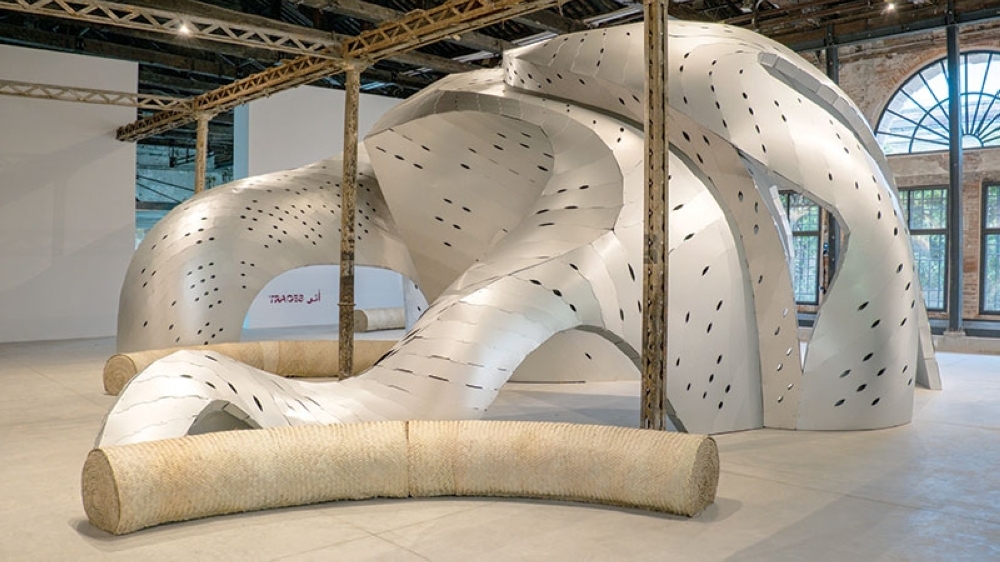
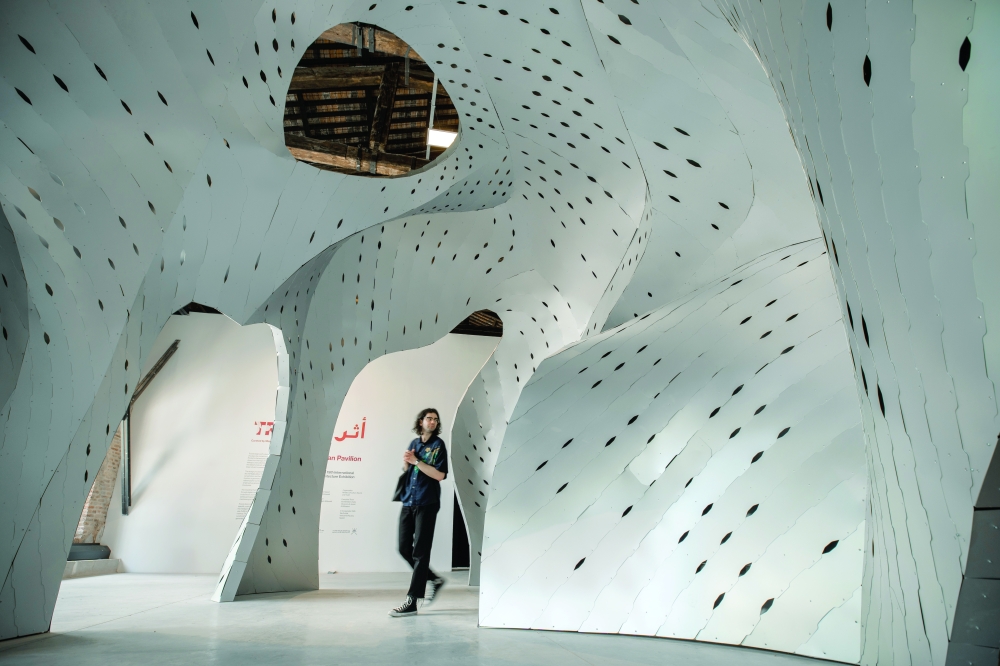
Her work’s distinctiveness lies in a commitment to cultural continuity fused with innovative resilience. With Traces, Al Hinai has designed a pavilion that draws from Oman’s Sablah — a traditional communal space — not as a nostalgic idyll but as a dynamic framework for contemporary civic life. Constructed entirely from precision-crafted aluminium, each perforated panel embodies patterns rooted in Omani culture: palm frond weaving, carved wooden doors, and the branching geometry of the Falaj irrigation system. Yet, these references serve as architectural instructions, shaping light, space, and social interaction—anchoring her project firmly within the global conversations surrounding sustainability, reuse, and architectural responsibility.
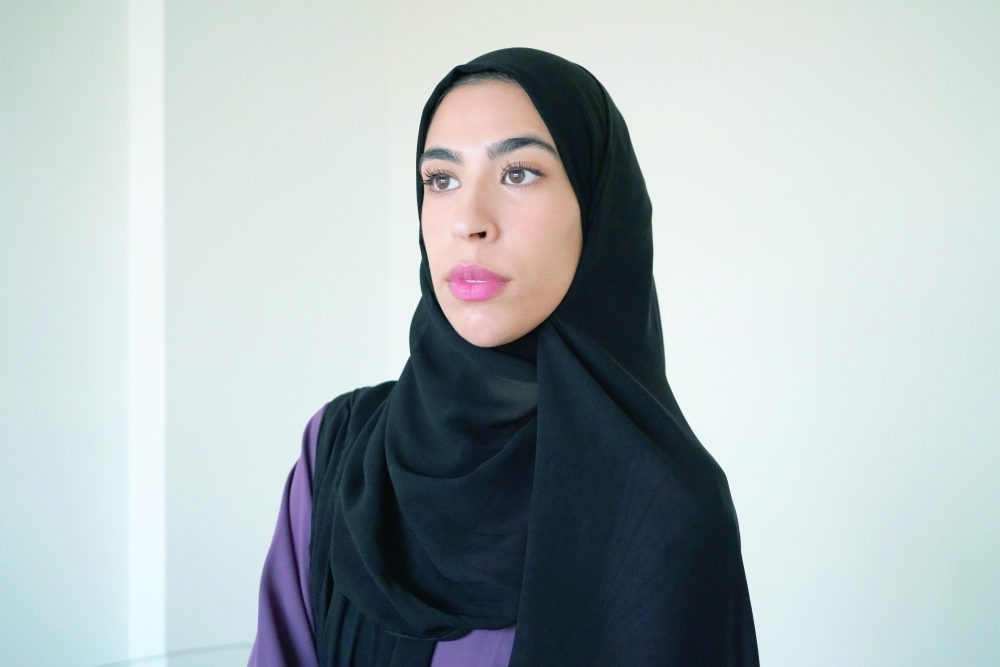
Al Hinai’s approach exemplifies a global vision that remains rooted in local wisdom. Her design philosophy is characterised by porous, open surfaces that invite visitors to pass through, linger, and gather—a spatial embodiment of hospitality and collective dialogue. This reimagining of heritage as a living, adaptive system underscores her belief that architecture must be flexible, inclusive, and rooted in the social fabric.
Her appointment as curator is further distinguished by her capacity to fuse cultural depth with technical precision. She discusses her journey, emphasising her belief that impactful architecture and curation stem from curiosity, resilience, and collaboration.
Below is an excerpt from an exclusive email interview with Majeda:
How do your personal experiences and cultural background influence your artistic and architectural design principles?
My work is deeply informed by the experience of moving between cultures and geographies, where architecture is never just a backdrop but a system of values and relationships. These encounters revealed early on how spaces embody generosity, adaptability, and collective belonging, and how architecture becomes a vessel for memory and exchange. Ultimately, my background has instilled a belief that architecture must remain porous: open to cultural specificity yet expansive enough to engage with urgent planetary questions. Every project becomes an opportunity to test how local wisdom and lived memory can inform new ways of making and inhabiting space.
As the curator for the Oman Pavilion, what is the core message you want visitors to take away?
The core message of the Oman Pavilion is that heritage is not a fixed image but a living framework for civic life. With Traces, we wanted to move away from the idea of heritage as something to be merely displayed, and instead treat it as an active system that shapes how people gather, converse, and build community. That is why we turned to the Sablah, not as a nostalgic symbol, but as a spatial and cultural practice that continues to evolve. Presenting this in Venice meant resisting the temptation to “show” Omani culture in static terms, and instead creating a space that performs it: open, inclusive, and adaptable.
What groundbreaking or innovative elements can visitors expect from the Oman Pavilion that set it apart from previous exhibitions?
What makes the Oman Pavilion distinctive is not spectacle, but the quiet innovation of its approach... The innovation lies in its nuance. Instead of a singular, monumental statement, the pavilion gathers multiple voices (those of architects, designers, engineers, local craftsmen, and storytellers) into a collective expression. It treats heritage as something alive and adaptive, while using advanced design processes to push material and spatial possibilities. Traces was also conceived for permanence; every component has been designed for disassembly and reassembly in Oman, where it will continue to function as a civic space. This makes the project as much about legacy as about exhibition, merging cultural sustainability with architectural responsibility.
How do you see architectural and artistic collaborations at events like these influencing regional and international perceptions of Oman?
Events such as the Venice Biennale provide Oman with a platform to be recognised not only as a nation of heritage but also as an active participant in global architectural and artistic discourse. In this context, architecture and art become tools for shifting international perceptions; from viewing Oman solely through the lens of cultural tourism to recognising it as a country engaged in shaping future-focused cultural narratives. This aligns with Oman’s presence in other prominent global forums. In the same year, Oman participated in three major events: Expo in Osaka, the Venice Biennale, and the London Design Biennale. These platforms reach diverse audiences worldwide, positioning design as a universal language through which nations can articulate identity, innovation, and resilience. Collectively, they situate Oman within an ecosystem of cultural exchange where architecture, art, and design are not isolated practices but shared tools for imagining new possibilities.
What advice would you give to young artists and architects aspiring to make a meaningful impact in their fields?
I would encourage young artists and architects to resist the pressure to follow predetermined paths or trends. What matters most is finding a direction that genuinely sparks your curiosity and pursuing it with persistence. Authenticity isn’t about rejecting influence but about filtering what you absorb through your own lens until it becomes something distinct. Depth comes from practice. It’s not just about acquiring skills, but about learning how to apply them to questions that truly matter to you. The most compelling voices are those that lean into their obsessions and refine them until they reveal something enduring.
Oman Observer is now on the WhatsApp channel. Click here