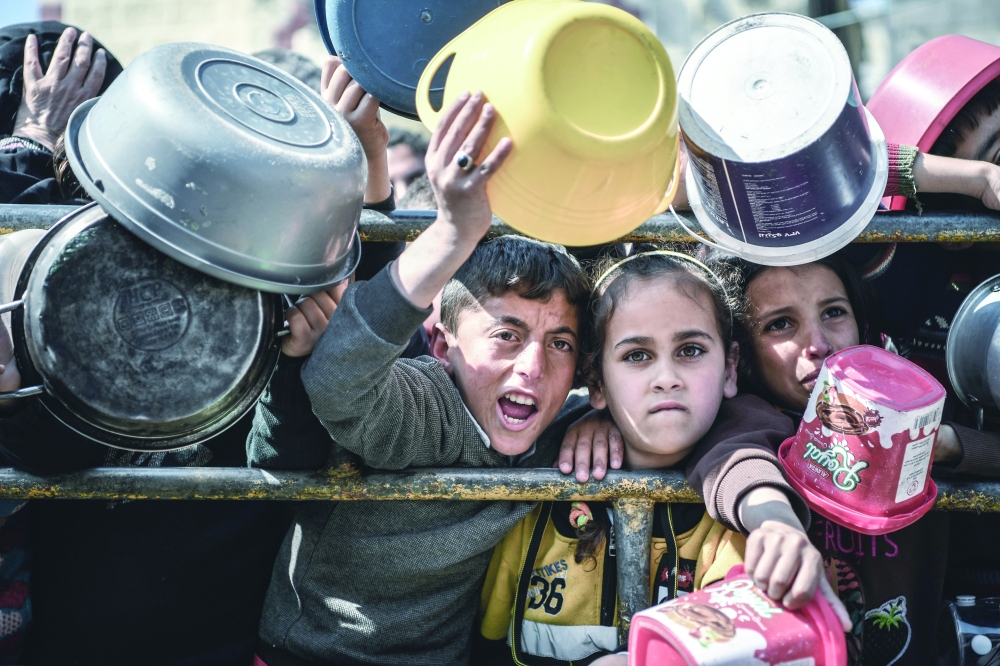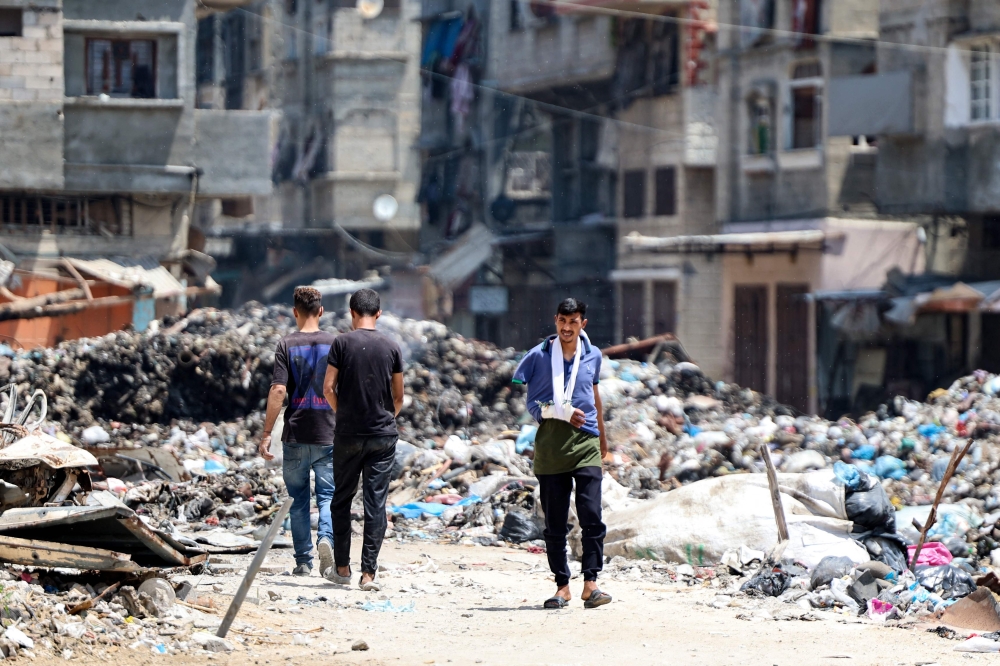





GENEVA: The availability of food in the Gaza Strip has very slightly improved, though the risk of famine in the besieged territory remains, the World Health Organization said on Friday.
"The food situation has a little bit improved. There's a bit more food," Rik Peeperkorn, the WHO representative in the Palestinian territories, told a press briefing in Geneva via video-link from Tel Aviv.
Compared to a few months ago, "definitely there is more basic food, more wheat, but also a little bit more diversified food on the market. Not just in the south -- also in the north", where people have been surviving on the equivalent calories of less than a can of beans a day.
Ahmed Dahir, the WHO's Gaza sub-office team lead, said that previously, "thousands" of people had been rushing at WHO trucks heading to northern Gaza -- which has been most at risk of famine -- in the hope of finding food.
"It has changed in the last few weeks. Now there is more food coming, and going to the north," he said, speaking from the Gaza Strip. Dahir said the food situation remained "fragile" in Gaza, while the population also lacked the cash to pay for food in the markets. "Access to food now has to be sustained," he said.
Peeperkorn stressed that local food production, such as fruit, vegetables and fish in the Gaza Strip had been "destroyed" by the war. The threat of famine had "absolutely not" gone away due to the slight improvement in the food situation, Peeperkorn said. "We cannot say the risk has passed," Dahir added.
Israel has often accused the United Nations and non-governmental organisations of not distributing aid quickly enough, but those have blamed the restrictions and inspections imposed by Israel.
Peeperkorn hit out at snags holding up WMO missions around the Gaza Strip. "Sometimes, what we could do in one mission, we have to do in four. It's incredibly labour intensive and also incredibly costly," he said.
The Gaza war started after October 7 attack on southern Israel, which resulted in the deaths of 1,170 people, mostly civilians, according to a tally of Israeli official figures.
Israel's retaliatory offensive has killed at least 34,596 people in Gaza, mostly women and children, according to the health ministry in the territory. Nearly seven months of war have devastated the Palestinian coastal territory, which the United Nations said would require a rebuilding effort on a scale not seen since World War II.
Oman Observer is now on the WhatsApp channel. Click here